
Nikro Air Duct Cleaning in South Hill: A Homeowner’s Guide
Most homeowners in South Hill hire a duct cleaning company based on the name on the truck and the price on the phone. That’s backwards. The equipment determines what actually gets removed from your ducts, and Nikro systems are built around negative-pressure source removal, which captures contaminants instead of stirring them up. This guide explains how that equipment works, what a proper job looks like, and what to ask before you book anyone.
What Is a Nikro Negative-Pressure System, Mechanically Speaking?
A Nikro unit is a high-volume vacuum that pulls the entire duct system into negative pressure, so dislodged debris and airborne particles move toward the machine rather than into your living room. It’s the difference between sweeping a dusty floor with a fan running and doing it with a sealed containment tent around the pile.
The numbers matter here. A shop vac generates roughly 1 to 2 inches of water column of suction. A Nikro negative-pressure unit generates 10 to 12 times that. And suction is only half the job; the machine also passes air through HEPA-grade filtration before exhausting it, so what comes out the other side is filtered rather than simply relocated to your hallway.
That combination of high static pressure and filtration is why the equipment category is worth understanding before you hire anyone in South Hill. A company running consumer equipment can spend two hours in your home and leave half the debris where it started, because low suction won’t move material that’s adhered to duct walls or settled at the far end of a long run.
- Source removal: the method targets contaminants at their origin inside the ductwork, then captures them under pressure.
- Contact vacuuming: a brush and hose work the duct surfaces directly, which is useful for loosening material but not sufficient alone.
- Negative pressure: the whole system is depressurized so loosened material travels to the collection point instead of back into the room.
Why Negative Pressure Prevents Cross-Contamination
In a South Hill home with a single air handler and a trunk-and-branch layout, every duct run is connected. Clean one branch with a positive-pressure blower and you can push debris into the next branch, or through a supply register into a bedroom. Negative pressure reverses that flow, holding contamination at the collection point until the run is finished and sealed off.
This is where the Abatement Technologies negative-air equipment matters in our process. It adds an additional layer of containment at the work area, so particles loosened during cleaning are captured on site rather than recirculating into the house. In practical terms, that means fewer dust complaints after the job, and a cleaner result in homes where the ductwork has never been touched.
South Hill’s housing stock makes this relevant. Many neighborhoods here have homes from several different decades, and duct systems in older houses often have more seams, more joints, and more places for debris to settle. A cleaning method that assumes a tight modern system won’t get the same result in a home with a 1970s-era trunk line. Negative pressure doesn’t care about the age of the ductwork; it just pulls everything toward the machine.
For more on our overall approach to the service in this area, see South Hill Air Duct Cleaning Pros.
What a Nikro-Based Cleaning Job Looks Like From Your Side
You should be able to watch the setup happen and know it’s correct within the first fifteen minutes. A proper negative-pressure job follows a predictable sequence, and none of it happens in a closed room you’re not allowed to look into.
- Access and inspection. The technician opens access points at the air handler, trunk line, and key branch runs, and notes any damage or disconnected sections before cleaning begins.
- Containment setup. Negative-air equipment is positioned and connected, and registers are sealed so air only moves through the machine.
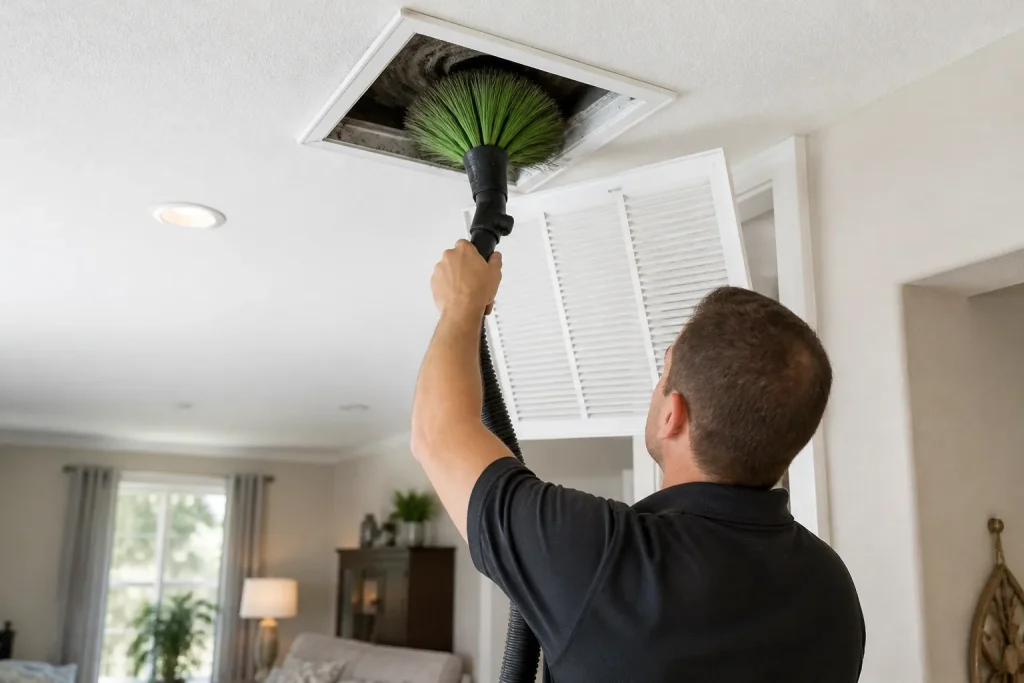
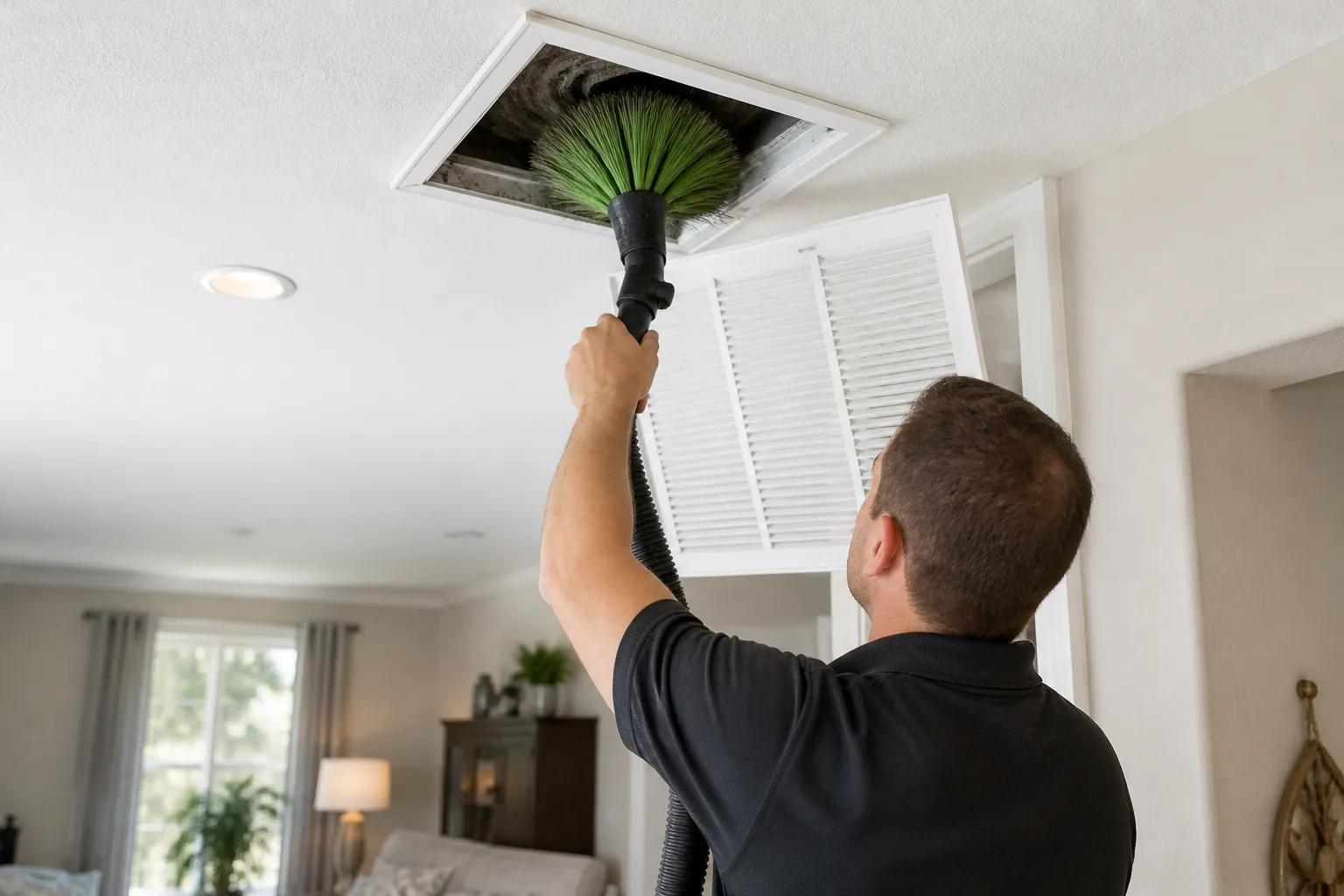
- Agitation and extraction. A Rotobrush or similar contact tool loosens material from duct walls while the Nikro unit holds the system under negative pressure.
- Filtration and verification. Air is filtered before exhaust, and the technician shows you before-and-after photos of your own ducts, not stock images.
- Reassembly and repair notes. Registers go back on, access points are sealed, and any leaks or disconnected runs found during cleaning get flagged. In our case, we can handle duct repair and sealing in the same visit rather than handing you off to another contractor.
A whole-system cleaning in a typical South Hill home usually runs a few hours depending on the number of runs and how much buildup is present. The estimate is set per job before work starts, not per vent, so the number you agree to is the number you pay.
When Nikro Equipment Is Most Critical
Some duct conditions demand high-suction negative-pressure equipment because contact vacuuming alone can’t safely remove the contamination. If your system falls into any of these categories, the equipment question stops being academic.
- Mold growth in ductwork: mold spores become airborne easily, and a low-suction method can spread them through the house. Negative pressure captures them at the source.
- Post-renovation cleanup: drywall dust and construction debris settle deep in duct runs and are heavy enough to resist ordinary vacuuming.
- Heavily contaminated systems: homes where the ducts haven’t been cleaned in many years, or where pest activity or water intrusion has occurred, need the higher suction level to move adhered material.
- Homes with allergy or asthma sufferers: when the goal is reducing airborne irritants, the difference between a partial clean and a full extraction matters more than the price.
For these cases, we also offer sanitizing through Honeywell and Aprilaire product lines, which addresses what remains after extraction. Cleaning removes the material; sanitizing treats the surfaces. They’re separate steps, and a company that offers only one of them is doing half the job.
How to Verify a Company Is Actually Using the Equipment They Claim
Ask to see the machine on job day and note whether it looks like commercial equipment or a shop vac with a hose attachment. That sounds simple, but it’s the single most useful check a South Hill homeowner can make.
Here’s what to look for and what to ask:
- Ask what equipment will be used before booking. A company that answers vaguely or names only “professional equipment” without a brand is either using consumer gear or doesn’t know their own setup.
- Look for negative-pressure containment. If nothing is sealed and no machine is connected to pull air out of the system, the job is contact vacuuming only.
- Ask about filtration on the exhaust. HEPA filtration on the machine output is what separates a clean job from a dust cloud in your hallway.
- Request before-and-after photos of your own ducts. Not stock photos, not a brochure. Real images from your system after the job.
- Ask whether they can repair and seal damage found during cleaning. A specialist who handles both cleaning and repair is less likely to stop at surface-level work.
We run Rotobrush and Nikro systems together because the two methods complement each other: Rotobrush agitates, Nikro extracts. Asking about that pairing is a fair litmus test when you’re comparing quotes in South Hill.
When to Call a Pro
If you can see visible dust puffing from a supply register when the system kicks on, smell a musty odor when the heat or AC runs, notice a buildup of dust returning quickly after cleaning, or you’ve just finished a renovation, it’s time for a professional assessment. Ductwork that’s disconnected or leaking also belongs on that list, because a leak behind a wall lets attic or crawlspace air into the system. The local pro is licensed and insured as their state requires, and a free estimate costs you nothing but a phone call.
Related services in South Hill: air duct cleaning, dryer vent cleaning, HVAC cleaning.
The Bottom Line
Nikro negative-pressure equipment matters because suction and filtration determine what actually leaves your ducts. A shop vac can’t match the static pressure, and contact vacuuming alone can redistribute what it loosens. If you’re comparing quotes in South Hill, ask about the equipment, ask about containment, and ask to see before-and-after photos of your own system. The right answers are specific and the wrong ones are vague.
If you’re in South Hill and need help, South Hill Air Duct Cleaning Pros offers free estimates. Call (833) 772-9858. We answer 24/7. Fast dispatch from 7am to 7pm, Sunday through Friday.
Frequently Asked Questions
It depends on the size and condition of your system, and it’s priced per job by a written estimate, not per vent. Call (833) 772-9858 for an exact quote. Estimates are free.
Yes, by a wide margin. A Nikro unit generates 10 to 12 times the suction of a shop vac and filters its exhaust, so it removes debris rather than moving it around.
Yes, that’s one of the cases where it matters most. Negative pressure captures mold spores at the source instead of dispersing them, and we can sanitize the system afterward using Honeywell and Aprilaire products.
Most homes benefit from cleaning every few years, sooner if you’ve had renovations, water intrusion, pets, or allergy concerns. Call (833) 772-9858 to talk through your situation and get a free estimate.
Written by the team at South Hill Air Duct Cleaning Pros.
Need Air Duct Cleaning Help?
Call South Hill Air Duct Cleaning Pros - the local pro we connect you with is licensed and insured, with free written estimates in South Hill.
(833) 772-9858