
Emergency Air Duct Cleaning Near Me: What South Hill Homeowners Should Do First
If you’ve just found rodent droppings in a vent register and you switch the HVAC on to check whether other vents smell the same, you’ve just pushed contaminated air through every room in the house. That single reflex causes more damage than the discovery itself. Most duct emergencies in South Hill have a first-hour window where what you do matters far more than how fast anyone arrives. This guide walks through that window, step by step, for each type of contamination we get called about.
If you’d rather not sort through it alone, call (833) 772-9858. We answer 24/7, with fast dispatch from 7am to 7pm.
Key Takeaways
- Shut the HVAC off before you investigate anything. Airflow is what turns a localized problem into a whole-house one.
- Different emergencies need different first moves: smoke residue, rodent evidence, sewage, and flood water each call for their own sequence.
- Temporarily sealing registers slows circulation while you wait for a scheduled visit.
- Telling the dispatcher the contamination type up front determines what equipment arrives.
- Not every situation is a true emergency. Many can be safely booked within 24 to 48 hours.
What Should You Do First When You Find Contamination in Your Ducts?
Turn the system off before anything else. That’s the first action for every contamination type we deal with in South Hill, and it’s the one homeowners skip most often. A running air handler pulls air from the return, pushes it through the supply trunk and out every register in the house. Whatever is sitting in one section of ductwork gets distributed to rooms that were clean five minutes ago.
After the system is off, work through this sequence:
- Stop the airflow. Switch the thermostat to off, not just fan-auto. If you’re unsure which setting kills the blower, flip the furnace disconnect or the breaker labeled for the air handler.
- Contain the source room. Close the door to the room where you found the problem and tape a towel along the gap under it if odors are strong.
- Protect yourself before inspecting. A mask and gloves aren’t overkill. Rodent urine and droppings carry real risk when disturbed and airborne.
- Photograph what you see. Pictures of the register, the staining pattern, the droppings, or the waterline help the cleaning company plan before they load equipment.
- Don’t run the system “just to check.” If you need to confirm which vents are affected, inspect them by hand and nose with the blower off.
That list is the difference between containing a problem and spreading it. We’ve seen a single contaminated return register turn into a whole-house cleaning because someone wanted to test the smell.
Which Emergency Needs Which First Move in South Hill?
Each contamination type has its own correct first action, and getting the order wrong makes the job harder. Here’s how the four common situations break down for South Hill homes.
Smoke or fire event
Shut the HVAC off immediately and leave it off. Smoke residue is sticky and acidic. Running the system pulls soot particles into the blower compartment, the evaporator coil, and every branch line. If the fire department has already cleared the house, keep the system off until the ductwork and the air handler are assessed. Smoke odor that returns days later usually means residue lodged in the ducts and coil, not the furniture.
Rodent infestation discovery
Shut the system off and do not vacuum with a household vacuum. Standard vacuums exhaust fine particles back into the room. Rodent activity in ducts means droppings, nesting material, and urine residue, and those need HEPA-level capture with negative air containment, not a shop vac. Seal the register you found and stop there.
Sewage backup near ductwork
Shut the system off and keep the area ventilated. Sewage carries bacteria that aerosolize easily. If the backup reached a crawl space or a floor near a return duct, treat the ductwork as contaminated until it’s assessed. Don’t run fans to dry the area if a return register is nearby; a box fan can push contaminated air into the system.
Water in the crawl space or post-flood
Shut the HVAC off until the standing water is removed and the space is drying. Damp ductwork, especially flex duct with insulation, holds moisture and becomes a growth surface fast. Running the system over wet ducts spreads spores. Get the water out first, then have the ducts evaluated.
In every one of these cases, the first move is the same: stop the airflow. Everything after that depends on the type of contamination.
When Should You Shut Off the HVAC Immediately vs. Run It Briefly?
Shut it off immediately in almost every case. The narrow exception is when you genuinely cannot locate the source and a short, controlled run helps you identify which registers are affected. Even then, run it for seconds, not minutes, and only if no one in the household has asthma, allergies, or a compromised immune system.
Reasons to keep the system off, without exception:
- Visible rodent droppings, nesting material, or urine staining anywhere in a register or return
- Any smoke or soot residue from a fire event
- Sewage contact with ductwork or a nearby return
- Standing water or visible moisture in the crawl space, duct insulation, or air handler
- Strong, unexplained musty or chemical odor coming from registers
- Anyone in the home with respiratory conditions, young children, or pets
The instinct to “just run it and see” is understandable. In our experience, it’s also the most common way a contained problem in South Hill becomes a full-system cleaning. A blower moves a lot of air quickly, and whatever is in the ducts goes everywhere that air goes.
How Do You Temporarily Seal Registers While You Wait for a Technician?
You can slow down contaminant circulation with materials you probably already have. The goal isn’t a perfect seal. It’s reducing air exchange between the contaminated section and the rest of the house until the system is properly cleaned and the source is dealt with.
- Use painter’s tape or blue masking tape around the register grille. It releases cleanly from most finishes and won’t leave adhesive residue on painted trim.
- Lay plastic sheeting over the register and tape the edges if the grille is large or the odor is strong. A cut-open trash bag works fine.
- Seal the return register too, not just the supply vents. The return is what pulls air back to the air handler, and in a contaminated system it’s often the dirtier side.
- Keep the HVAC off while registers are sealed. A sealed supply with the blower running builds pressure and can force air out through gaps in the duct joints.
- Don’t seal off a room you need to use. If a bedroom has the affected register, sealing it is fine as long as the door stays closed and the HVAC stays off.
Leave the tape in place until the technician arrives. It’s a stopgap, not a fix, but it buys you time without spreading the problem through the rest of a South Hill home.
What Is a Real Duct Emergency vs. What Can Wait 24 to 48 Hours?
A real emergency involves an active contamination source or an immediate health exposure. Everything else can be safely scheduled within a day or two, with the system off and registers sealed in the meantime.
Genuine emergencies:
- Active rodent infestation with droppings confirmed inside ducts
- Sewage or floodwater contact with ductwork or the air handler
- Post-fire soot and smoke residue in the system
- Visible mold growth inside a register or on duct interior surfaces
Can wait 24 to 48 hours with the system off:
- Dust buildup noticed during a renovation or after moving in
- A musty smell that isn’t tied to water intrusion
- Visible dust streaks around supply registers
- Ductwork that hasn’t been cleaned in years, with no active contamination
- Suspected leaks or disconnected joints in the duct run
For the second list, the honest answer is that you don’t need an emergency visit. You need a scheduled one. If you’ve spotted damaged or disconnected ductwork while checking things over, our air duct cleaning visit can include repair and sealing in the same appointment, which saves a second contractor trip. If the smell is coming from the whole system rather than one register, HVAC cleaning addresses the coil, blower, and cabinet where the odor usually starts. And if the dryer has been running hot or slow, our dryer vent cleaning is a separate service worth scheduling while you’re at it.
What Should You Tell the Cleaning Company When You Call?
Tell them the contamination type first, before the address. The type of contamination determines which equipment shows up, and equipment determines whether the job gets done right the first time.
Have these details ready:
- What you found: droppings, soot, water staining, visible mold, sewage contact, or just odor
- How many registers are affected and whether the return is involved
- Whether the system has been running since you found the problem
- Whether there’s been a fire, flood, or pest issue in the past few months
- Whether anyone in the home has respiratory conditions
- Whether the registers are sealed and with what
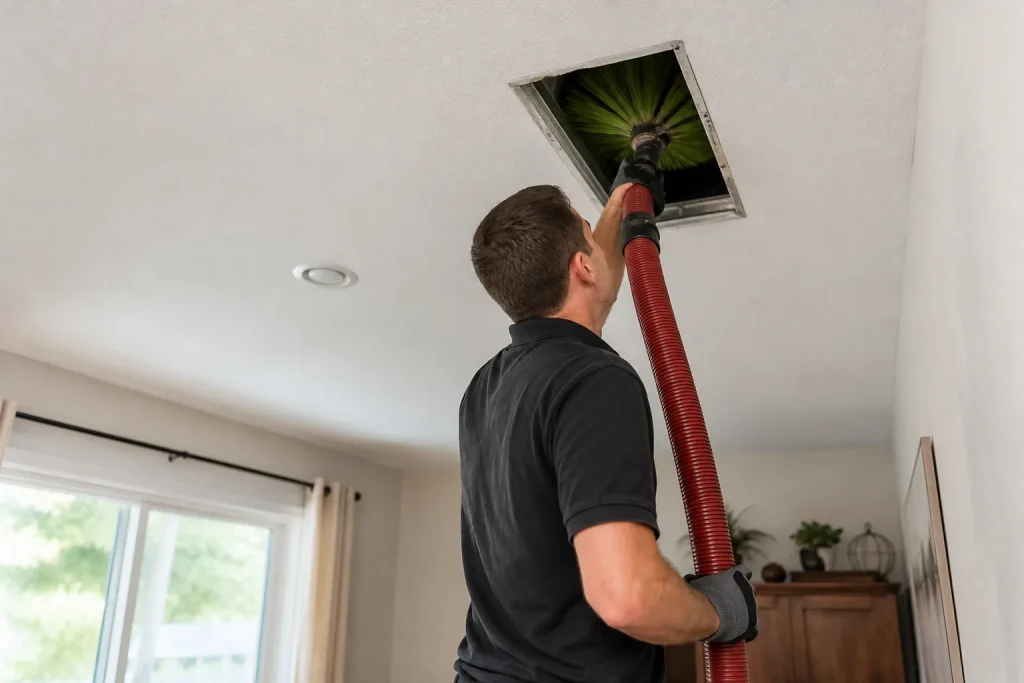
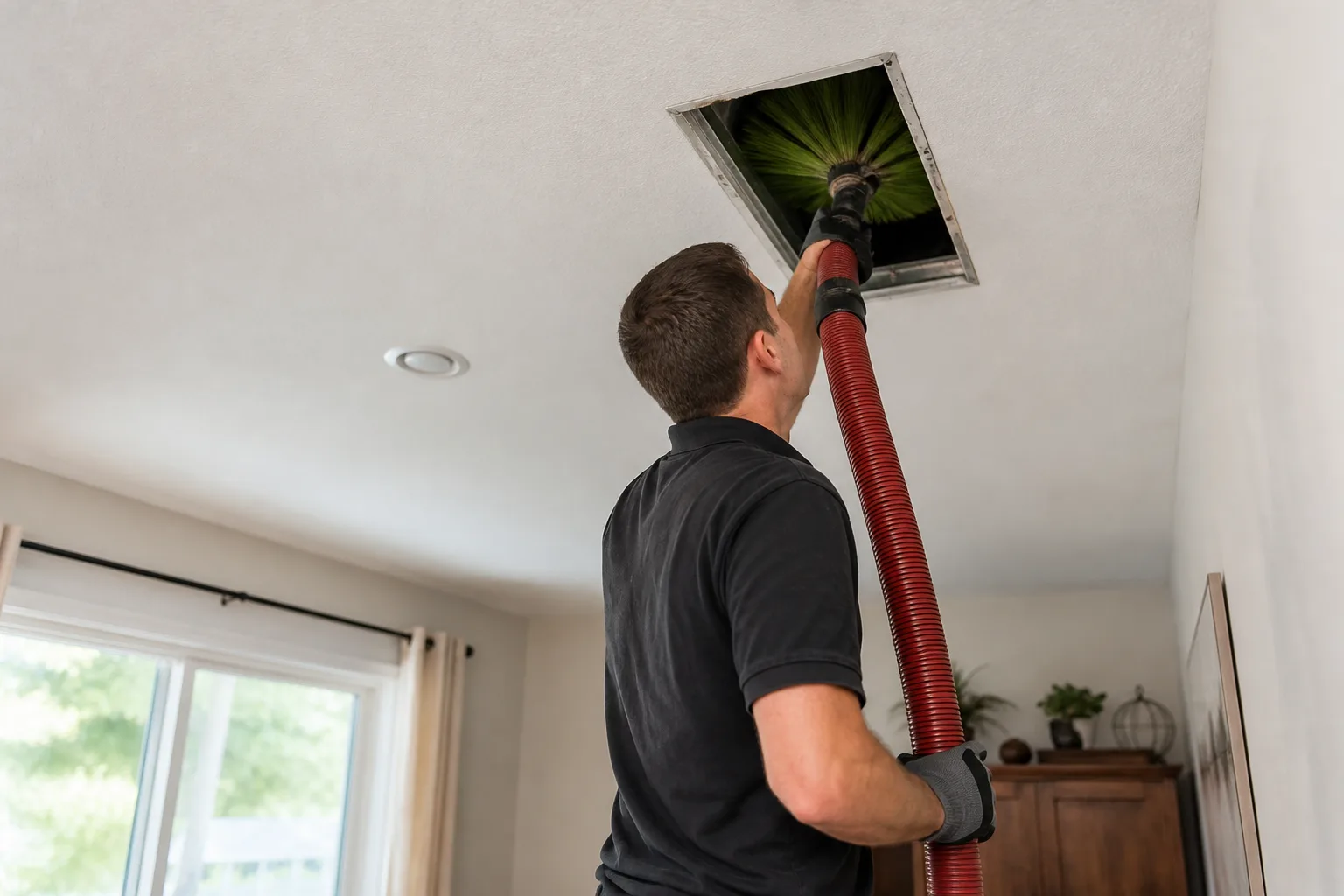
That information shapes the job. Rodent or sewage contamination calls for negative air containment and HEPA-level filtration to capture what gets dislodged. A standard dust and debris job is handled differently. We use Abatement Technologies negative-air equipment during contamination jobs so particles are contained on site instead of recirculating through the house, and dual Rotobrush and Nikro extraction systems so debris actually leaves the system rather than getting stirred up. For long-term air quality after a contamination event, Honeywell and Aprilaire filtration products handle the ongoing side of the job.
When to Call a Pro
Call a professional the moment you’ve found active contamination in South Hill, even if you’ve already sealed the registers and shut the system off. DIY duct cleaning with consumer equipment doesn’t capture fine particles, and in contamination cases it can make the exposure worse. Our technicians have up to 14 years of experience and use professional-grade equipment built for this work, not shop vacuums.
For reference on what to expect: we set one price per system based on the written estimate, agreed before work starts. You’ll see before-and-after photos of your own ducts, not stock images. The local pro is licensed and insured as their state requires. The estimate is free.
Related Services in South Hill
If your situation turns out to be something other than an active contamination, we cover the full duct system: cleaning, sanitizing, repair, and sealing. You can read more about how we work at South Hill Air Duct Cleaning Pros, or call and describe what you’re seeing. Estimates are free.
What happens when you call
- 1
A real person answersNo phone trees – you reach a local pro.
- 2
You get an upfront price rangeHonest numbers before anyone is dispatched.
- 3
A background-checked tech heads outLicensed & insured, dispatched right away.
- 4
You approve before work beginsNothing starts until you say go.
The Bottom Line
Turn the HVAC off first. That’s the whole game. Identify the type of contamination, seal the affected registers, protect yourself, and then call. Don’t test the system to see how bad it is. Don’t reach for the shop vac. The first hour is about containment, not troubleshooting.
Most duct emergencies in South Hill don’t become whole-house problems because a technician arrived fast. They become whole-house problems because the system ran for ten extra minutes while someone decided what to do. Get the airflow stopped, then get help.
If you’re in South Hill and need help, South Hill Air Duct Cleaning Pros offers free estimates. Call (833) 772-9858. We answer 24/7. Fast dispatch from 7am to 7pm, Sunday through Friday.
Frequently Asked Questions
There’s no emergency surcharge. The price is set per job by the written estimate, agreed before work starts, and the estimate is free. Cost depends on the number of systems, how much ductwork is involved, and the type of contamination.
No. Keep the system off. Running it aerosolizes rodent urine and droppings through every room in the house. Seal the register, put on a mask and gloves if you need to inspect further, and call for an assessment.
Ask for before-and-after photos of your own ducts. A legitimate cleaning job produces visible evidence, and we provide photos of the actual ductwork. If a company can’t show you what they cleaned, that tells you something.
Usually not, unless it’s tied to water intrusion or visible mold. Shut the system off, check for moisture around the air handler and duct runs, and schedule a visit within 24 to 48 hours. If there’s standing water or mold growth inside a register, treat it as urgent and call.
Written by the team at South Hill Air Duct Cleaning Pros.
Need Air Duct Cleaning Help?
Call South Hill Air Duct Cleaning Pros - the local pro we connect you with is licensed and insured, with free written estimates in South Hill.
(833) 772-9858