
Honeywell Air Duct Cleaning in South Hill: A Homeowner’s Guide
Here’s a sequence we see often in South Hill: a homeowner spends real money on a Honeywell F300 electronic air cleaner, has it wired in at the furnace, and then can’t figure out why the air still smells faintly of dust and crawl space. The hardware is working. The ductwork underneath it isn’t. A filter can only clean the air that reaches it, and if your ducts are leaking or loaded with debris, a lot of that air never gets the chance. This guide covers what Honeywell indoor air quality equipment actually needs from your ducts to do its job.
Why a Honeywell Filter Can’t Fix a Dirty Duct System
Honeywell’s media filters and electronic air cleaners are designed to sit in the return air stream and capture particles before they hit the blower and coil. That works when the air reaching them is contained inside a sealed duct. It doesn’t work when the system leaks. A cracked plenum or a failed joint downstream of the filter lets unfiltered air in at every gap, which means the hardware does its job in one spot while the ductwork undoes it everywhere else.
There’s a second problem, and it’s the one we run into more often in South Hill: a filter is a load on the system, and a dirty system makes that load worse. Debris on the return side reduces airflow, which drops static pressure, which makes the blower work harder to move the same volume of air. The filter catches what it catches, but the dust that settles on duct walls never makes it to the filter at all. Over time that layer on the duct interior becomes its own source of particles, releasing them every time the system cycles on.
That’s why we treat Honeywell equipment as the last step, not the first. If you want a filter or air cleaner to change what you breathe in a South Hill home, the duct system has to be clean and sealed before the device goes in.
The Sequence That Actually Works: Clean, Seal, Then Install
The order matters more than the equipment brand. Here’s the sequence we recommend for any South Hill homeowner considering a Honeywell IAQ upgrade:
- Inspect the duct system first. Look for disconnected joints, torn flex, failing tape at plenum connections, and evidence of rodent or moisture intrusion. A device installed on a compromised system will underperform from day one.
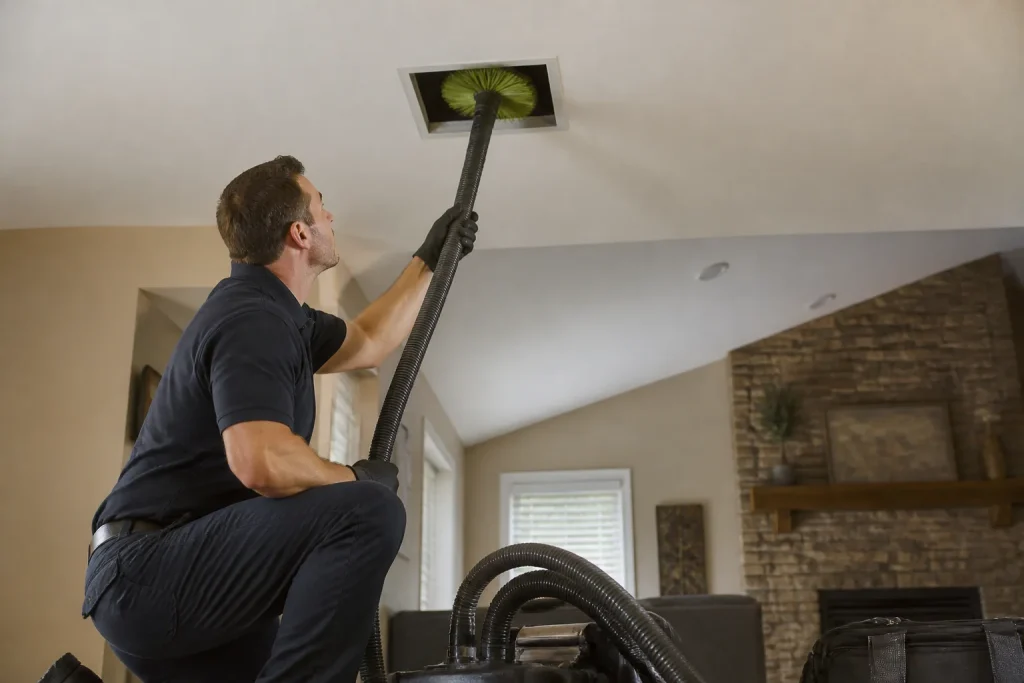
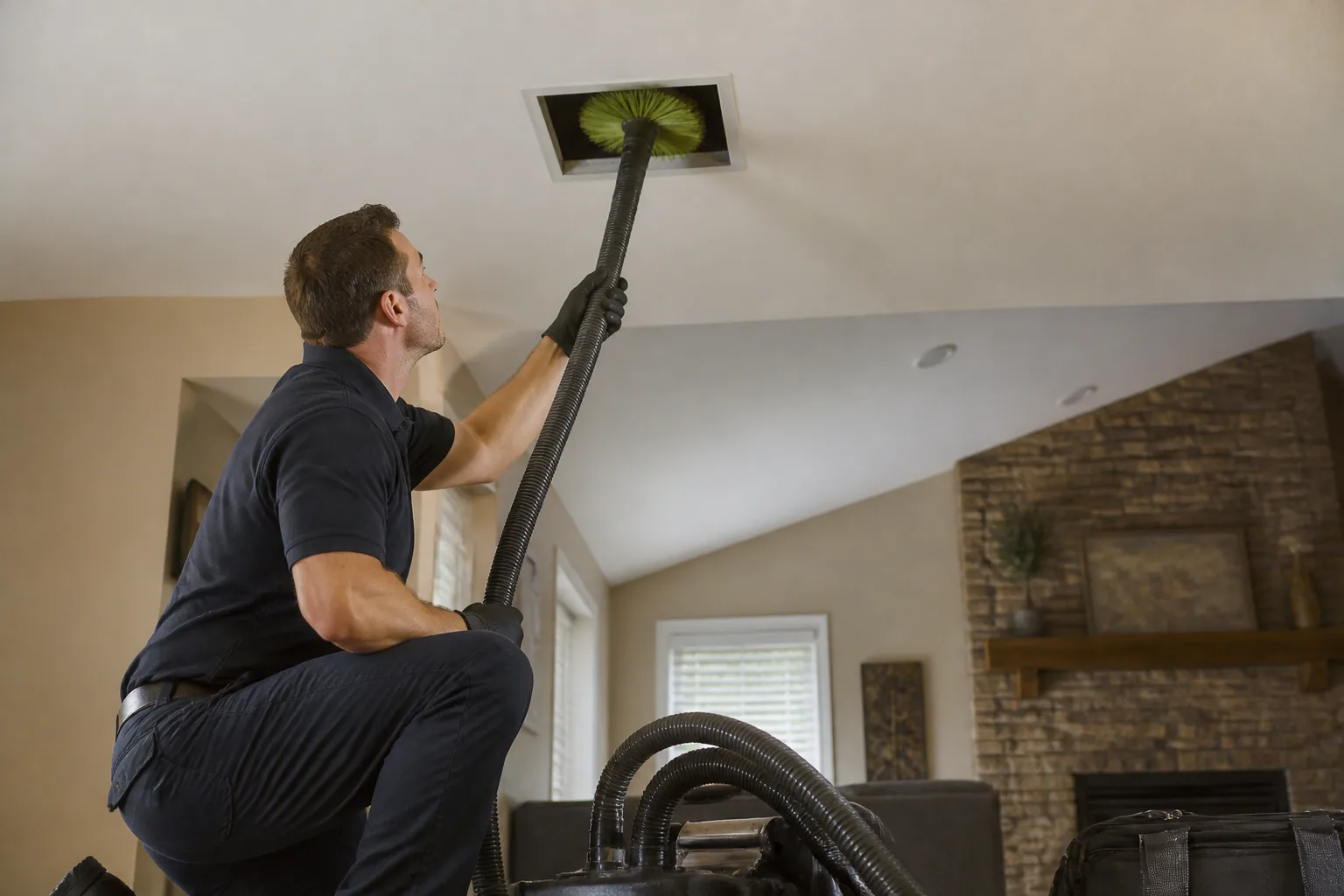
- Clean the full duct system. Source removal, not just a surface pass at the registers. Contact vacuum and agitation through the whole run, with the contaminants contained during the work.
- Seal what’s leaking. Plenum connections, boot-to-floor gaps, and any joint that’s pulling in attic or crawl space air. Sealing is what makes the filter’s job possible.
- Verify airflow. Check static pressure before you add a restrictive filter. A system already near its limit won’t tolerate a high-MERV media filter without a change.
- Install the Honeywell device. Now the air cleaner or media cabinet is working on a system it can actually improve.
Skipping step two is the most common mistake. It’s also the one that leads to the “I bought the filter and nothing changed” phone call.
Honeywell UV Systems: What They Actually Target
Honeywell UV germicidal lamps get marketed hard, and the marketing tends to blur three different jobs into one. It helps to separate them:
- Coil mold. A UV lamp mounted at the evaporator coil shines directly on a wet, dark surface where biological growth likes to start. This is the most defensible use of UV in a residential system, because the lamp is aimed at a specific surface and runs continuously while the system is wet.
- Airborne pathogens. UV in a moving air stream has limited contact time. A lamp in the return plenum passes air by in a fraction of a second, which is not the same as a purpose-built air sterilization chamber. Treat claims about airborne pathogen reduction with appropriate skepticism.
- Duct wall contamination. UV light doesn’t penetrate dust. A lamp shining on a duct wall covered in settled debris is sterilizing the top layer of the debris and nothing beneath it. The contamination has to be physically removed, not irradiated.
In our experience, a UV system paired with air duct cleaning and a genuine source-removal job performs very differently from a UV system dropped into a system nobody has touched. The lamp is a maintenance tool, not a substitute for cleaning.
Matching Filter MERV Rating to Your Duct System’s Capacity
A Honeywell MERV 16 filter is a genuinely effective filter. It’s also a significant restriction, and not every South Hill home has a duct system sized to carry it. MERV 13 and above starts to matter for airflow in systems designed around a thinner, lower-MERV filter. The blower pulls against the added resistance, static pressure rises, and the result is reduced airflow at the far registers, a colder coil in summer (which invites condensation and mold), and a blower motor working harder than it should.
This is where a technician’s measurement matters more than a product spec sheet. Before recommending a MERV rating, we check:
- Return duct size and the number of return paths feeding the air handler
- Existing filter cabinet dimensions and whether the filter will sit flush without bypass gaps
- Static pressure across the system with a clean filter in place
- Whether the return is pulling from a single central grille or multiple rooms
A smaller or older South Hill home with one return and a tight filter slot often performs better on MERV 11 or 13 than on a MERV 16 media cabinet it wasn’t designed for. A larger home with a proper filter cabinet can often carry the higher rating without trouble. The right answer comes from measurement, not from the box.
What a Technician Should Check Before Any Honeywell IAQ Upgrade
If you’re considering a Honeywell media filter, electronic air cleaner, or UV system, here’s what a qualified technician should walk through before quoting the installation. It’s a fair checklist for any South Hill homeowner to hold a contractor to:
- Duct leakage test. Pressurize the duct system and check joints at the plenum, the boots, and the trunk lines. Leaks upstream of the filter are unfiltered air entering the home.
- Interior duct inspection. Camera or visual inspection at multiple points, looking for debris depth, moisture, and biological growth.
- Return air sizing. Confirm the return can carry the design airflow the system needs with the proposed filter installed.
- Airflow measurement. Static pressure and, where feasible, a flow reading at the registers. This is the number a filter upgrade will change.
- Blower and coil condition. A dirty blower wheel or a fouled coil will sabotage a filter upgrade faster than anything else.
- Sealing opportunities. Any gap identified during the inspection that should be sealed before the new equipment goes in.
If the technician hands you a quote for the filter without touching any of these, ask why. A Honeywell device is an investment in air quality, and it deserves a system that can support it.
When It’s Time to Call a Pro
Some of this is homeowner-level work: changing the filter, checking that the return grille isn’t blocked, noticing a whistle or a gap at a boot. The rest isn’t. Duct cleaning that actually removes debris from the runs requires professional-grade extraction equipment, and sealing a plenum or a trunk line needs the right materials and a way to verify the work. We use Rotobrush and Nikro extraction systems and Abatement Technologies negative-air containment on every job, so the debris we dislodge gets captured instead of recirculating through your South Hill home. If inspection turns up real damage, our duct repair and sealing scope means it gets fixed in the same appointment rather than handed off to a second contractor. If you’re evaluating options for full-system HVAC cleaning before an IAQ upgrade, that’s exactly the job we do.
Related services in South Hill: if your dryer is taking two cycles to dry a load, that’s a separate system with its own fire risk, and we handle dryer vent cleaning as a standalone service.
The Bottom Line
Honeywell makes good indoor air quality equipment, but no filter, electronic air cleaner, or UV system can outrun a leaking, dirty duct system. The sequence that works in South Hill is clean first, seal second, install third. Skipping the first two steps is why so many homeowners upgrade their filtration and see no change in the air they’re breathing. When you’re ready to get the duct system sorted before the upgrade, South Hill Air Duct Cleaning Pros offers free estimates at South Hill Air Duct Cleaning Pros. Our technicians have up to 14 years of experience with professional-grade equipment. Call (833) 772-9858. We answer 24/7. Fast dispatch from 7am to 7pm, Sunday through Friday.
Frequently Asked Questions
It runs, but it doesn’t deliver the air quality you paid for. The cells capture particles that reach them, and a dirty or leaking duct system sends a lot of air past the filter through gaps and joints. Clean and seal the ducts first, then the air cleaner has filtered air to work with.
No. MERV 16 is a high-restriction filter and many residential duct systems aren’t sized to carry it. A smaller South Hill home with one return and a tight filter slot often does better on MERV 11 or 13. A technician should measure static pressure before recommending a rating.
They can help at the coil, where the lamp shines directly on a wet surface and runs continuously. They don’t remove settled debris on duct walls, and UV can’t penetrate dust to reach what’s beneath it. Contamination has to be physically removed by cleaning. The UV system is a maintenance tool on top of that.
There’s no fixed interval, but if you’re installing a Honeywell device and the ducts haven’t been professionally cleaned, clean them before the install. After that, inspection every few years, or sooner if you notice dust streaks at the registers, musty odors, or a recent renovation.
Written by the team at South Hill Air Duct Cleaning Pros.
Need Air Duct Cleaning Help?
Call South Hill Air Duct Cleaning Pros - the local pro we connect you with is licensed and insured, with free written estimates in South Hill.
(833) 772-9858