
Last updated November 25, 2026
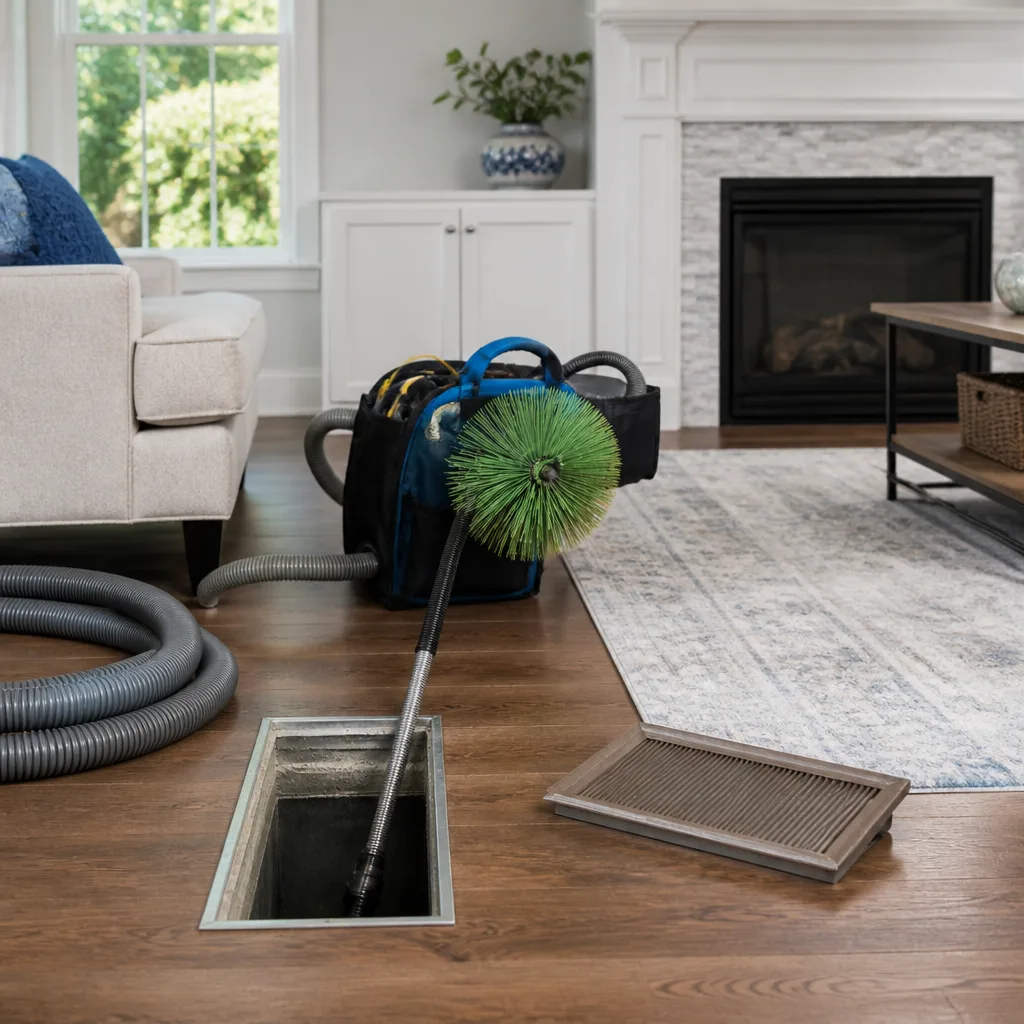 Whole-home duct cleaning
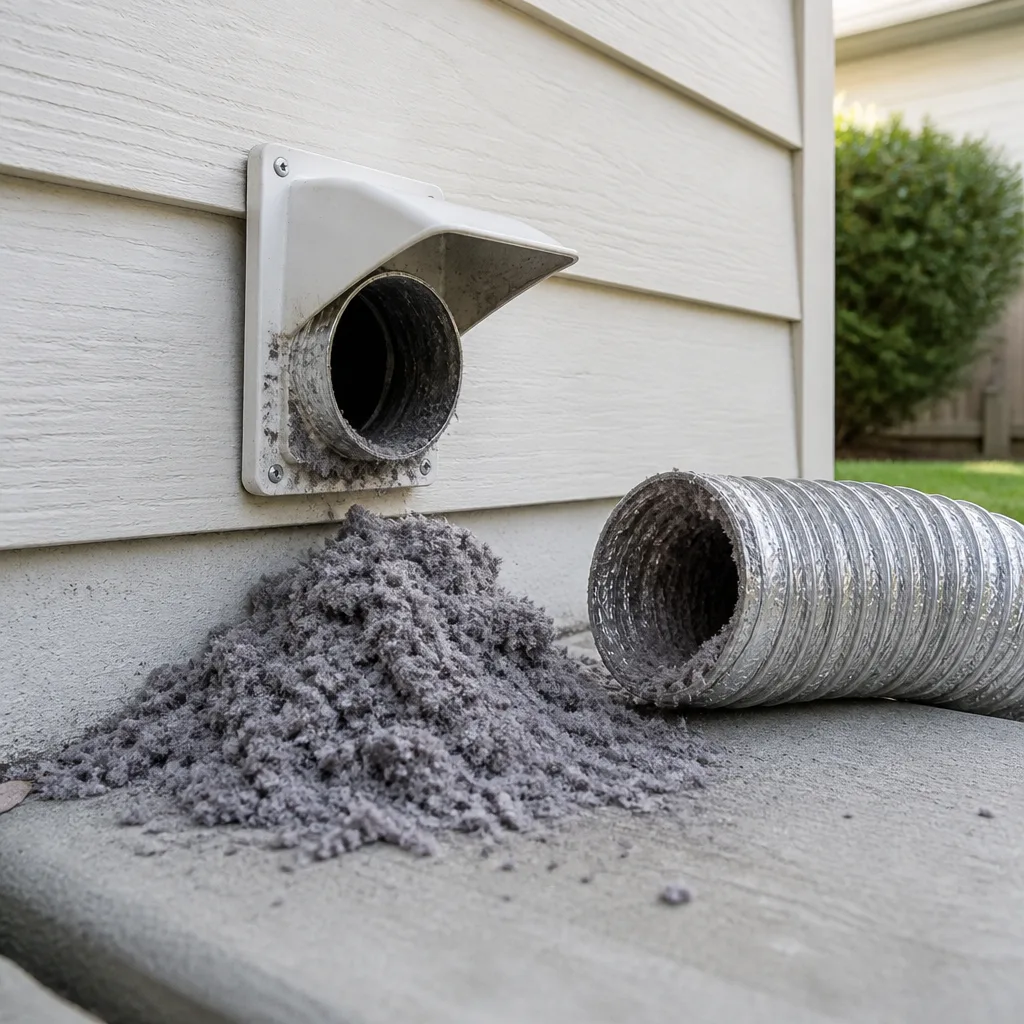 Dryer vent cleaning
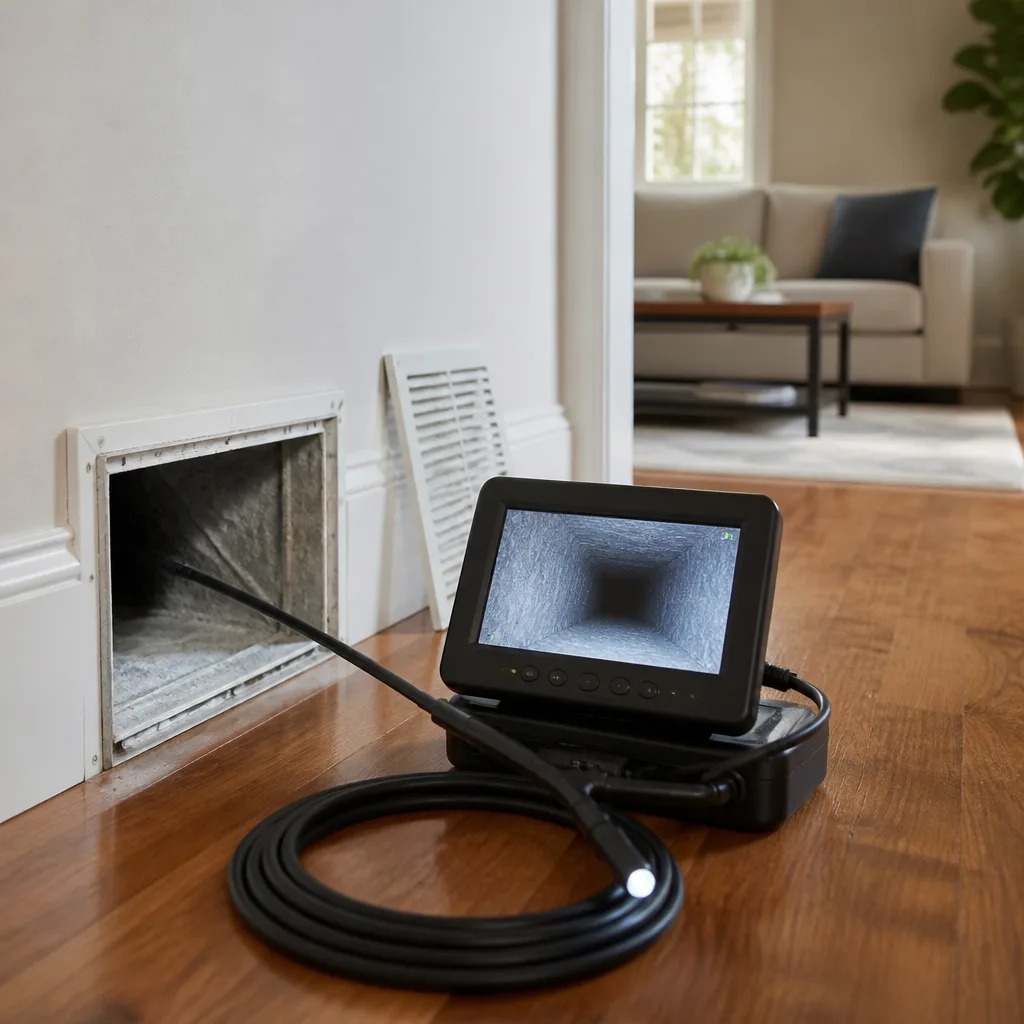 Camera inspection
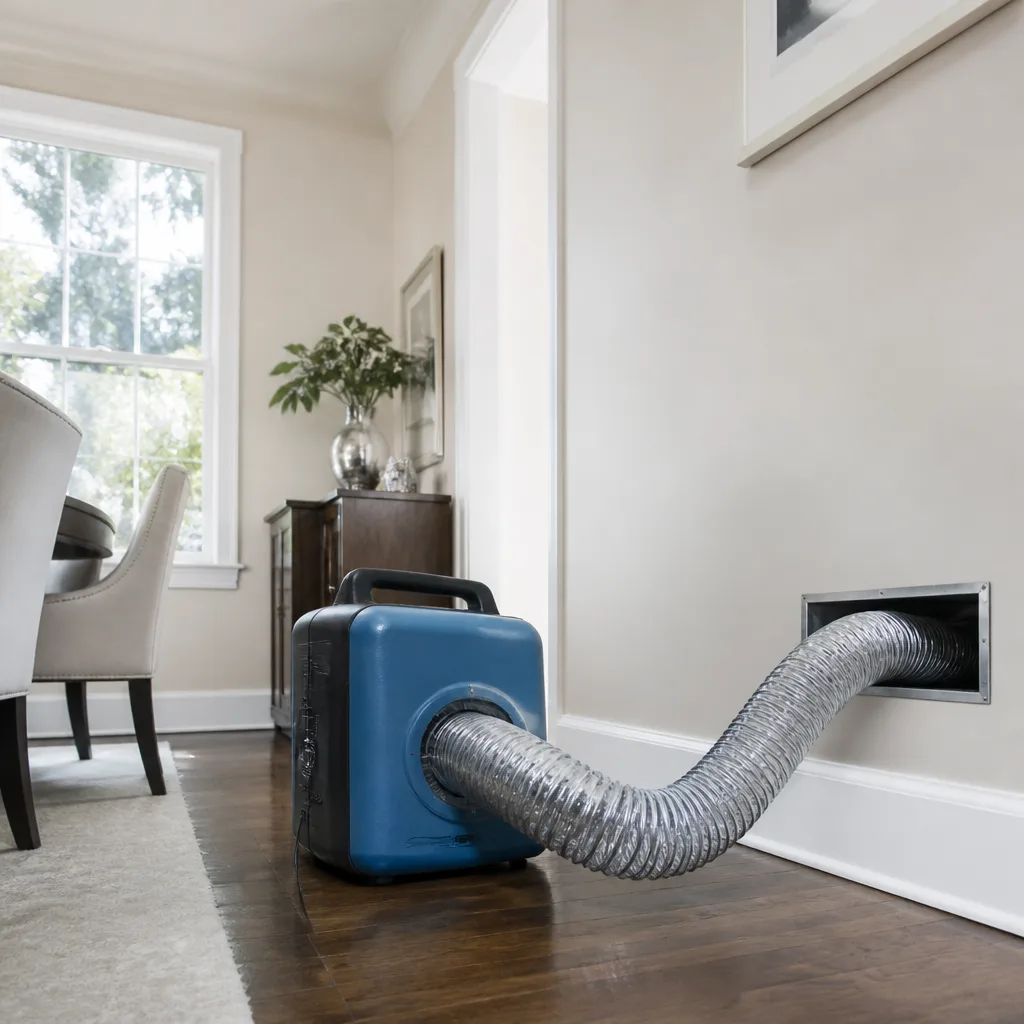 Sanitizing & deodorizing
Whole-system duct and dryer vent check with before-and-after photos - you see exactly what came out of your vents
That "$99 whole-house special" is a bait ad - the real number appears once they are in your hallway, or the "clean" is a shop-vac at the register. We photograph the inside of your ducts before and after instead.
Air Duct Cleaning Permits, Codes & Inspections in South Hill, WA: What You Need to Know
Here’s the part of the conversation most duct cleaning contractors skip: a standard clean doesn’t need a permit in Washington, but the second a technician seals a joint, replaces a run of flex duct, or applies an aerosol sealant, the work may cross into regulated mechanical territory. That boundary is invisible to most homeowners in South Hill, which is exactly why it gets crossed without anyone saying so. This guide draws the line clearly: what requires a permit and what doesn’t, which work needs a licensed HVAC contractor, how to verify credentials through Washington’s Labor & Industries in about two minutes, and why unpermitted mechanical work can follow a house all the way to closing. If you’re scheduling air duct cleaning and wondering whether the scope drifts, read this first.
Quick Answer
Routine air duct cleaning does not require a permit in Washington State. Duct repair, duct replacement, and aerosol duct sealing like Aeroseal are treated as mechanical work under the Washington State Mechanical Code, may require a permit through Pierce County, and should be performed by a licensed HVAC contractor whose work is subject to inspection. The dividing line is whether the work alters, adds to, or replaces part of the mechanical system, rather than cleaning what’s already there.
Styles & brands we work with
- Whole-home duct cleaning
- Dryer vent cleaning
- Camera inspection
- Sanitizing & deodorizing
Table of Contents
- Where the Cleaning and Repair Line Sits in Washington
- What the Washington State Mechanical Code Covers for Ducts
- When Pierce County Permits Are Triggered in South Hill
- Why Aeroseal Duct Sealing Requires a Licensed Contractor
- How to Check a Contractor’s License in Two Minutes
- What a Duct or Mechanical Inspection Actually Looks At
- Resale and Insurance Consequences of Unpermitted Work
- Common Mistakes to Avoid
Where the Cleaning and Repair Line Sits in Washington
Cleaning is a maintenance activity. Repair is construction. That’s the short version, and everything else in this guide flows from it.
When we run a professional-grade Rotobrush or Nikro extraction system through a home’s ductwork, we’re removing debris from a system that stays in its existing form. No components are added, altered, or replaced. That work doesn’t trigger a permit in Washington, and Pierce County doesn’t expect one for it. The moment the work changes the system itself, though, the picture shifts.
Here’s how the categories break down in practice:
- No permit typically required: source removal cleaning, sanitizing application, register and grille cleaning, dryer vent cleaning as a standalone service.
- Permit may be required: replacing a section of rigid or flex duct, adding a new run or register, reconfiguring a trunk line, replacing a section that’s failed due to pest damage or moisture rot.
- Licensed HVAC contractor required: any of the above, plus aerosol duct sealing with Aeroseal or a comparable product, and any work touching the air handler, furnace, or coil assembly.
The confusion usually arrives at the boundary case: a tech finds a crushed flex run under a South Hill crawlspace or a disconnected joint in an attic chase and offers to fix it. That’s a good find and a legitimate repair. Whether the repair requires a permit depends on scope, and whether the person doing it needs an HVAC license is a separate question with a clearer answer. We’ve seen this come up most often in the split-level and mid-century homes around South Hill where original ductwork has been patched at least once already.
The takeaway is simple: ask before the work starts. Any contractor who’s upfront about the boundary will tell you without being pressed. If they don’t, that’s your signal.
What the Washington State Mechanical Code Covers for Ducts
The Washington State Mechanical Code is the adopted model code governing installation, alteration, repair, replacement, and maintenance of mechanical systems, including ductwork. It’s enforced locally, which in South Hill means through Pierce County’s building department. For ducts specifically, the code addresses materials, sizing, support, sealing, clearances, and connection to the air distribution system.
The provisions that matter most to homeowners during a duct job:
- Materials and construction: duct material must meet recognized standards for the application – flex duct isn’t automatically interchangeable with rigid duct, and undersized flexible runs are a common shortcut.
- Sealing requirements: joints and seams must be sealed to design standards. Tape and mastic have to be applied correctly or the “repair” leaks as badly as the original failure.
- Support and sag: flex duct has to be supported at defined intervals and can’t sag, since sagging creates a trap for dust and moisture.
- Clearances: ductwork near heat sources and in garage separation assemblies has specific clearance requirements. This one matters in South Hill’s attached-garage homes.
- Termination and connection: ducts must be properly connected to boots, registers, and the air handler, with clamps or mechanical fasteners, not tape alone.
Two observations from our work. First, “duct repair” covers a wider range than most homeowners expect – a disconnected joint at a boot counts, and so does a re-built trunk. Second, the code governs both permitted and unpermitted work; a permit determines whether anyone inspects it. An unpermitted, code-noncompliant repair is still noncompliant, just undocumented.
If you suspect you’re dealing with a repair rather than a cleaning issue, our HVAC cleaning scope includes an inspection of the air handler connection points where this kind of failure usually shows up.
When Pierce County Permits Are Triggered in South Hill
Pierce County issues the mechanical permits that apply to residential duct work in South Hill, and the trigger is usually a change to the system rather than activity on it. Cleaning, sanitizing, and service call diagnostics generally don’t require one. Alteration, addition, and replacement often do.
The situations we see most often in South Hill homes:
- Replacing a duct run. A new section of flex or rigid duct connecting a register to a trunk is a mechanical alteration. Ask whether the contractor is pulling a permit before you approve the work.
- Adding a register or zone. If a homeowner wants a bedroom that never gets airflow to finally get some, that’s an addition to the distribution system. Permit territory.
- Rebuilding a failed trunk line. Common in older South Hill homes where a trunk has sagged, separated, or deteriorated.
- Replacing attic or crawlspace ductwork after pest or moisture damage. Rodent-contaminated flex often has to be removed and replaced, which is a mechanical change, not a clean.
- Aerosol duct sealing. Addressed separately below because the licensing layer stacks on top of the permit question.
One South Hill-specific wrinkle: our climate swings wet and cool for most of the year, and crawlspace and attic ductwork sees persistent moisture exposure. That accelerates deterioration, which accelerates the pace at which cleaning findings turn into repair recommendations. If you’ve got a mid-century split-level with original duct runs, the odds that a thorough cleaning surfaces a repair are higher than in newer construction. That doesn’t mean the cleaning is a setup for an upsell – it means the underlying ductwork has had more time to fail, and a thorough inspection is doing its job.
For anything in that numbered list, ask the contractor two direct questions: is a permit required, and who’s pulling it. If the answer is “no permit needed,” you’re entitled to ask why – and “we do this all the time” isn’t a reason.
Why Aeroseal Duct Sealing Requires a Licensed Contractor
Aerosol duct sealing is a mechanical alteration, not a cleaning enhancement, and Washington treats it as contractor-level HVAC work. If a South Hill homeowner is offered Aeroseal as an add-on to a duct cleaning, the person applying it should be a licensed HVAC contractor operating under that license. The documentation you should retain is specific.
Here’s what to keep on file after any duct sealing project:
- A written scope of work listing which duct sections were sealed, the method used, and the before-and-after leakage numbers if the contractor measured them.
- The contractor’s license number and business name as it appears on the estimate and invoice. Match it against the state record.
- The permit number if one was pulled, and the inspection result.
- Any manufacturer documentation from the sealant system, since some products carry a written performance warranty tied to the registered application.
- Before-and-after photos of the duct interior where accessible. Visual proof is the homeowner’s cleanest defense if a question comes up later.
We don’t perform Aeroseal, and we won’t pretend to. What we do is flag it when the leakage pattern suggests sealing is worth pricing out. That’s a referral, not a hand-off – the homeowner should always know which work is cleaning, which is sealing, and which contractor’s license sits behind each.
The other reason documentation matters: aerosol sealing warranties and homeowners insurance claims both hinge on being able to prove who did what, when, and under what license. A folder with the license number on the invoice is worth more than a verbal promise.
How to Check a Contractor’s License in Two Minutes
Every contractor doing work in Washington State that requires a license must be registered with the Department of Labor & Industries, and the license lookup is public and free. Verifying a duct work contractor takes about as long as reading this paragraph.
- Get the contractor’s full business name and license number from the written estimate, not from a truck or a business card. The estimate is what binds the job.
- Open the L&I contractor verification tool on the Department of Labor & Industries website and search by license number or business name.
- Confirm the status reads active and check the expiration date. A license that lapsed two months ago is not a license.
- Check the classification. General and specialty contractor registrations carry classification codes for the type of work. Duct work falls under HVAC-related classifications – a general contractor registered only for, say, painting is not covered for duct repair.
- Confirm the insurance and bond line items show current coverage on the same record. The state lists them right there with the license.
- Save a screenshot or printout. If a dispute comes up later, you’ll have a dated record of what the record said when you looked.
Two things we’ve noticed in this part of Pierce County. First, homeowners often confuse a business license (which every business has, including ours) with a contractor registration (which only licensed trades have). They’re different, and the second is what protects you on duct repair and sealing. Second, some cleaning companies will include “duct repair” in their service list without the underlying HVAC classification. That’s worth confirming before the work begins rather than after.
The bottom line: verify before you sign. It takes two minutes and it’s the difference between a repair you can prove was done properly and one you can’t.
What a Duct or Mechanical Inspection Actually Looks At
When a permit is pulled for duct work in South Hill, the Pierce County inspection is a mechanical inspection, and it focuses on whether the system is installed to code. It is not a duct cleanliness inspection, and those are two different things worth keeping separate in your head.
A typical inspection checklist for permitted duct work:
- Materials match the approved plans and meet code standards
- Duct sizing and layout follow the permitted design
- Supports are installed at required intervals and no sag is present
- Joints, seams, and connections are sealed to standard
- Clearances to combustibles and to separation assemblies are maintained
- System is connected to the air handler and all registers are functional
What it doesn’t look at: dust accumulation in the duct interior, mold activity inside the lining, or debris left over from a prior cleaning. Those questions are answered by an inspection using proper equipment – a camera pushed through the duct, pressure and airflow measurement, and a look at the air handler and coil faces.
Our rotation includes Abatement Technologies negative-air equipment during cleaning, which contains the contaminants we dislodge rather than recirculating them into the living space. That’s a process choice, not an inspection, but it’s part of what we show on the invoice and in before-and-after photos so the homeowner has a record of the job.
For a South Hill homeowner, the practical rule is: if the work required a permit, get the inspection result in writing and keep it with the permit number. If the work was cleaning only, the documentation you want is the scope of work, before-and-after photos, and a line-item estimate that matches the invoice.
Resale and Insurance Consequences of Unpermitted Work
Unpermitted mechanical work can surface at two painful moments: at resale, and at insurance claim. Both are entirely preventable with a folder of documents.
The resale scenario usually plays out like this. A buyer’s home inspector finds ductwork that shows obvious signs of replacement or repair, then checks the public permit record and finds nothing. The buyer’s agent raises the question in the inspection response. Now the seller has to prove the work was done properly, or pay to have it re-opened, inspected, and possibly re-done under permit. That cost lands on the seller, and the negotiation leverage is gone.
The insurance scenario is less common but sharper. If a duct-related failure is suspected – a disconnected run pouring heated air into a crawlspace, or a sealing failure that leads to moisture – the insurer is entitled to ask who did the work and under what license. A contractor license number on the invoice is what answers that question. Without it, the claim can be contested on the grounds that the work was never compliant in the first place.
For property managers and owners of rental homes in South Hill, the same records matter any time a unit turns over. Duct cleaning receipts, permit numbers, and inspection results are the fastest way to close a turnover question and the fastest way to answer a tenant’s air quality question.
What to hold on file after any duct job:
- Signed estimate with the contractor’s business name and license number
- Invoice with a line-item scope matching the estimate
- Permit number and inspection result, if a permit was pulled
- Before-and-after photos of the duct interior
- Any manufacturer documentation for sealing products, filters, or UV components installed
None of that is exotic. It’s just what a professional relationship should produce anyway. Our team is happy to be asked for it on every job in South Hill Air Duct Cleaning Pros work, and the same should go for any contractor working in your home.
Common Mistakes to Avoid
- Treating a duct repair as a cleaning line item. A tech who offers to re-run a crushed flex duct without discussing permits or licensing is skipping the part that matters. Ask which classification of contractor is doing the repair.
- Confusing a business license with a contractor registration. Every business has a license. Only licensed trades have a contractor registration. The one you want on duct repair is the second, checked on Labor & Industries’ site.
- Assuming a cleaning company that offers “duct sealing” is licensed for it. Aerosol sealing and mechanical sealing are contractor-level HVAC work in Washington. Confirm the classification before signing the estimate.
- Failing to keep the permit number. If the work required a permit and the permit was pulled, the number itself is the record. Write it on the estimate and keep it with the closing paperwork.
- Letting “we do this all the time” replace the license check. Volume of work isn’t a substitute for a contractor registration, and the two-minute check on L&I is what actually protects you.
- Running repairs on a system that hasn’t been cleaned first. If ductwork contains debris and moisture, patching a joint without addressing the underlying cause usually fails again. Cleaning and inspection come first, then repair scope.
- Ignoring dryer vent work because it’s not part of the duct permit question. Dryer vents operate under different rules and different code, but they still need to be cleaned on their own schedule – that’s dryer vent cleaning, and it’s worth doing separately from HVAC duct work.
See the difference
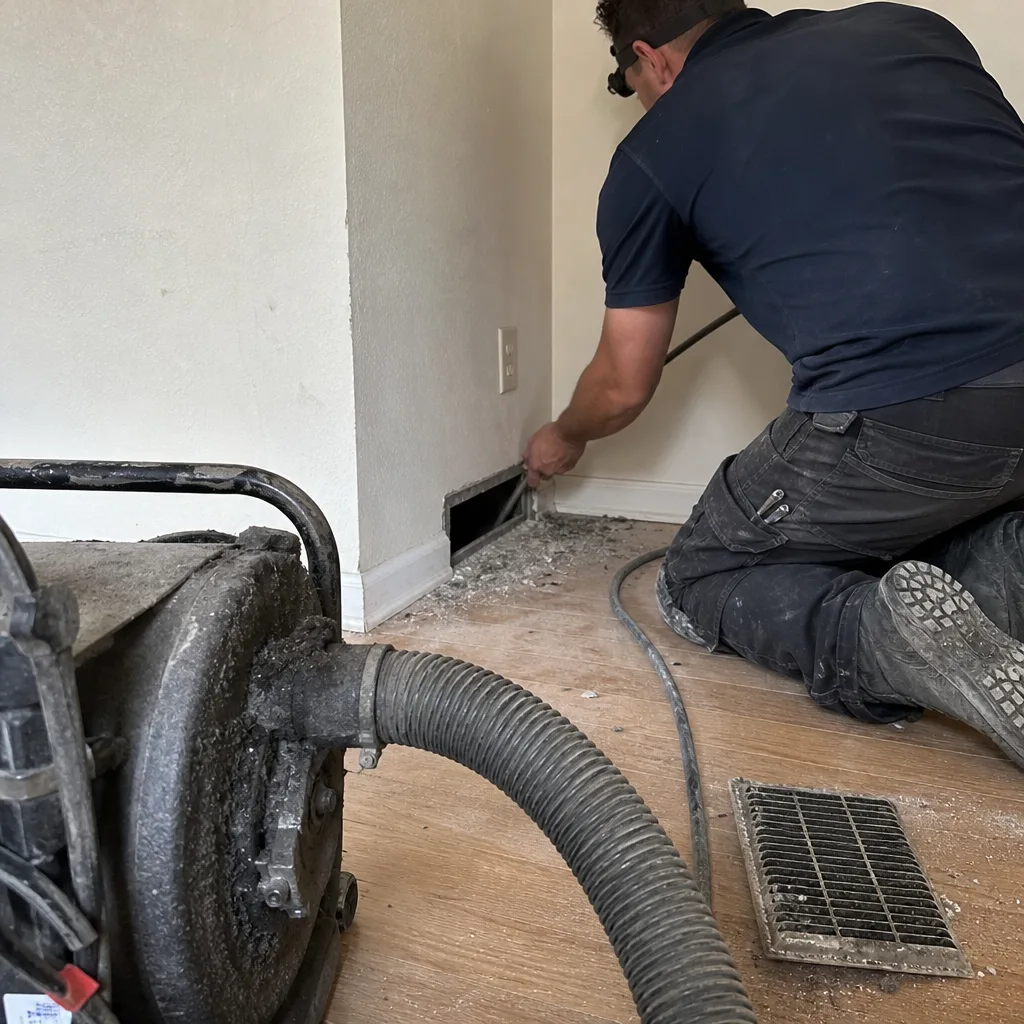 Before
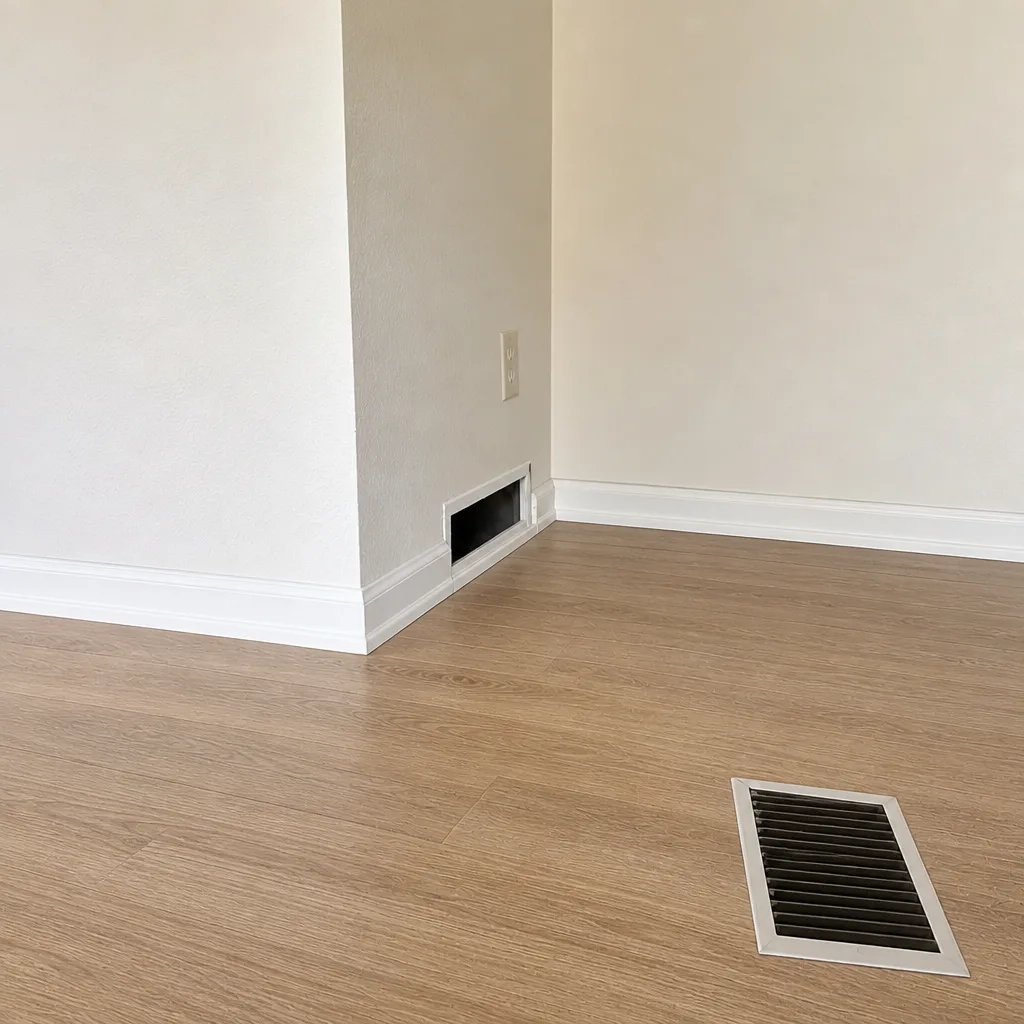 After
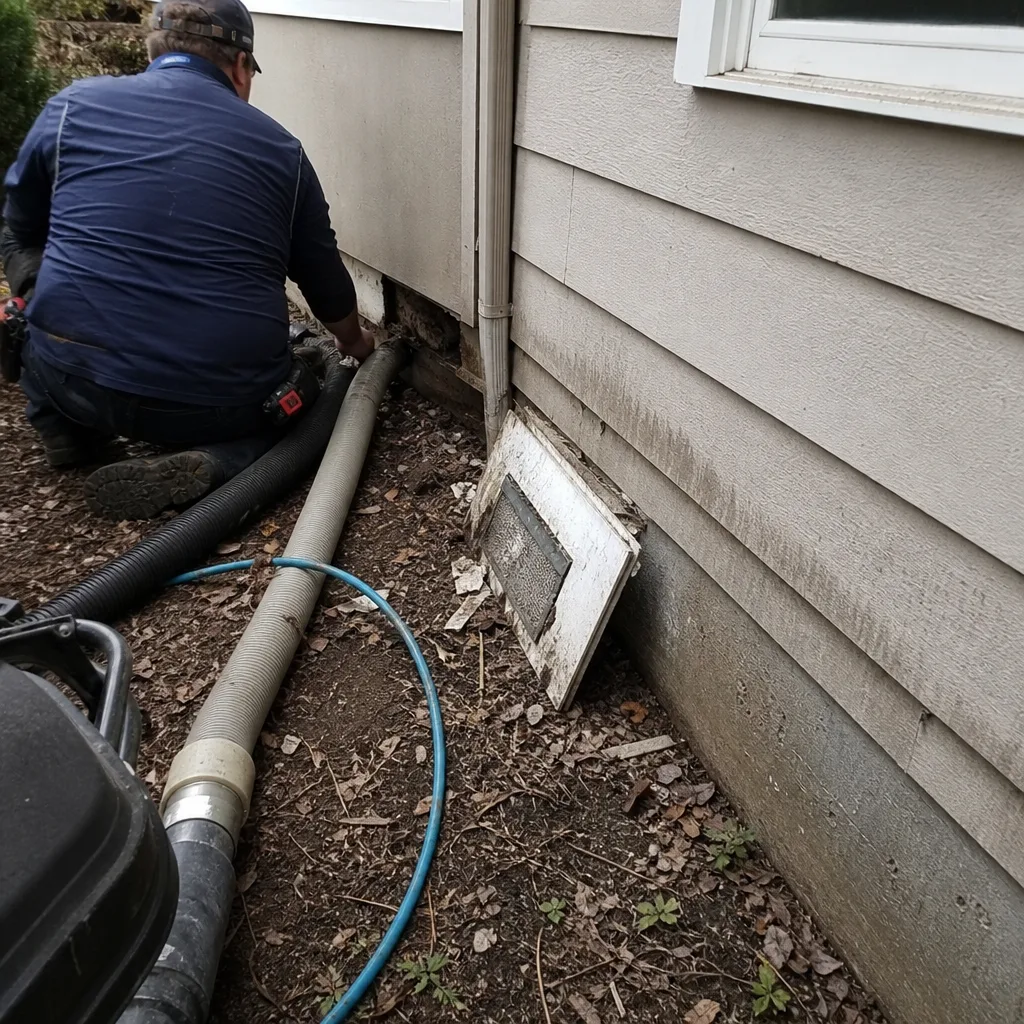 Before
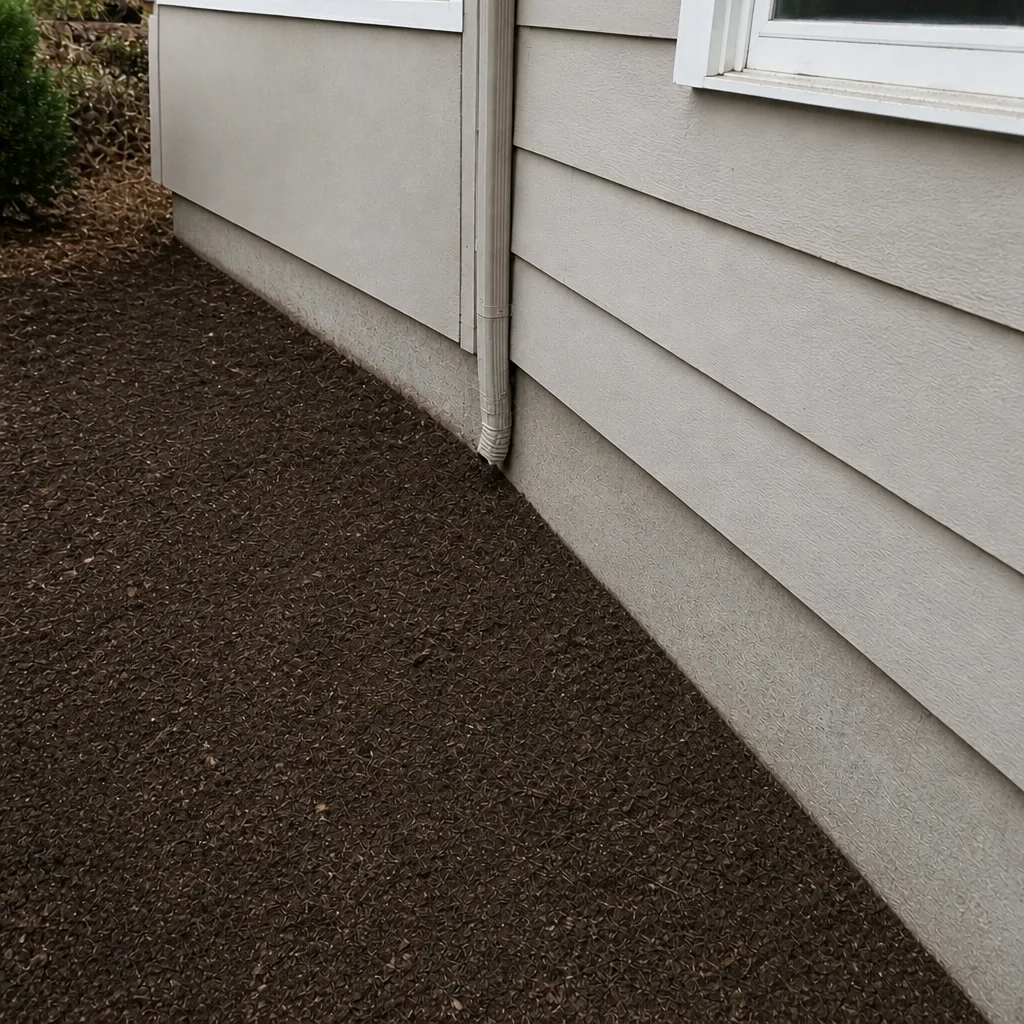 After
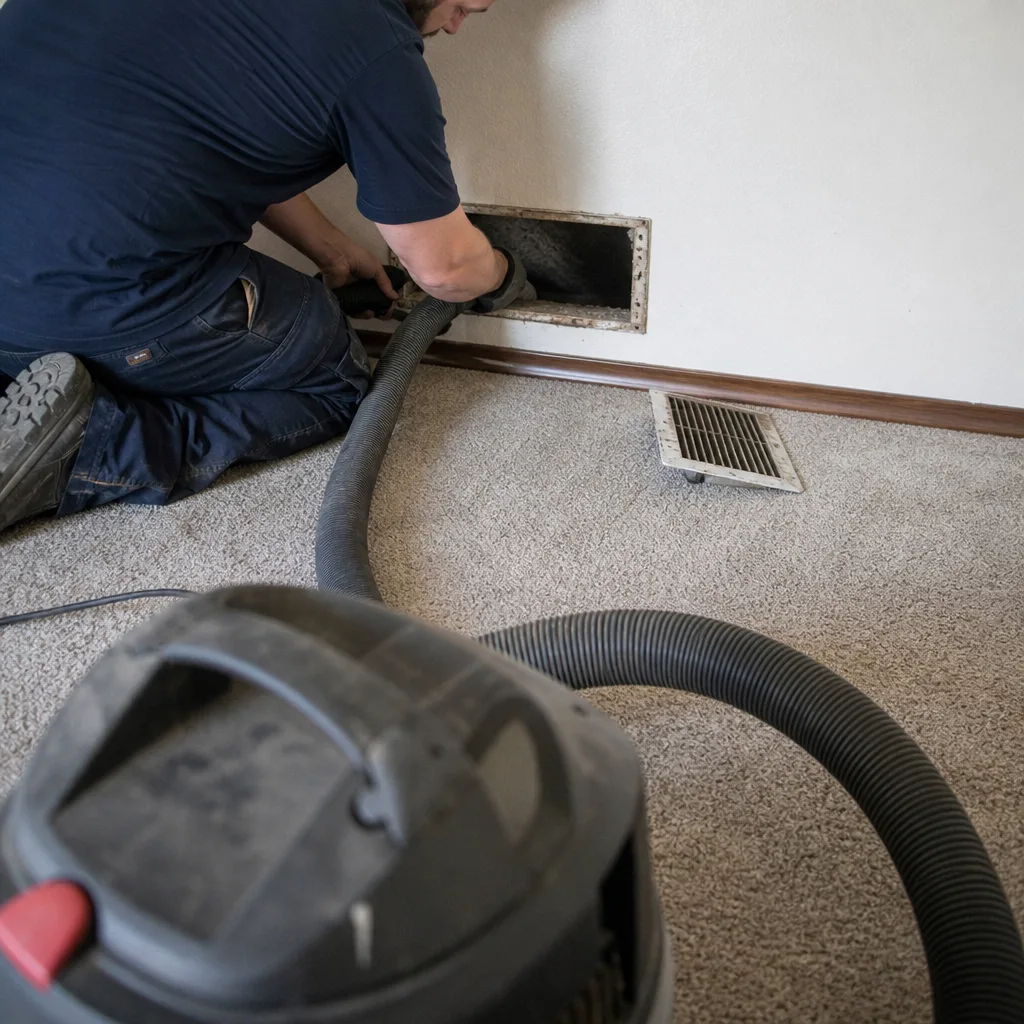 Before
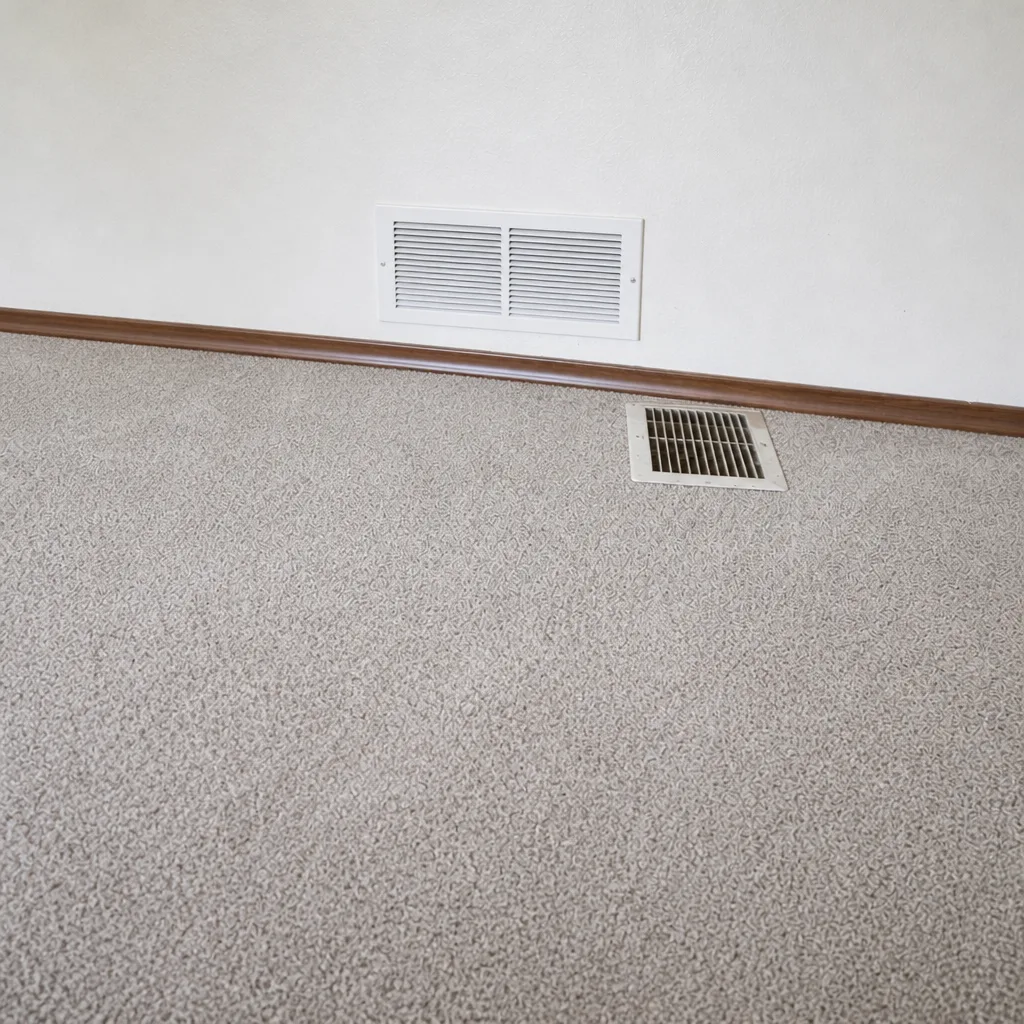 After
When to Call a Professional
Call a professional when the work touches the mechanical system rather than just what’s inside it: replacing damaged or crushed duct runs, reconnecting a separated joint at a boot or trunk, applying aerosol sealant, or addressing any evidence of rodent damage inside the ductwork. Call when you’re selling a South Hill home and the inspection report flags ductwork with no permit record on file. Call when a contractor quotes “duct repair” as part of a cleaning and you want someone to confirm what’s actually needed before work begins. Call when you can’t tell whether a job is cleaning or repair, because that ambiguity is exactly the case where a licensed second set of eyes matters.
South Hill Air Duct Cleaning Pros offers free estimates in South Hill – call (833) 772-9858. We answer 24/7. Fast dispatch from 7am to 7pm, Sunday through Friday. Estimates are free, the price is set per job by the written estimate, and the local pro we connect you with is licensed and insured as the state requires.
Frequently Asked Questions
No. Routine air duct cleaning does not require a permit in South Hill or anywhere in Washington State, because cleaning removes debris without altering the mechanical system. A permit may be required when the job includes repair or replacement of ductwork, and licensed contractor requirements kick in the moment any of that regulated work begins. Call (833) 772-9858 for an estimate that separates cleaning from any repair scope.
Yes, duct repair falls under the Washington State Mechanical Code and is treated as mechanical work. This means it may require a permit through Pierce County, it should be performed by a licensed HVAC contractor with the correct classification, and the work should be available for inspection. Our team will tell you which items in any repair scope sit on the permit side of the line, before any work begins.
Yes, aerosol duct sealing is contractor-level HVAC work in Washington and the person applying it should be licensed for that classification. Documentation to retain: the contractor’s business name and license number on the written estimate, the permit number if one was pulled, before-and-after leakage documentation if measured, and any manufacturer documentation for the sealant system. Call (833) 772-9858 if you need help confirming whether a repair recommendation falls into this category.
Use the Department of Labor & Industries contractor verification tool on the state’s website. Search by license number or business name from the written estimate, confirm the status shows active, check the expiration date, and confirm the classification covers HVAC work. The same record lists insurance and bond coverage. Our team is happy to walk you through it over the phone at (833) 772-9858 – estimates are free.
The work is still subject to code, but nobody has inspected it, which creates problems at resale and potentially at insurance claim time. A buyer’s home inspector can flag the unpermitted work, and the seller is typically the one who pays to resolve it. Keeping the contractor’s license number, permit number, and inspection result together in one folder prevents the problem. Call (833) 772-9858 for an estimate on cleaning or to discuss what a documented duct job should include.
Most South Hill homes do well with a professional cleaning every few years, but the number depends on the home: pets, recent remodeling, moisture in crawlspaces, and whether the ductwork has ever been cleaned all shift the interval. If a cleaning turns up signs of deterioration or moisture, the timeline shortens and repair scope gets priced separately. Ask for the written estimate and a documented scope before work begins. Call (833) 772-9858 for an exact quote – estimates are free.
The Bottom Line
Cleaning is maintenance and doesn’t require a permit in South Hill. Repair, replacement, and aerosol sealing are mechanical work under the Washington State Mechanical Code, may require a Pierce County permit, and require a licensed HVAC contractor with the right classification. Verify that license through Labor & Industries before you sign. Keep the permit number, inspection result, and before-and-after photos together and you’ll never have to reconstruct the record at resale. If a contractor can’t clearly separate cleaning from repair, that’s your answer about which one to hire.
Air quality and duct work are the only things we do. Our team uses Rotobrush and Nikro extraction systems, Abatement Technologies negative-air containment, and Honeywell or Aprilaire components when a homeowner wants ongoing air quality improvement after the clean. If you’re in South Hill and want a conversation about the boundary between cleaning and repair, we’re a phone call away. Estimates are free, the price is set per job by the written estimate, and any repair found during cleaning is priced and permitted properly before it’s done.
Call (833) 772-9858 for a free estimate. We answer 24/7. Fast dispatch from 7am to 7pm, Sunday through Friday.
Written by the team at South Hill Air Duct Cleaning Pros.