
Last updated November 25, 2026
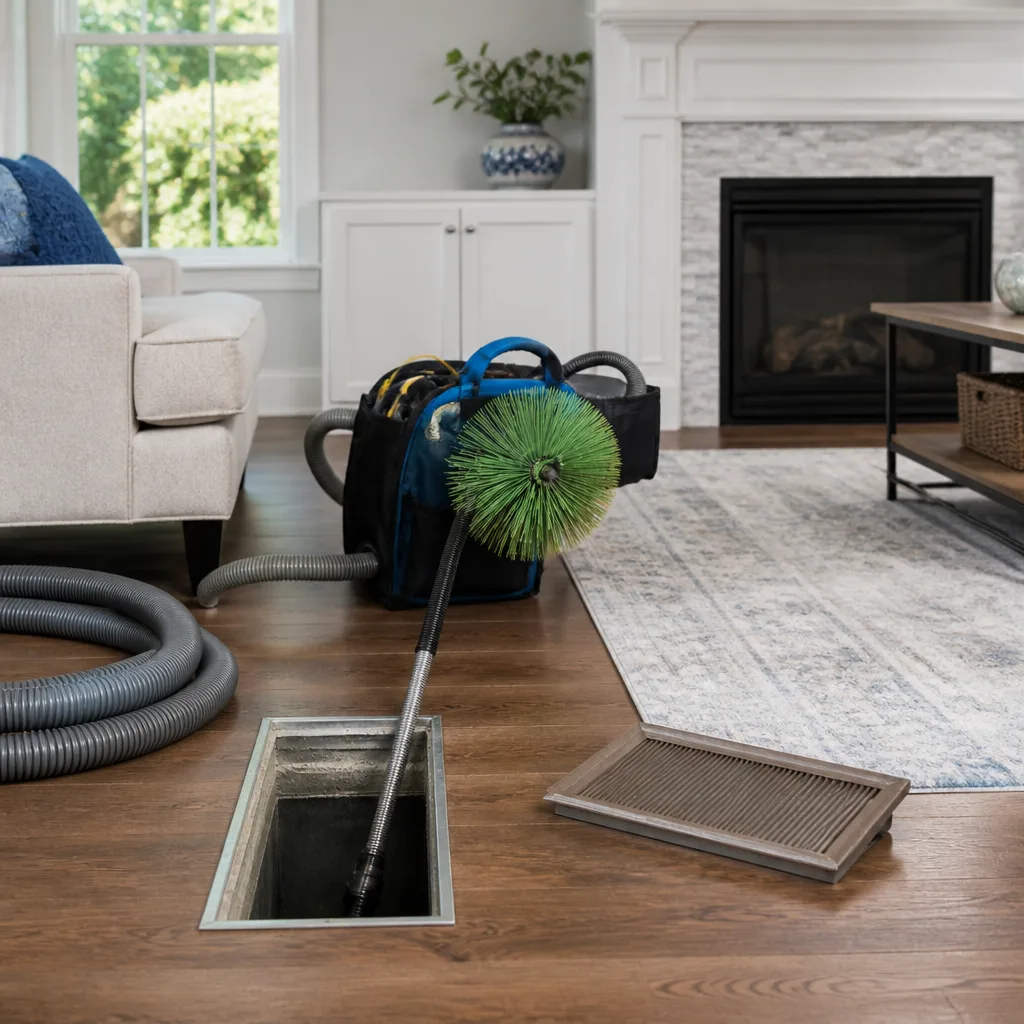 Whole-home duct cleaning
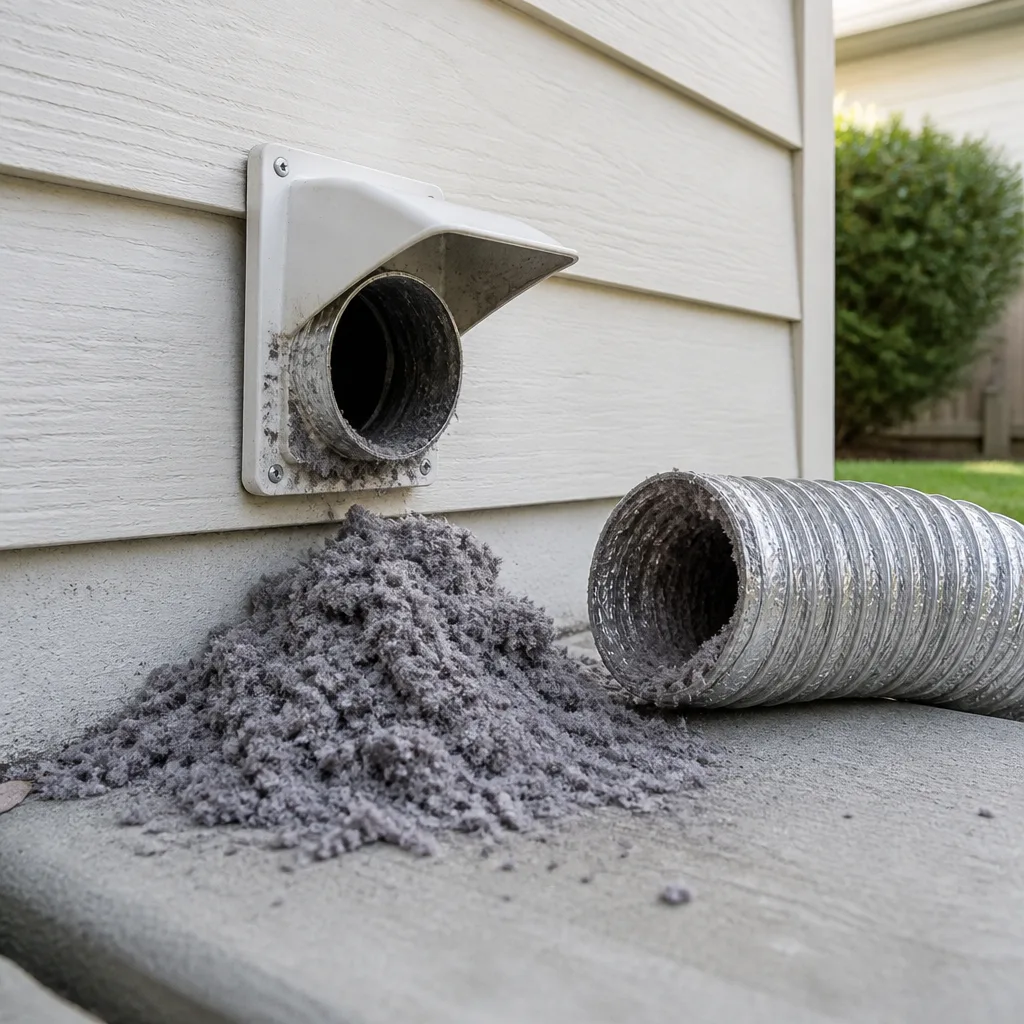 Dryer vent cleaning
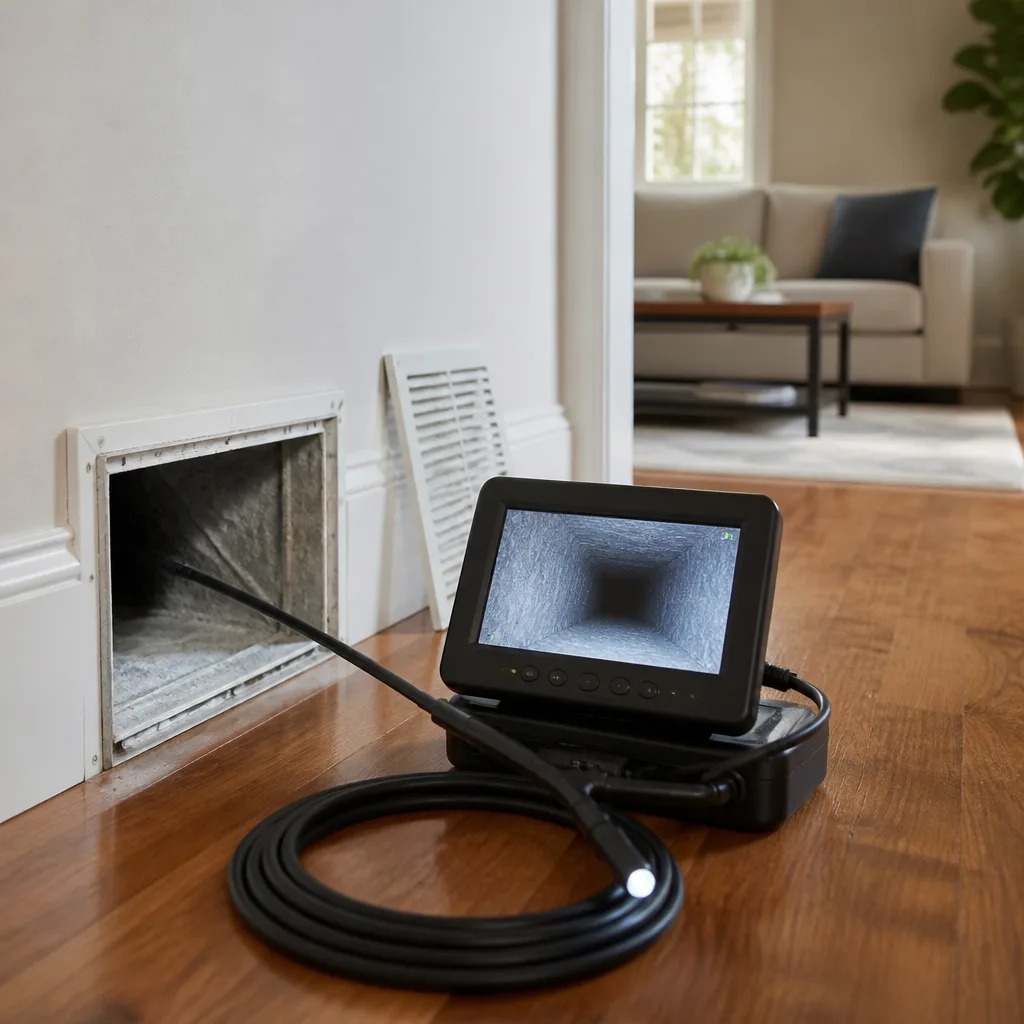 Camera inspection
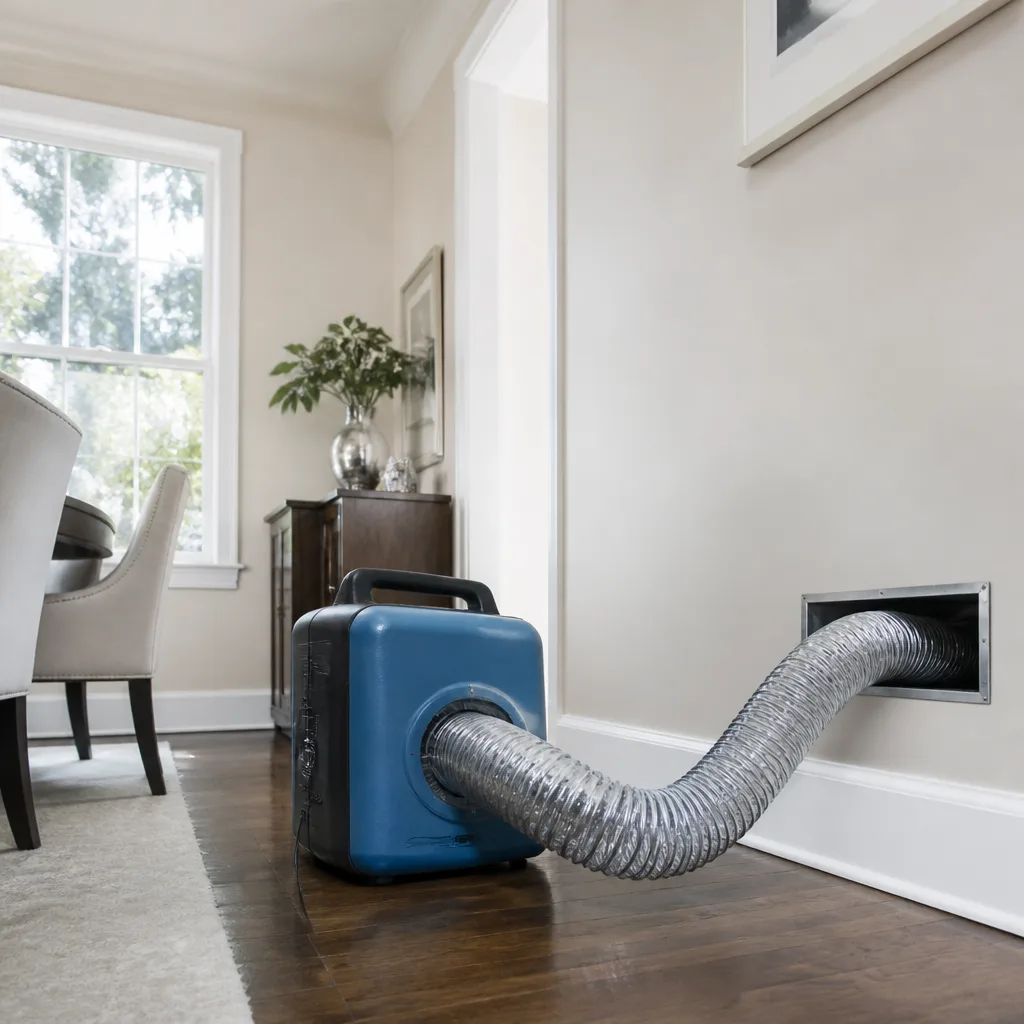 Sanitizing & deodorizing
Whole-system duct and dryer vent check with before-and-after photos - you see exactly what came out of your vents
That "$99 whole-house special" is a bait ad - the real number appears once they are in your hallway, or the "clean" is a shop-vac at the register. We photograph the inside of your ducts before and after instead.
Air Duct Cleaning Cost Breakdown: The South Hill Homeowner’s Reference for 2026
The $99 whole-house specials that circulate in South Hill Facebook groups almost always exclude the return side of the system. That means the air handler, the blower compartment, and the return plenums, which is exactly where the heaviest contamination tends to sit. It’s how a contractor honors a very low advertised price while still delivering a partial job. Two quotes can list the same headline number and cover completely different amounts of your ductwork. This guide decodes the real cost structure of a full-scope cleaning in South Hill, line by line, so you can price-compare on scope instead of on the sticker price.
Quick Answer
A full-scope air duct cleaning for a typical South Hill home runs roughly $450 to $900 in 2026, and the biggest variables are home size, duct material, and whether the returns, plenums, and air handler are actually included. A partial cleaning focused only on the supply registers can legitimately cost $250 to $400, but it leaves the dirtiest parts of your system untouched. The written estimate, set per job before work starts, is what fixes your final price.
Styles & brands we work with
- Whole-home duct cleaning
- Dryer vent cleaning
- Camera inspection
- Sanitizing & deodorizing
Table of Contents
- What Actually Drives Air Duct Cleaning Cost in South Hill?
- A Line-by-Line Breakdown of a Full-Scope Cleaning
- 2026 Price Ranges by Home Size in South Hill
- How Duct Material Changes the Price
- How to Price-Compare Quotes That Define Scope Differently
- Add-Ons Worth Paying For vs. Low-Value Upsells
- Why Equipment Choice Shows Up in the Price
- Why South Hill’s Climate and Housing Add Their Own Costs
What Actually Drives Air Duct Cleaning Cost in South Hill?
Four things move the price on almost every duct cleaning job in South Hill: how big the home is, what the ducts are made of, how the system is configured, and how hard it is to reach everything. A cleaning is priced on labor plus equipment time, and each of those four variables changes both. A 2,400-square-foot home with clean sheet metal runs one number. A 1,400-square-foot home packed with flex duct runs another.
Home size determines how many registers, how many trunk runs, and how long the extraction equipment stays running. Duct material decides the tooling: sheet metal takes one type of brush head and air pressure, flex duct takes a gentler approach because the liner can tear, and fiberboard needs its own handling so the board doesn’t break down. Maybe the biggest driver in South Hill is system configuration. A house with a single return and a clean air handler is quick. A house with two returns, a finished basement run, and an air handler buried in a closet takes considerably longer.
Access difficultly is the one homeowners underestimate most. Ducts run through crawlspaces, tight closets, and low attic spaces across South Hill’s older and newer neighborhoods alike. If a technician has to pull panels, remove a section of flex to reach a trunk, or work around a finished ceiling, that’s time on the quote.
What a duct cleaning should never be priced on is per-vent teases. A flat number per register hides the fact that the trunk line, the plenum, and the air handler are where most of the cost and most of the benefit live. One flat price per system, agreed before any work begins, is the honest way to scope it.
A Line-by-Line Breakdown of a Full-Scope Cleaning
Understanding what each part of the job costs helps you see exactly what you’re buying. Here’s how a complete cleaning breaks down in scope, with typical South Hill price ranges for each portion when quoted standalone. In a full-scope package, these overlap and the total lands lower than the sum of the parts.
| Line Item | What It Covers | Typical Range |
|---|---|---|
| Supply registers and runs | Each supply vent, branch run, and boot cleaned out | $120 – $220 |
| Return registers and returns | Return grilles and the return trunk, often the heaviest load | $120 – $240 |
| Main trunk line | Source extraction through the central trunk | $80 – $160 |
| Plenums | Supply and return plenum at the air handler | $70 – $140 |
| Air handler and blower compartment | Blower wheel, cabinet interior, accessible surfaces | $80 – $150 |
| Coil inspection | Visual check of the evaporator coil for buildup | $40 – $80 |
| Sanitizer application | Full-system misting after cleaning, if wanted | $75 – $150 |
Two things stand out. First, the returns, plenums, and air handler together account for a big share of a complete job, and those are precisely the items a low-price special tends to leave out. Second, coil inspection is cheap and worth it. If the coil is caked with dust, cleaning the ducts around a dirty coil only gets you partway there.
Pricing, cleaning, and repair all happen in the same visit when we find a problem. If a section of flex has collapsed or a joint has pulled apart, we fix and seal it rather than hand it off. That full-scope air duct cleaning is what the line items above describe.
2026 Price Ranges by Home Size in South Hill
Square footage is the fastest way to sanity-check a quote, though it’s a starting point, not the whole story. These ranges reflect what commercial-grade cleaning operations in the South Hill market actually charge for complete work in 2026. Every figure is an estimate; your written quote sets the final number.
- Condos and small homes (up to about 1,200 sq ft): $350 – $550 for full scope.
- Mid-size homes (about 1,200 to 2,000 sq ft): $450 – $700 for full scope.
- Larger homes (about 2,000 to 3,000 sq ft): $600 – $900 for full scope.
- Big or complex homes (3,000 sq ft and up, or multiple systems): $850 – $1,300+ for full scope.
South Hill covers a wide spread of housing, from compact older homes near the commercial corridor to larger newer builds on the edges, and the price band reflects that. A tight 1,300-square-foot house with simple sheet metal can come in near the bottom of its tier. A 2,600-square-foot home with flex runs, two returns, and a hard-to-reach air handler climbs toward the top. The number that matters is what’s inside the quote, not which tier it falls into.
If you’re budgeting for a larger home or a place you’ve just bought, it’s worth having the whole system looked at at once rather than vent by vent, so your estimate reflects the actual scope. A free estimate is the fastest way to get a real number for your house.
How Duct Material Changes the Price
The material inside your walls and attic shapes both the technique and the price. South Hill homes span all three common types, and the material can add or trim a hundred dollars or more on a job of the same square footage.
- Sheet metal: The most durable and the most forgiving to clean. A power brush and high-pressure air move through it cleanly, and technicians can inspect it easily. Usually the least expensive to clean per linear foot.
- Flex duct: Common in newer construction and retrofits. It’s the gentlest material to handle because the inner liner can tear if pushed too hard, so cleaning takes more care and time. Its ridges also trap more dust. Expect a slight premium on flex-heavy systems.
- Fiberboard (duct board): Faced with a foil or coated surface over a fibrous core. It holds up to cleaning when handled correctly, but the surface can be scuffed or damaged by aggressive tooling, so it needs a lighter touch. A careful approach protects the board and keeps the job honest.
Mixed systems are common, with sheet metal trunks feeding flex branches. A quote that treats all duct material the same is either oversimplifying or planning to muscle through it, neither of which you want. Knowing your material type before you call makes the conversation faster and the estimate more accurate. If your ducts turn out to have gaps or loose joints, that’s where duct repair and sealing come in, and doing both at once avoids a return visit.
How to Price-Compare Quotes That Define Scope Differently
This is the part most homeowners skip, and it’s the reason a $300 quote and a $900 quote can both be “accurate.” They’re pricing different jobs. Here’s a normalization sequence to run every quote through so you’re comparing equivalent services.
- Check the supply count. Does the quote list every supply register, or a lump “all vents”? Count your supplies first so you can verify.
- Check the return side. Are return registers, the return trunk, and the return plenum included, or is the quote silent on them? Silence almost always means excluded.
- Ask about the air handler and blower. Is the air handler cleaned and the blower compartment reached? This is one of the most skipped items.
- Ask whether coil inspection is included. A quick visual check of the coil should be part of any complete job.
- Confirm the equipment. Source extraction with professional-grade systems is different from a shop-vac approach. Ask what’s used and whether negative air is run.
- Ask about sanitizer separately. Treat it as its own line, priced on its own, so you can decide if you want it.
- Get the flat price per system in writing. A number before work starts, not a per-vent estimate that grows once the technician arrives.
Run two quotes through that sequence and the mystery collapses. A quote that includes returns, plenums, and the air handler at $650 may be cheaper than a $300 quote that skips all three, because you’d need a second visit to cover what the first missed. The lowest number is only the lowest number if the scope is the same.
Add-Ons Worth Paying For vs. Low-Value Upsells
Not every add-on earns its price. Some genuinely improve the outcome, and some just pad the ticket. Sorting them before you’re on the spot keeps you in control of the final number.
Worth paying for
- Video inspection: A camera down the trunk shows you the actual condition before and after, and it’s the most honest proof of what was removed. Worth the small cost if you want evidence.
- Coil cleaning: If inspection shows a dirty evaporator coil, cleaning it restores airflow and keeps the system efficient. It ties directly to the cleaning you’re already paying for.
- Duct repair and sealing: Loose joints and gaps leak conditioned air and let dust back in. Sealing them during the same visit keeps your clean ducts clean. This pairs naturally with HVAC cleaning and belongs in the same appointment.
- Sanitizing after a full clean: If you want a system-wide sanitizer application, it makes sense once the ducts are physically clean. We use Honeywell and Aprilaire lines for follow-on air quality needs.
Low return for most homes
- Ozone treatments: Ozone is a respiratory irritant and not something you want to introduce into an occupied home, especially with allergy or asthma concerns. The evidence doesn’t support routine use.
- Most chemical foggers: A fog that coats surfaces without removing the dirt underneath does little. Physical removal is what changes your air quality, not a scented mist.
If a quote leans hard on foggers and skips returns, the upsell is doing the work of a scope conversation. Ask what’s actually being removed.
Why Equipment Choice Shows Up in the Price
Two companies can quote the same square footage and charge $200 apart, and equipment is often the reason. Better equipment costs more to run, and it produces a different result. That difference is worth understanding when you weigh a quote.
Professional-grade source extraction uses systems like Rotobrush and Nikro, which combine brushes and high-powered vacuum to pull contamination toward the source while agitating the duct walls. That’s fundamentally different from a consumer shop-vac approach, which reaches only the surface and can stir dust loose into the room. When we clean a South Hill home, dual extraction with Rotobrush and Nikro gets what single-method cleaning leaves behind.
Containment matters just as much. Running Abatement Technologies negative-air equipment during the job keeps dislodged contaminants contained instead of recirculating them into the living space. That’s a real health benefit for anyone with allergies or asthma, and it’s part of the labor and equipment time baked into a professional quote.
This is the difference the price is buying. A cheap quote usually means cheaper equipment, less containment, and less time on the job, not a better deal. For the full picture of how our team works, see what we do at South Hill Air Duct Cleaning Pros, and know that our technicians have up to 14 years of experience with this equipment.
Why South Hill’s Climate and Housing Add Their Own Costs
South Hill sits in a temperate, wet-corner climate where homes run their heating systems for many months and often keep a tighter envelope against the damp. That means more dust and debris cycling through the ducts across a long heating season, and more reason to clean on a schedule. Damp conditions also make moisture management matter, since a system that never dries out fully can harbor more buildup, and flexible transitions in older construction can collect it in the low spots.
Housing stock across South Hill spans decades. Homes with retrofitted flex and finished basements often have longer, more convoluted runs, and those take more time to clean thoroughly. A house with a single central return is straightforward. A house with multiple returns and runs through a finished lower level is not. That configuration is a price variable, and a written estimate should reflect it honestly.
One more climate-adjacent cost worth flagging: dryer vents. A clogged dryer vent is a fire risk, and cleaning it is a standalone service that many HVAC-only providers skip. If you’re scheduling dryer vent cleaning, doing it alongside a duct cleaning saves a second visit. If you’re unsure your ducts need it, a free estimate settles the question faster than guessing.
Common Mistakes to Avoid
- Buying on the number alone. The cheapest quote is usually the smallest scope. Compare what’s inside the quote, not just the total.
- Accepting a special that excludes returns. A whole-house price that skips the return side is a partial job. Ask specifically whether the return trunk, plenums, and air handler are included.
- Paying per vent without a flat system price. Per-vent pricing rewards the contractor for counting more vents and hides the trunk and plenum work. Insist on one flat price per system.
- Skipping the video or before-and-after proof. If you can’t see what was removed, you can’t know the job was done. Ask for before-and-after photos of your own ducts.
- Treating a fogger as a substitute for cleaning. A scented fog over dirt isn’t a cleaning. Physical removal with the right equipment is the only thing that changes what circulates.
- Assuming any home-services company can do it. A generalist that offers duct work as a side service often lacks the containment equipment that keeps dust out of your air. Look for a duct and HVAC specialist.
- Forgetting the dryer vent. It’s easy to leave off the list and it’s a leading cause of residential fires. Fold it into the same visit.
See the difference
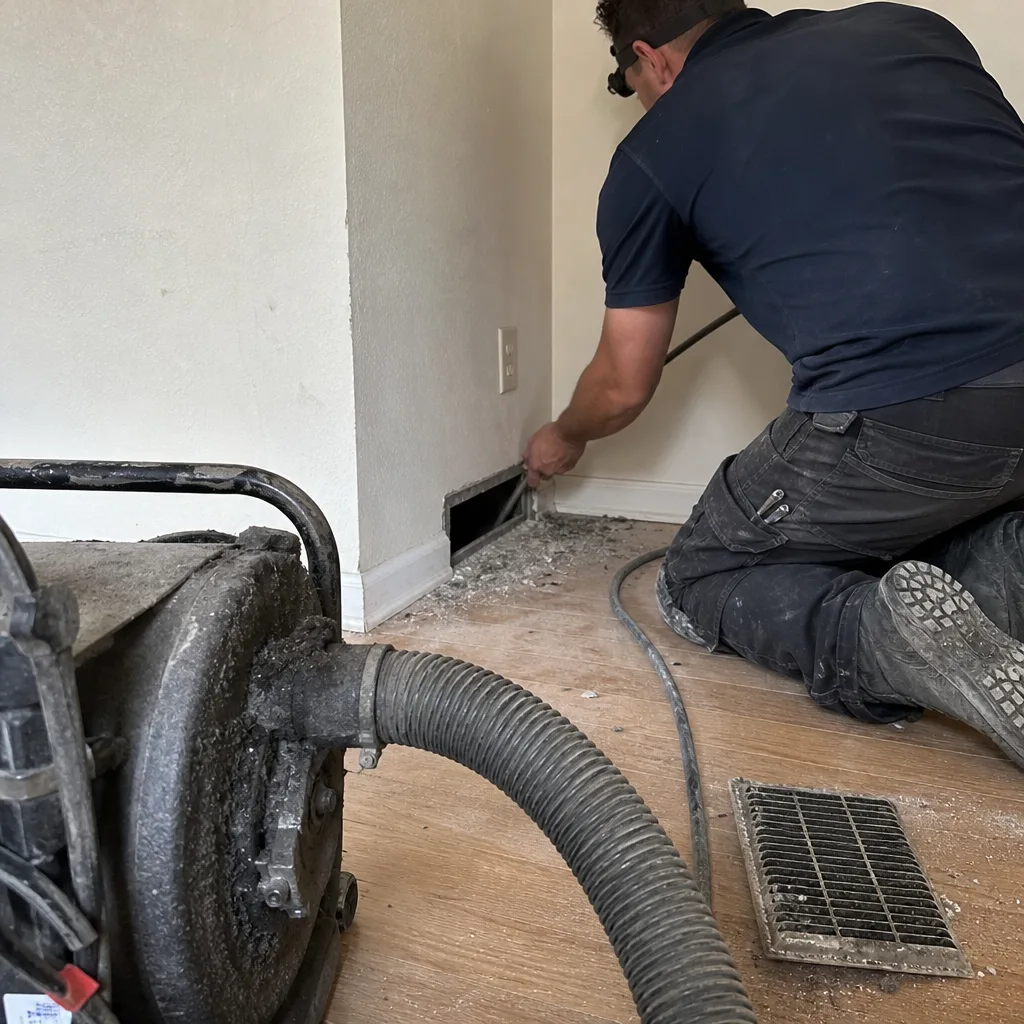 Before
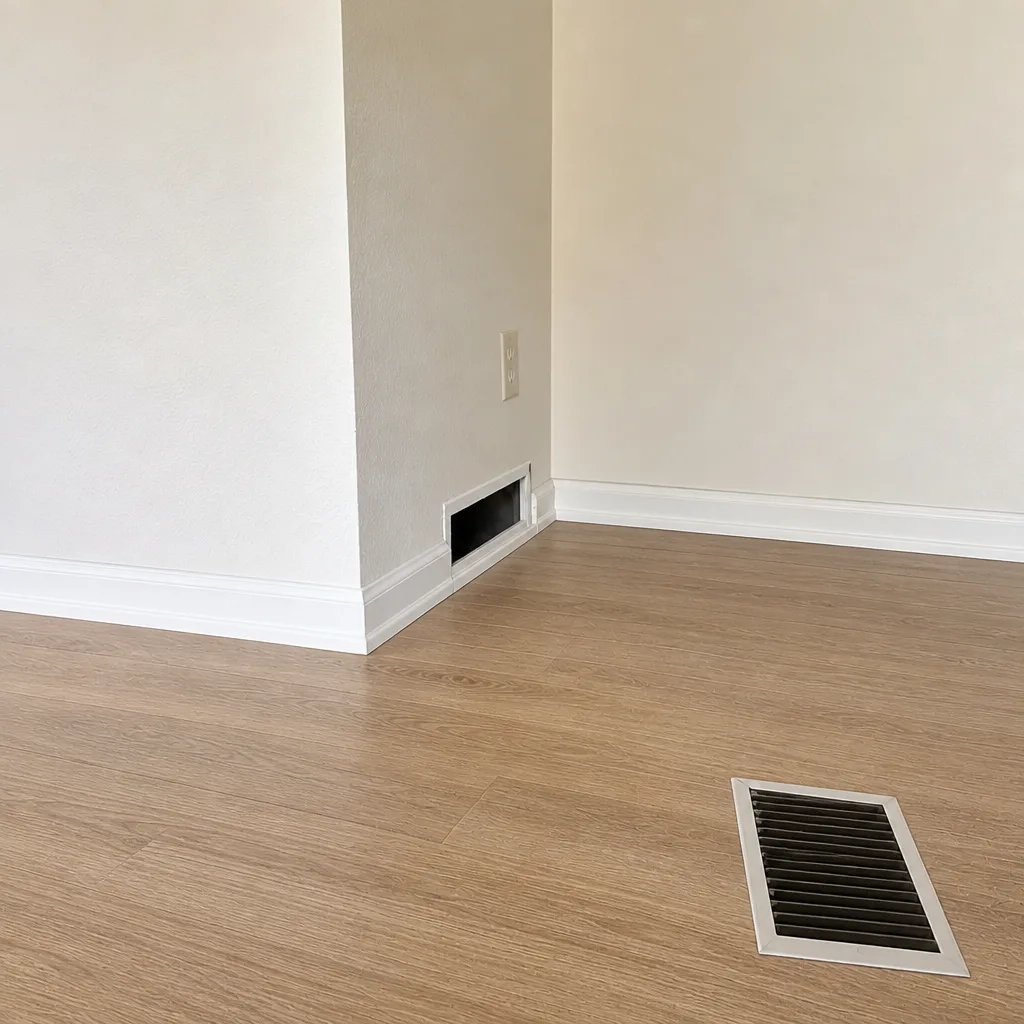 After
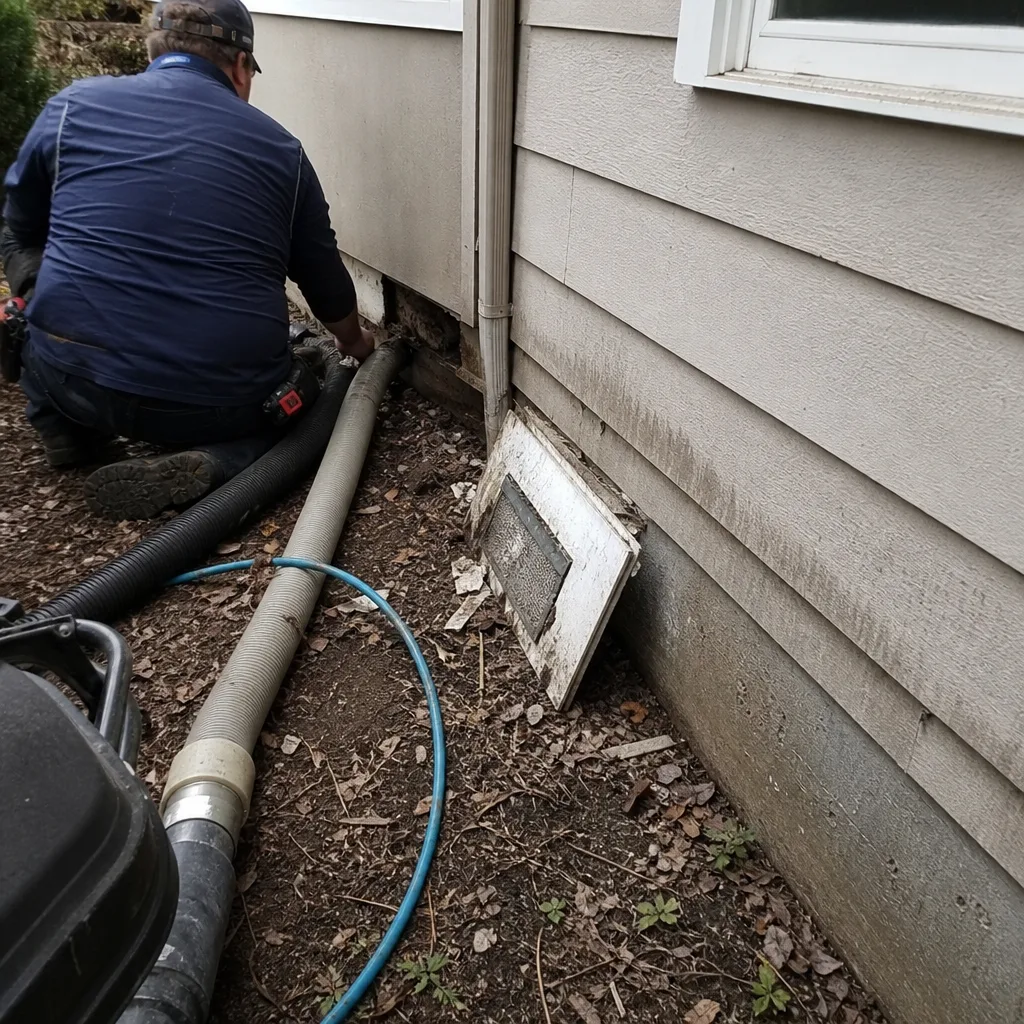 Before
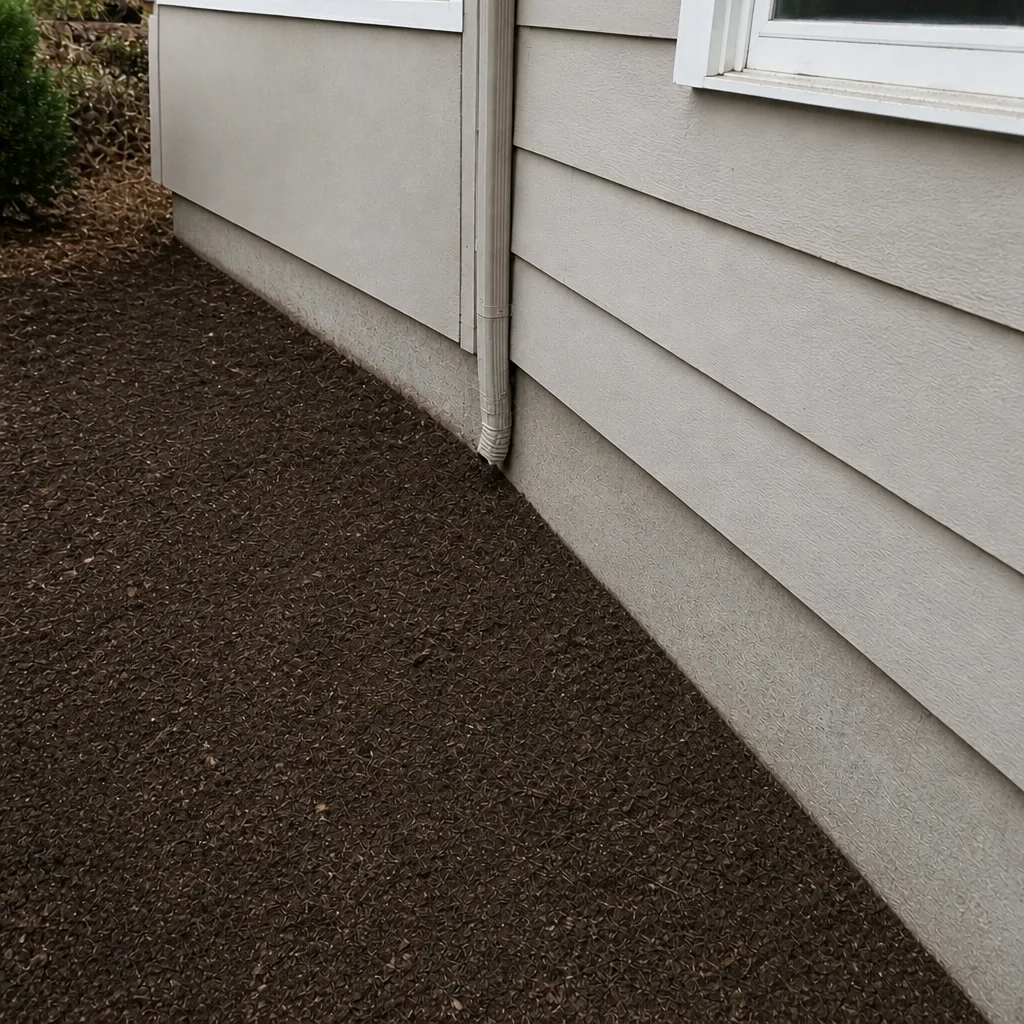 After
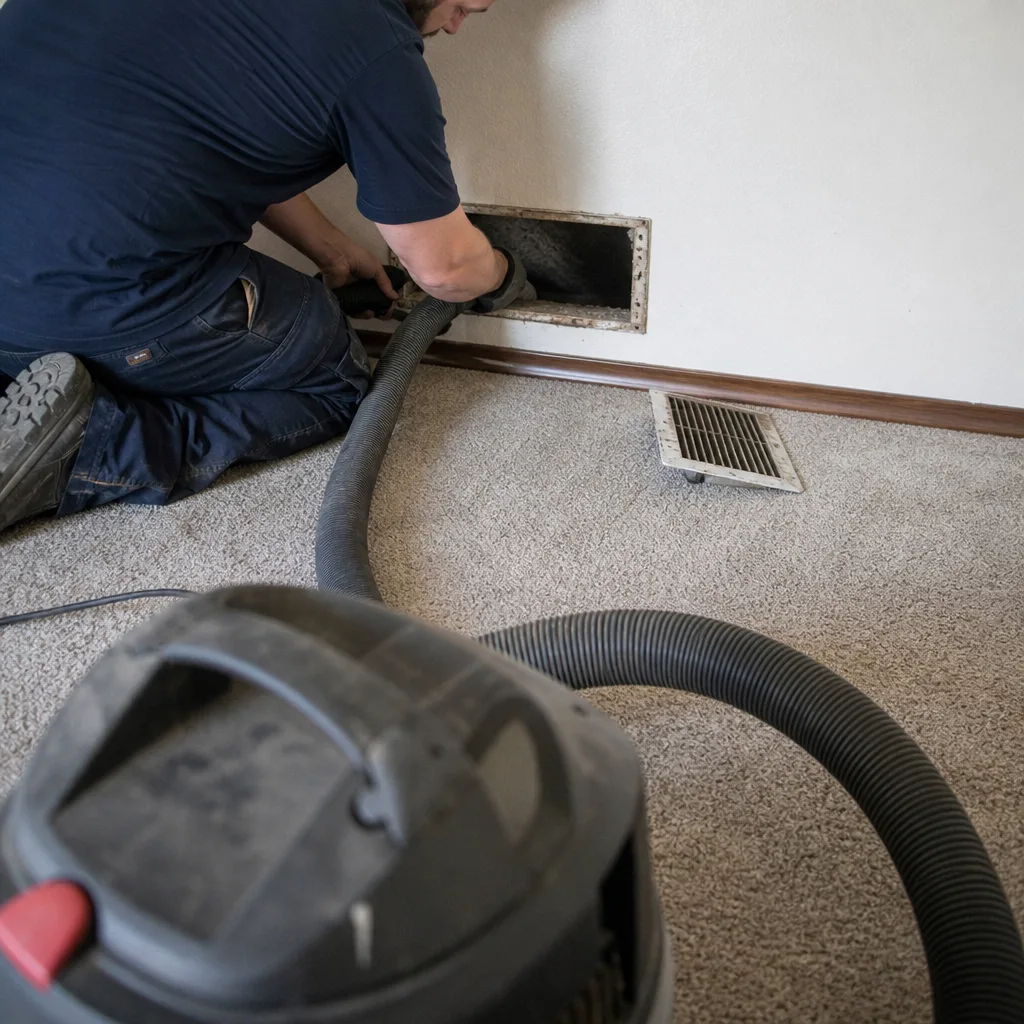 Before
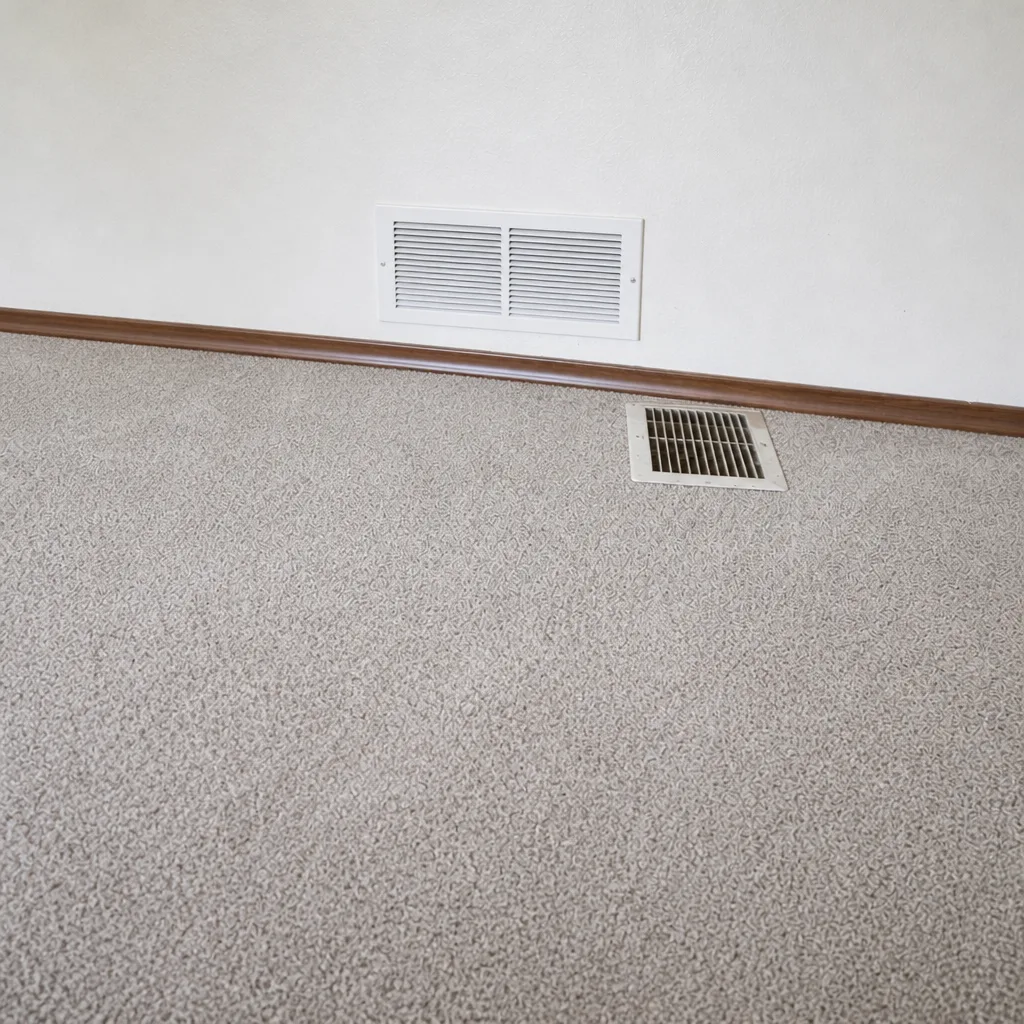 After
When to Call a Professional
Call a specialist rather than try this yourself if you’ve never had the ducts cleaned and don’t know their condition, if anyone in the home has allergies or asthma, or if you’ve recently noticed more dust settling on surfaces soon after cleaning. If you’ve moved into a South Hill home and don’t know when the ducts or dryer vent were last serviced, a professional evaluation is the sensible starting point. Problems like a collapsed length of flex, a torn liner, or loose joints should also be fixed professionally; duct repair and sealing need correct materials and a proper seal, not tape over a gap. High-tension components, gas lines, and electrical work inside the HVAC system aren’t DIY territory, and we’d always recommend a trained professional for those.
South Hill Air Duct Cleaning Pros offers free estimates in South Hill. Call (833) 772-9858. We answer 24/7. Fast dispatch from 7am to 7pm, Sunday through Friday. We’re closed Saturday.
Frequently Asked Questions
For a full-scope cleaning that includes supplies, returns, plenums, and the air handler, most South Hill homes land between about $450 and $900 in 2026, depending on size and duct material. A partial cleaning that skips the return side can run $250 to $400, but it leaves much of the system untouched. Call (833) 772-9858 for an exact quote, and the estimate is free.
Cheaper quotes usually cover a smaller scope, not a better price. A quote that leaves out the returns, the plenum, and the air handler is pricing a partial job, which is where the low specials come from. The written estimate should spell out each item so you can compare equivalent services. Call (833) 772-9858 and we’ll walk you through what a complete cleaning includes.
Ask for before-and-after photos of your own ducts, and consider a video inspection so you can see the condition of the trunk before and after. A professional operation can show you what came out instead of just telling you. Our team photographs the work and uses professional-grade equipment so the proof is visible. Call (833) 772-9858 to set up an estimate.
Most homes do well with a full cleaning every three to five years, and homes with pets, smokers, recent renovations, or allergy and asthma concerns often need it more often. In South Hill’s long heating season, ducts collect a fair amount of dust between cleanings. If it’s been a while since yours were done, an estimate is a low-pressure way to find out where you stand. Call (833) 772-9858.
Rarely, because a $99 whole-house price almost always excludes the return side, meaning the air handler, blower compartment, and return plenums that often carry the heaviest contamination. You get a partial job at a low number, then pay separately for what was left out. One flat price per system, agreed up front, is the honest comparison. Call (833) 772-9858 for a full-scope estimate.
Not necessarily. Physical cleaning with proper extraction is the essential step; sanitizing and air quality products are optional additions for homes that want them, and we use Honeywell and Aprilaire lines for follow-on needs. Decide after the cleaning is scoped, not before. Call (833) 772-9858 to talk through what makes sense for your home.
The Bottom Line
Duct cleaning prices in South Hill aren’t random. A full-scope job runs roughly $450 to $900 for most homes because it covers the supplies, returns, plenums, air handler, and a coil check, while a $250 to $400 partial job skips the dirtiest parts. The material of your ducts, the size of your home, and how hard the system is to reach all shift the number, and equipment choice separates a thorough clean from a surface pass. The lowest quote is only the lowest quote when the scope matches. Compare on scope, get one flat price per system in writing, and ask for proof of what was removed. Our technicians have up to 14 years of experience and use professional-grade equipment for a clean that reaches the whole system. Call (833) 772-9858 for a free estimate. We answer 24/7. Fast dispatch from 7am to 7pm, Sunday through Friday, and we’re closed Saturday.
Written by the team at South Hill Air Duct Cleaning Pros.