
Last updated November 25, 2026
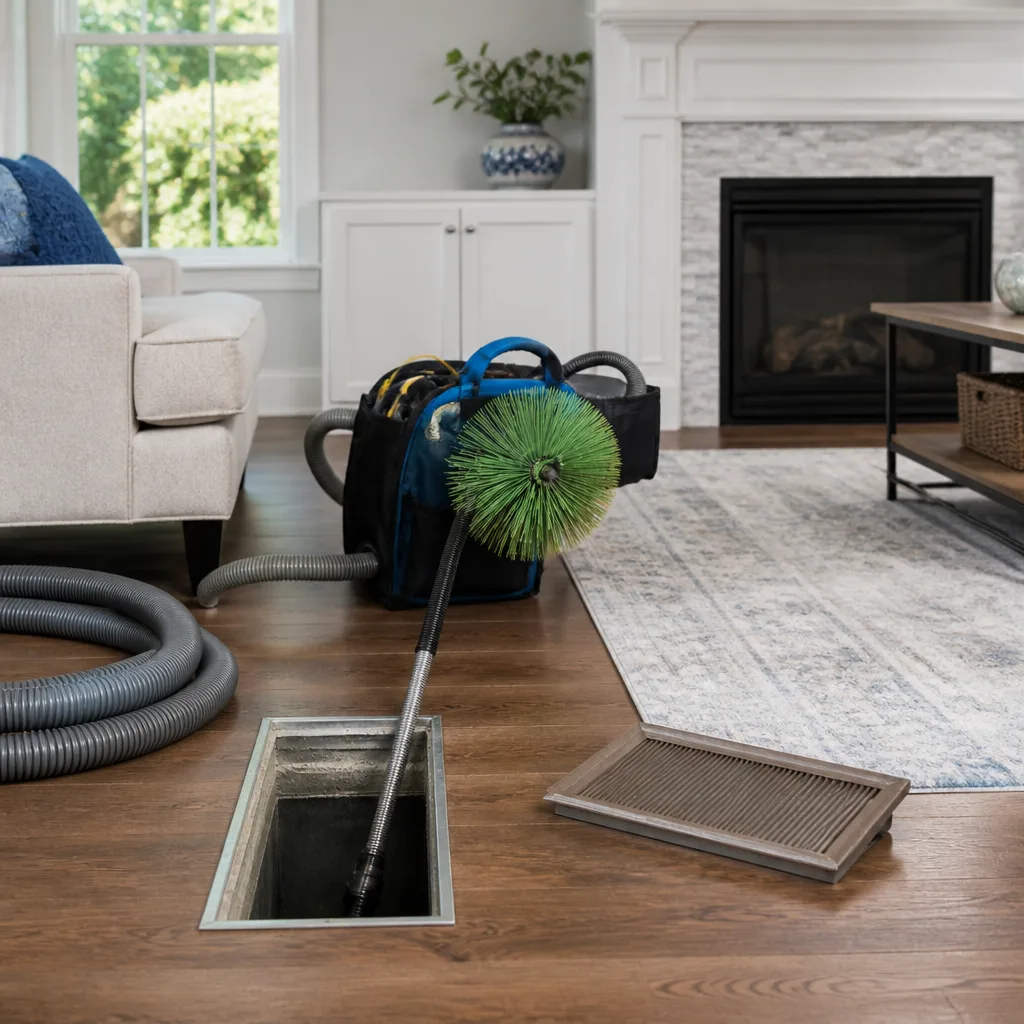 Whole-home duct cleaning
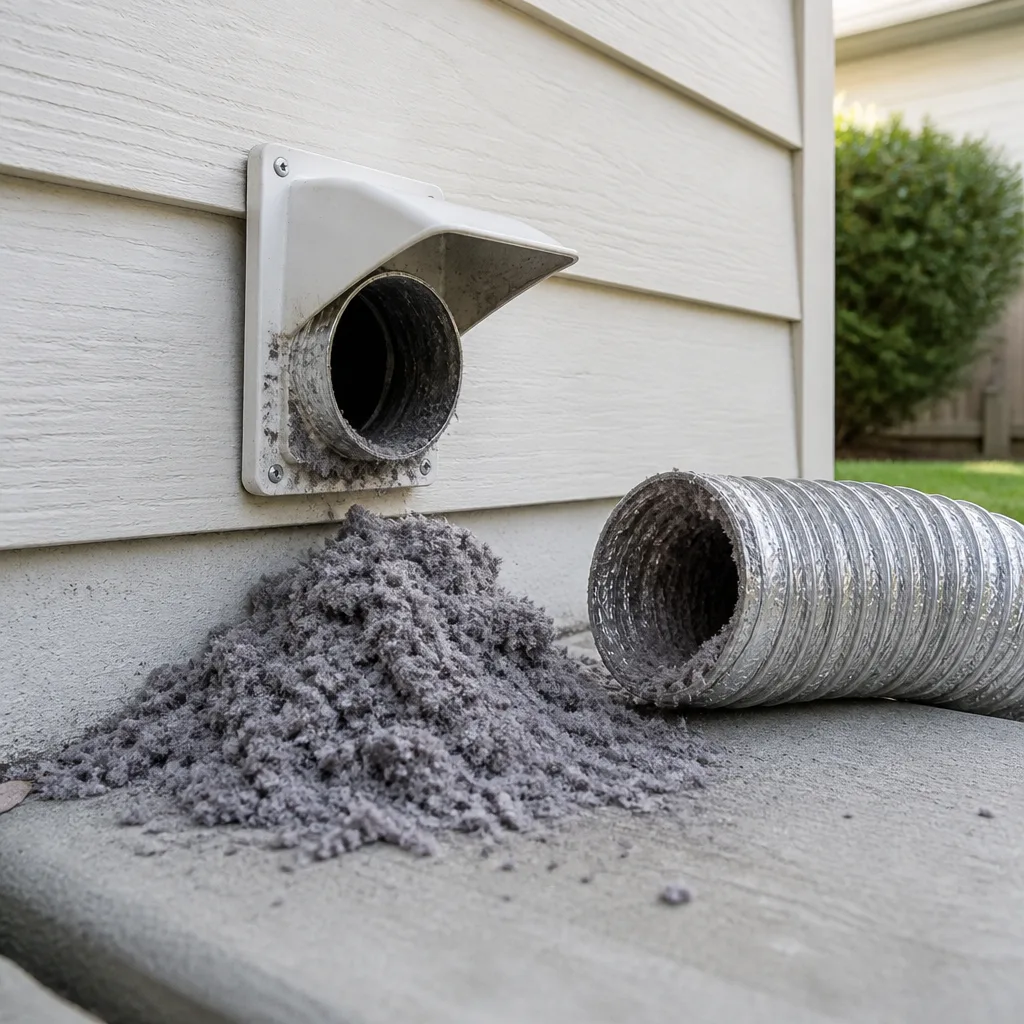 Dryer vent cleaning
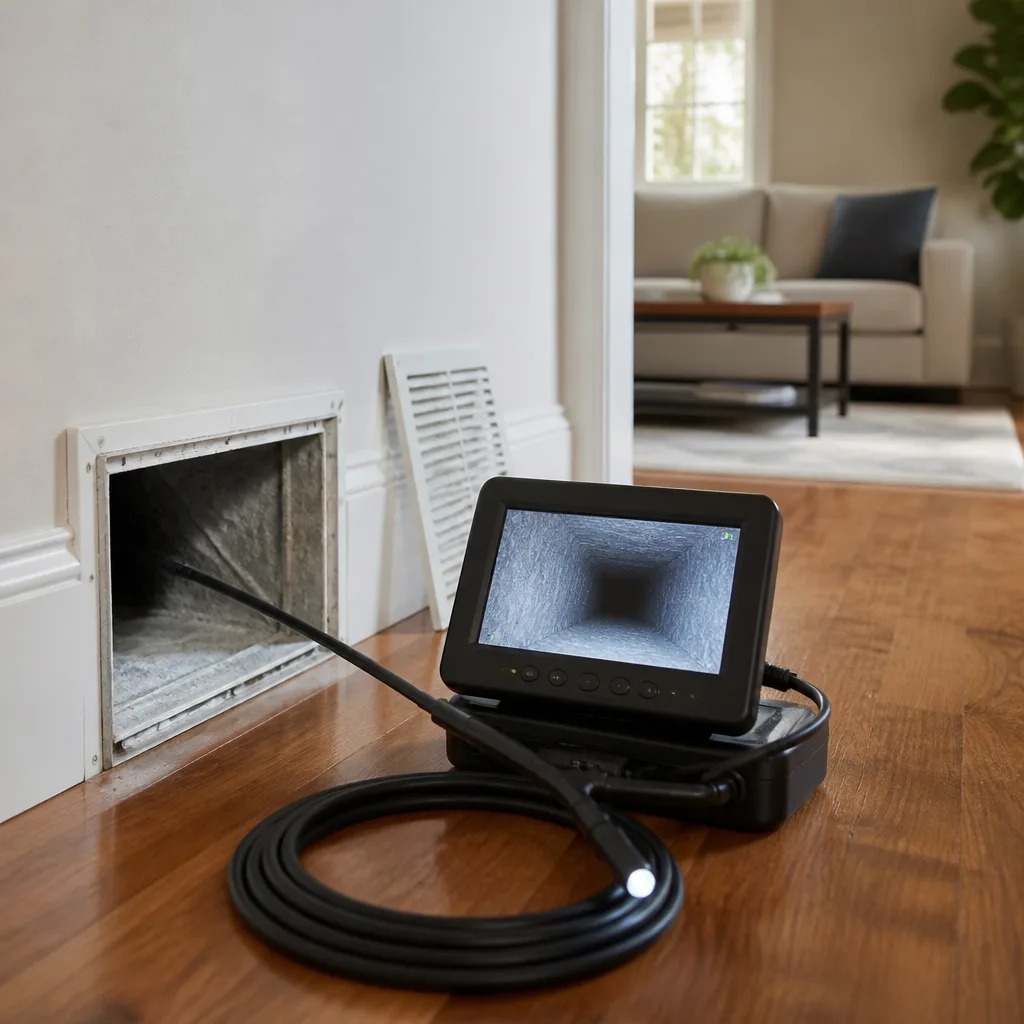 Camera inspection
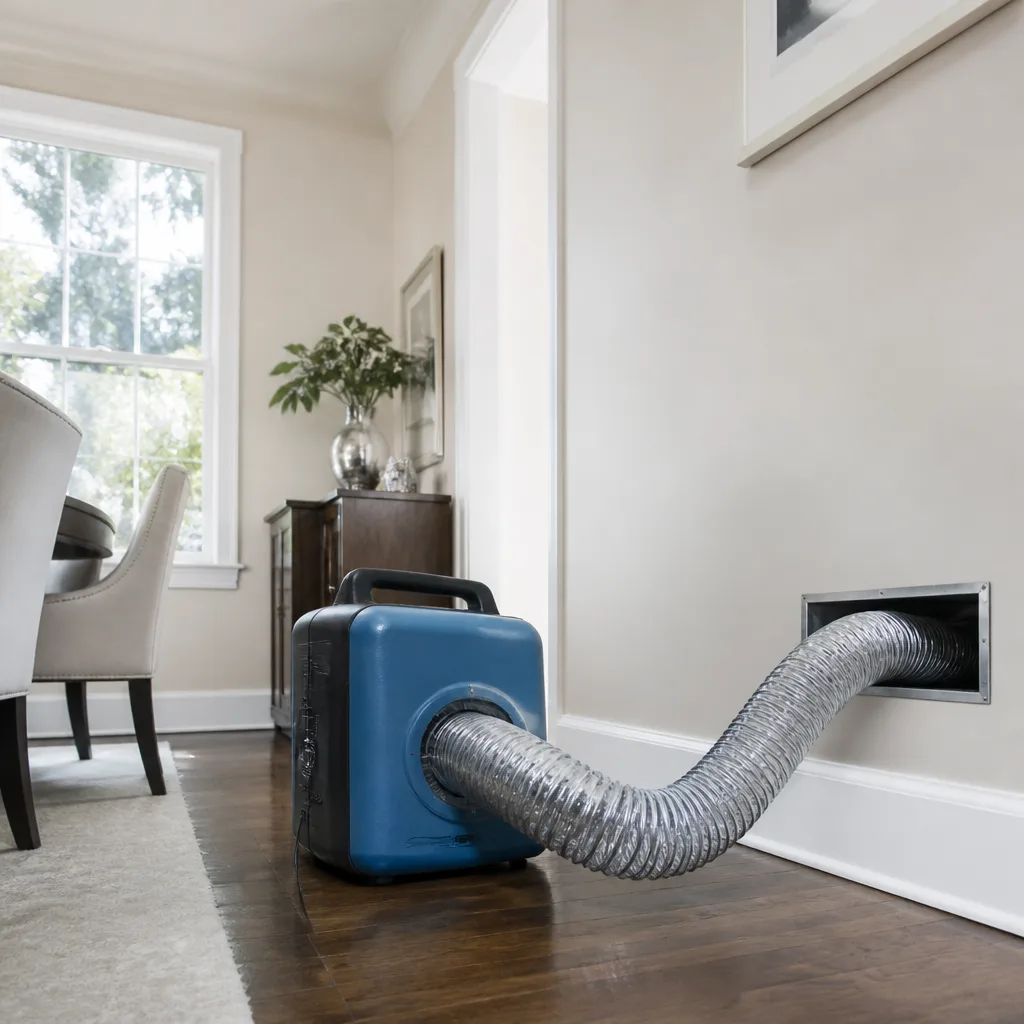 Sanitizing & deodorizing
Whole-system duct and dryer vent check with before-and-after photos - you see exactly what came out of your vents
That "$99 whole-house special" is a bait ad - the real number appears once they are in your hallway, or the "clean" is a shop-vac at the register. We photograph the inside of your ducts before and after instead.
Seasonal Air Duct Cleaning Care for South Hill: Year-Round Homeowner’s Guide
Most homeowners assume duct cleaning is a once-a-year chore that can be scheduled whenever the calendar allows. In South Hill, that assumption is expensive. Eastern Washington wildfire smoke events can push air quality into unhealthy ranges and deposit fine particulate inside a duct system within 48 hours if the HVAC runs during the event. That single factor resets the whole timeline. Add spring pollen loads, winter condensation risk in uninsulated crawl space ductwork, and heating-season demand, and you have a system that experiences four distinct kinds of stress each year. This guide maps duct care to the actual conditions South Hill homeowners live with, season by season, so you know what to schedule, what to inspect, and what to skip.
Quick Answer
In South Hill, the best time for a full air duct cleaning is early fall, before the heating season starts and the house closes up for winter. Spring pollen and summer wildfire smoke are the two events that most accelerate contamination, and both call for inspection and targeted action rather than a full clean. Winter is about watching for condensation in crawl space ductwork, not scheduling a cleaning. A full professional cycle once a year, timed to the fall window, covers most homes; homes with allergies, pets, or recent smoke exposure may need a second touchpoint.
Styles & brands we work with
- Whole-home duct cleaning
- Dryer vent cleaning
- Camera inspection
- Sanitizing & deodorizing
Table of Contents
- Why Fall Is the Best Window for a Full Cleaning in South Hill
- Spring Pollen in South Hill: What Alder, Birch, and Grass Do to Your Ducts
- Wildfire Smoke Protocol: What to Do During and After a Smoke Event
- Winter Moisture Management and Crawl Space Ductwork
- Summer: The Baseline Season for Inspection and Sealing
- The Seasonal Triage Framework: What to Request and What to Skip
- Why Method Matters More Than Timing
- South Hill Neighborhood Notes: Housing Stock and Duct Realities
Why Fall Is the Best Window for a Full Cleaning in South Hill
Fall is the single best time to schedule a full cleaning in South Hill because it happens before the house closes up for winter. Through the summer, windows sit open, doors cycle constantly, and outdoor particulate drifts in freely. Once the heating season starts, that same house becomes a sealed box that recirculates whatever is already sitting in the ducts. Cleaning in the fall removes the accumulated summer load before the system starts pushing it through every room for months.
There’s a second reason specific to this region. The heating season in South Hill runs long, and the first cold snaps tend to arrive quickly. A system that had a light summer of use suddenly runs hard. Any loose debris, dust mat, or partial blockage in the return side gets stirred up on the first cold morning and distributed through the whole house. Getting ahead of that first cold snap is the value of fall timing.
Here’s what a well-timed fall visit should include:
- Full supply and return cleaning using a professional extraction system that agitates and pulls debris simultaneously, rather than a shop-vac that stirs everything into the air.
- Negative-air containment so dislodged contaminants are captured at the source rather than pushed back into living space.
- Before-and-after photos of your own ducts, taken at the openings and in the trunk lines, so you can verify the work independently.
- An inspection of joints and seams for leaks, since a leaky return pulls attic or crawl space air straight into the system.
- A blower and coil check as part of an HVAC cleaning so the air handler isn’t reintroducing what you just removed.
One flat price per system, agreed before any work starts, is what fall scheduling should look like. That’s how air duct cleaning works in South Hill when it’s done correctly: a defined scope, a clear number, and verification at the end. Call (833) 772-9858 to book a fall slot. We answer 24/7. Fast dispatch from 7am to 7pm, Sunday through Friday.
Spring Pollen in South Hill: What Alder, Birch, and Grass Do to Your Ducts
Spring in South Hill brings three pollen waves that most homeowners feel before they can name: alder first, then birch, then grass. Alder and birch release early, often while the weather is still cool and the furnace is still cycling at night. Grass pollen arrives later as the season warms. Each wave behaves differently in a duct system, and each has a different implication for what you should request.
The early alder and birch waves are the tricky ones. Furnace use still overlaps with pollen release, which means a running system pulls pollen-laden air through the return and deposits fine particles on the duct walls before the house is even fully open. Allergy sufferers often notice symptoms spiking in early spring without realizing their ducts are collecting the load.
Grass pollen comes later, when windows and doors are open constantly and the HVAC is mostly idle. That pollen drifts in through the house, not primarily through the ducts, but it settles on registers and gets drawn back into the return when the system does run.
What makes sense for spring:
- An inspection, not a full clean, if your last full cleaning was within the previous fall. Pollen alone typically doesn’t justify another full cycle.
- A post-pollen inspection in late spring or early summer, once the grass wave finishes, to check whether the spring load has visibly accumulated at the registers or inside the trunk.
- Targeted register and return cleaning for homes with allergy sufferers, which addresses the pollen that has settled at the openings without a full system teardown.
- Sealing work if inspection reveals gaps, since a leaky return pulls pollen-rich outdoor air straight into the system. That’s duct repair and sealing territory, and it’s the fix that actually reduces future pollen intake.
The mistake in spring is over-servicing. A homeowner who had a full clean in October doesn’t need another in April. A homeowner who hasn’t had one in years and is noticing spring symptoms does. The triage framework below helps separate the two.
Wildfire Smoke Protocol: What to Do During and After a Smoke Event
Eastern Washington wildfire smoke events are the single most underappreciated threat to duct cleanliness in South Hill. When regional smoke pushes air quality into unhealthy ranges, the fine particulate that comes with it doesn’t stay outdoors. If the HVAC system runs during the event, it pulls smoky air through the return and deposits a layer of fine particulate on the duct walls, the blower, and the coil. That can happen within 48 hours of sustained smoke. The damage is invisible from inside the house, and a single annual cleaning schedule won’t catch it if the event lands outside your normal window.
What to do during a smoke event:
- Close windows and doors and set the thermostat to run the system’s fan continuously on low, if your system allows it, to keep indoor air moving through the filter rather than letting it sit and settle.
- Change to the highest-rated filter your system can safely handle before the smoke arrives, not after. A MERV rating that’s too high for your blower’s static pressure can starve airflow, so check with your HVAC technician if you’re unsure.
- Avoid running bathroom and kitchen exhaust fans during heavy smoke, since they pull outdoor air in through the same envelope they vent.
- Do not run a whole-house fan. It pulls outdoor air in directly and is the fastest way to load a duct system with smoke.
What to do after a smoke event clears:
- Change the filter immediately. Smoke-laden filters are spent, and running on a used filter just recirculates what it can no longer capture.
- Inspect the return and registers for visible staining or dust film. A visible film at the registers usually indicates a load inside the trunk too.
- Schedule an inspection or a full clean if the event was long or the system ran hard during it. A smoke-loaded system can’t be cleaned by the filter alone; the particulate on the walls has to be physically removed.
- Consider air quality equipment if you’re in a smoke-prone stretch. Media cabinets and higher-efficiency filtration from air quality and sanitizing are built for exactly this problem, bridging the gap between one clean and ongoing smoke protection.
We use Abatement Technologies negative-air equipment during jobs for this reason. Dislodged particulate gets captured and contained, not recirculated into the room, so a smoke-loaded clean doesn’t become a smoke-recirculation event. Call (833) 772-9858 for an inspection after a significant smoke event. We answer 24/7. Fast dispatch from 7am to 7pm, Sunday through Friday.
Winter Moisture Management and Crawl Space Ductwork
Winter in South Hill doesn’t bring extreme cold the way other parts of the state do, but the cold snaps that do arrive are hard on uninsulated ductwork in crawl spaces. When warm, moist air from inside the house hits a cold duct wall, condensation forms. Over a season of cold snaps, that condensation can leave standing moisture on the duct interior, promote biological growth, and degrade the duct insulation itself. Most homeowners never see this because it happens in the crawl space under the floor.
The signs that winter moisture is a problem in your ducts usually appear indoors:
- Musty or earthy smells at the registers when the heat first runs in cold weather.
- Persistent indoor humidity that feels higher than it should, particularly in rooms closest to the crawl space opening.
- Condensation on registers or window edges near ducts that pass through unconditioned space.
- Any visible rust or staining on duct seams where insulating wrap has come loose.
What winter actually requires depends on your setup. If your ductwork runs entirely inside conditioned space, winter is largely a waiting season and the correct action is a filter change, a call if you notice smells, and nothing more. If your ducts pass through a crawl space or attic, winter is when you want to know whether the insulation is intact. A visual check of accessible duct runs, done as part of an inspection or a scheduled HVAC cleaning, catches the loose wrap, disconnected runs, or sagging duct that point to a moisture problem before it becomes a biological one.
Winter is not the season for a full cleaning in South Hill unless there’s a specific reason for one. It’s the season for filters, inspections, and humidity awareness. If you smell something at the register in December, that’s worth a call rather than waiting for spring.
Summer: The Baseline Season for Inspection and Sealing
Summer in South Hill is the quiet season for ducts. Heating demand is at its lowest, windows are open, and the system runs mainly for cooling and air movement. That quiet is actually the best time to do two things that don’t show up in a cleaning schedule: inspection and sealing. With the system off more hours of the day, we can trace duct runs, find leaks, and test sealing work without fighting the blower.
Duct leaks are worth treating seriously. A leaky return pulls air from the crawl space or attic, which is not the air you want in your living space. A leaky supply dumps conditioned air into spaces you don’t occupy, which raises your energy bill and cuts the system’s effective performance. In our experience, the leaks that matter most in South Hill homes are at the joints, at the plenum connections, and where flexible duct has sagged or separated from its collar. None of those require a full cleaning cycle to address; they require a focused repair.
Summer is also the right time to schedule a dryer vent cleaning if you haven’t scheduled one separately. Lint buildup in a dryer vent is a leading cause of residential fires, and it’s a service most HVAC-focused providers skip entirely. Doing it in summer, when the dryer runs lighter, means the vent gets cleared before the busy fall and winter laundry season.
If summer inspection finds damage, the fix should happen in the same visit. We clean it, and if we find damage, we repair and seal it, so you aren’t handed off to a second contractor and a second schedule.
The Seasonal Triage Framework: What to Request and What to Skip
The single biggest problem with seasonal duct care is over-servicing. Homeowners who’ve had a full clean recently often get sold another one on a schedule that has nothing to do with the actual condition of their ducts. Here’s a simple framework for separating what really needs action from what can wait.
Request a full cleaning when:
- It’s fall, and you haven’t had a full cleaning since the previous fall.
- You’ve had significant smoke exposure, remodeling dust, or a pet loss event since your last clean.
- You’ve moved into a South Hill home and don’t know the duct history.
- You’ve had visible dust or debris blowing from registers when the system starts.
- You’re dealing with persistent allergy symptoms that don’t resolve with filters and medication.
Request an inspection only when:
- You cleaned in the last fall and it’s been a normal winter and spring with no smoke events.
- You had a spring pollen season but no visible accumulation at registers.
- You notice a light smell or slight increase in dust that isn’t persistent.
- You’re considering sealing work and want the scope accurately defined first.
Request targeted action when:
- Smoke event has passed and filters are spent: filter change plus register check.
- Winter moisture smell appeared: inspection with crawl space duct check.
- Dryer is taking multiple cycles to dry: dryer vent cleaning, separate from duct work.
- Leaks identified at joints: repair and sealing as its own scope.
This framework is meant to protect you from the industry’s worst habit: selling a full cycle on a fixed schedule when what the system actually needs is something smaller and more targeted. Call (833) 772-9858 and describe what you’re seeing. We’ll tell you what we’d recommend if it were our own house. We answer 24/7. Fast dispatch from 7am to 7pm, Sunday through Friday.
Why Method Matters More Than Timing
Timing is only half the equation. The other half is method, and it’s the part most homeowners can’t verify from a quote. A duct cleaning done with consumer equipment, a shop-vac, or a single-method approach leaves behind the debris that got trapped in the harder-to-reach sections. That debris recirculates within months, and the timing advantage of a fall cleaning disappears.
Our dual professional-grade extraction systems are why we can promise a different result. Rotobrush and Nikro work in tandem: one agitates the debris from the duct walls and the other extracts it, so the two processes happen at the same time rather than in sequence. On-site, we run Abatement Technologies negative-air equipment to contain what gets dislodged instead of recirculating it through the home. Both are the same class of equipment used by commercial HVAC contractors; they’re built for thorough extraction, not speed.
What that means for a South Hill homeowner, seasonally:
- Fall cleaning removes the summer load to a depth that a consumer method can’t reach, so the system stays cleaner through winter.
- Post-smoke action can actually remove smoke particulate from the duct walls, not just filter it, which is what makes the difference between a home that smells clean and one that doesn’t.
- Winter inspection catches what the equipment can reach in the crawl space, which is the only way to see moisture damage before it grows.
- Spring pollen inspection is meaningful because it’s looking at a system that was genuinely cleaned the previous fall, not one that was superficially touched.
We also carry Guardsman and sanitizing options for homeowners who want more than a cleaning, and Honeywell and Aprilaire products for those who want long-term filtration rather than a one-time result. We’re specialists in duct and HVAC systems, not a generalist home services company, and the equipment list reflects that focus. Call (833) 772-9858 for an equipment-first conversation about your system. We answer 24/7. Fast dispatch from 7am to 7pm, Sunday through Friday.
South Hill Neighborhood Notes: Housing Stock and Duct Realities
South Hill covers a wide spread of housing stock, and the duct realities shift street to street. Older homes near the South Hill commercial core tend to have original or partially replaced ductwork with more joint leakage and less insulation than newer builds. Homes on the slopes toward the edges of the hill often have ducts routing through unconditioned spaces, including attics and crawl spaces, which is where winter condensation risk lives. Newer subdivisions tend to have tighter duct systems but oversize returns and undersized filters, which is a different loading pattern than older homes.
The practical implication is that the seasonal framework above isn’t identical for every South Hill home. A home with attic-routed ductwork needs more winter attention than one with ducts entirely in conditioned space. A home with a large return and small filter needs more frequent filter changes during smoke season. A home with visible sealing issues needs the sealing problem fixed before the seasonal cleaning cycle problem is tackled, or every cleaning is undone by the same leak.
The one thing every South Hill home shares is the region’s four-season load. Wildfire smoke is the wildcard, spring pollen is the annual rhythm, winter moisture is the hidden variable, and fall is the reset point. When you call, describe your setup, and we can shape the schedule around what your house actually experiences rather than a generic annual cadence.
Common Mistakes to Avoid
- Scheduling the annual clean in spring instead of fall. Spring cleaning puts the fresh state months away from the heating season, so the ducts are already loaded again by winter. Fall lines cleaning up with the closed-house window.
- Ignoring smoke events between scheduled cleanings. A once-a-year cadence doesn’t account for a wildfire smoke season landing in July. After a significant smoke event, schedule an inspection even if the annual clean is months away.
- Assuming pollen season requires a full cleaning. Spring pollen is real, but a spring clean on a system that was cleaned last fall is usually unnecessary. A post-pollen inspection is cheaper and adequate for most homes.
- Letting winter moisture smells go until spring. A musty smell at the register in January indicates an active moisture problem, not a seasonal annoyance. Winter is when to inspect crawl space ductwork.
- Hiring whoever’s cheapest and calling it done. Quotes that come in far below typical reflect a method that can’t remove what’s trapped. One flat price per system from a provider using professional-grade equipment is the honest comparison.
- Skipping the dryer vent because it’s “not HVAC.” Lint buildup in the dryer vent is a leading cause of residential fires. Yearly cleaning of the vent itself is separate from duct cleaning and shouldn’t be forgotten in the seasonal schedule.
- Not asking for before-and-after photos. You can’t verify a duct cleaning by looking around the house afterward. Photos of your own ducts are the only real proof that the work happened.
See the difference
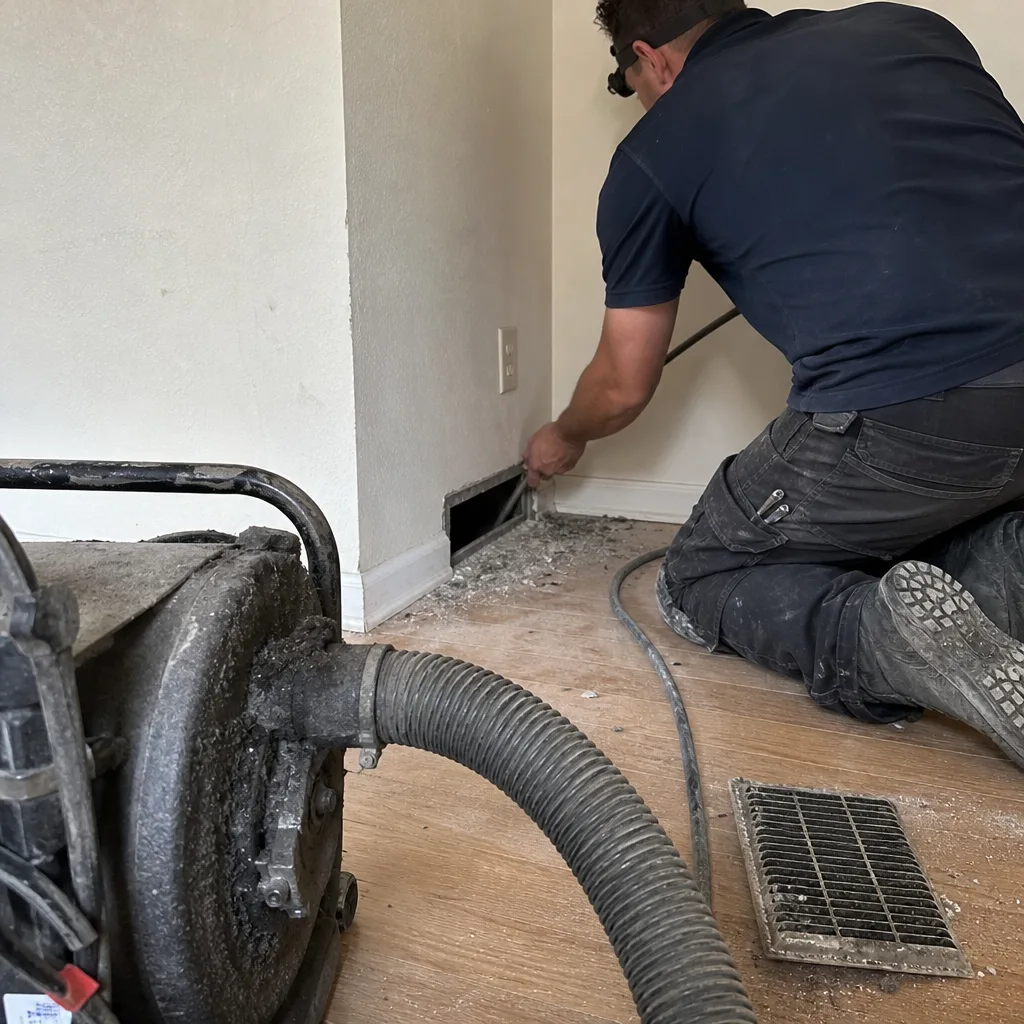 Before
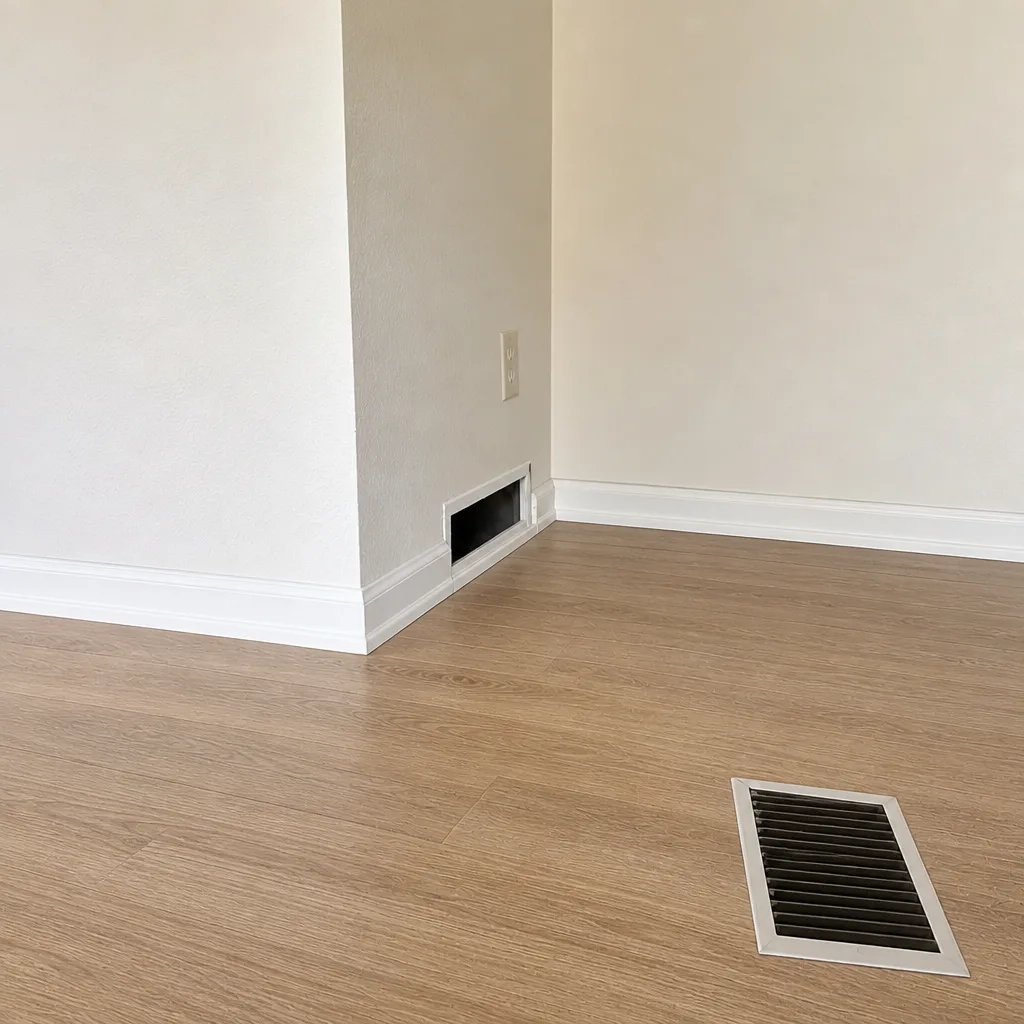 After
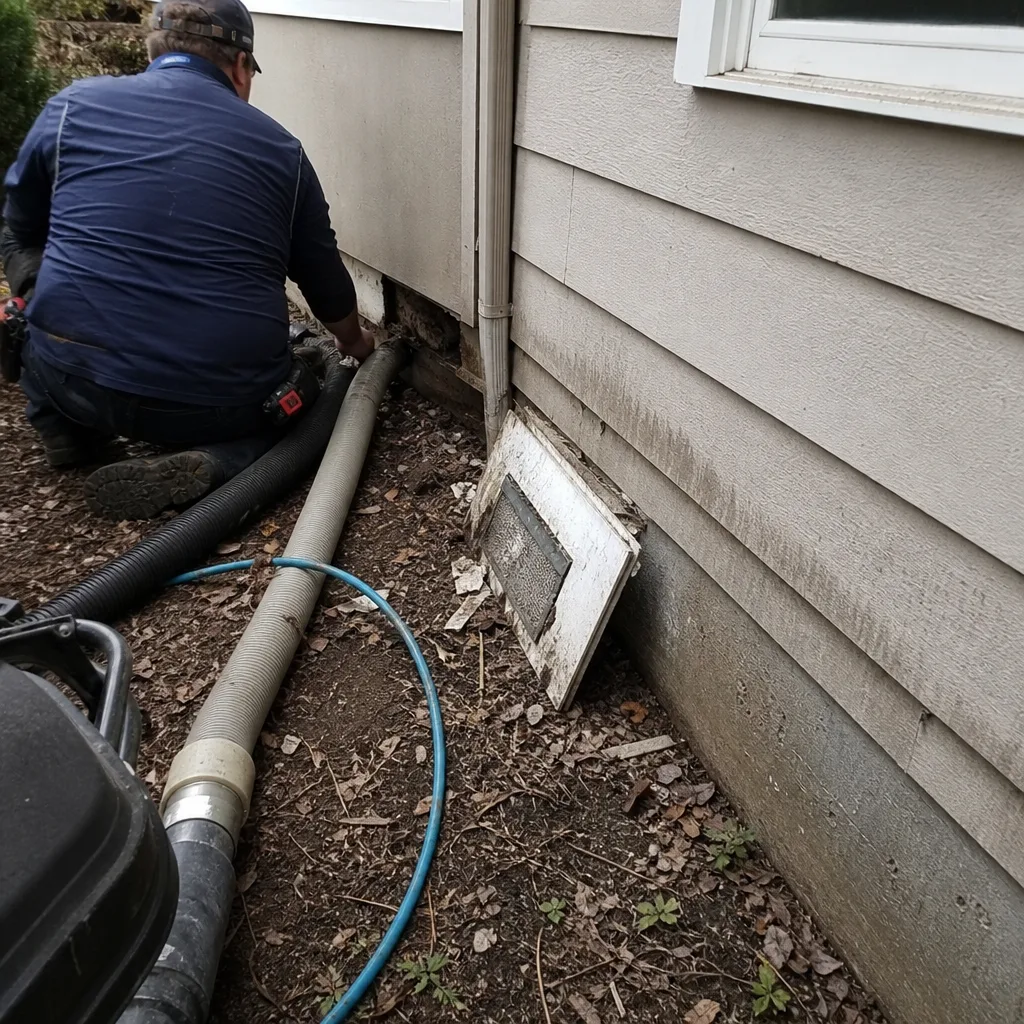 Before
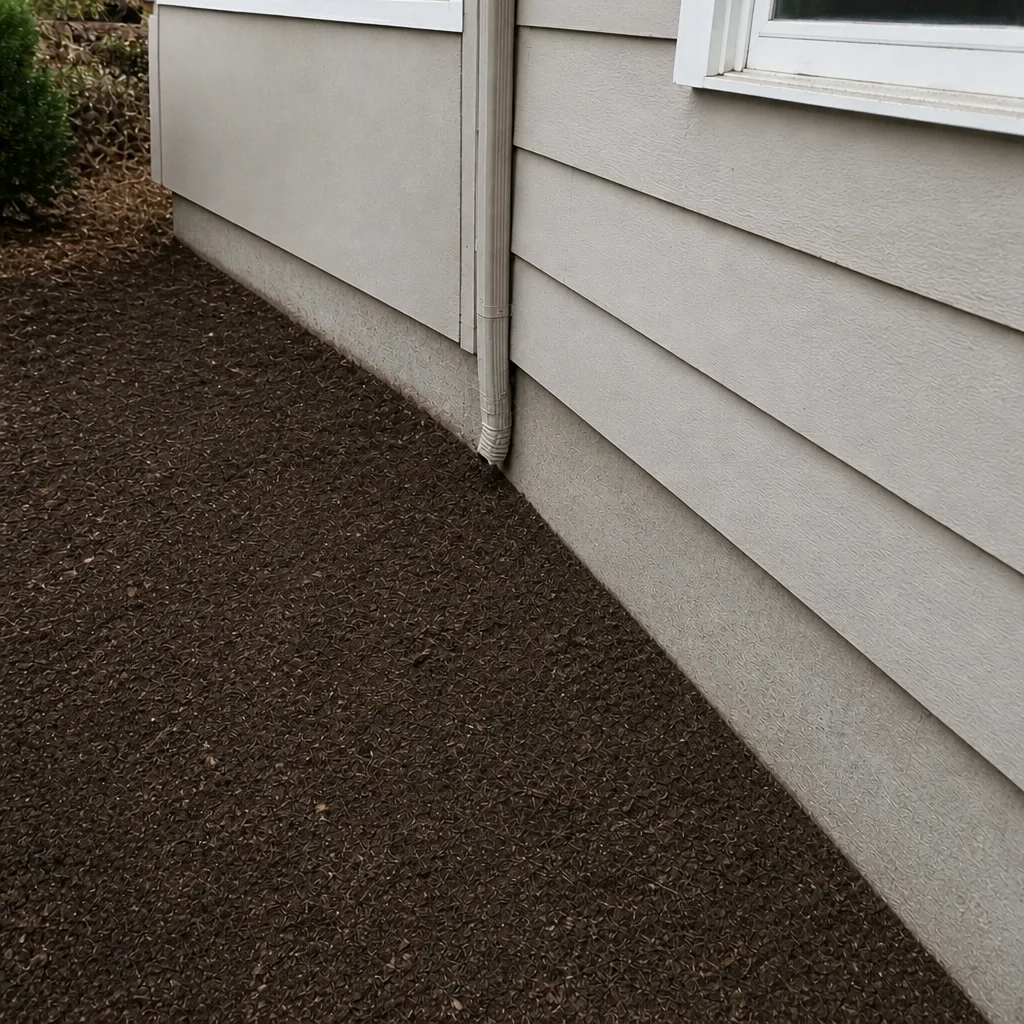 After
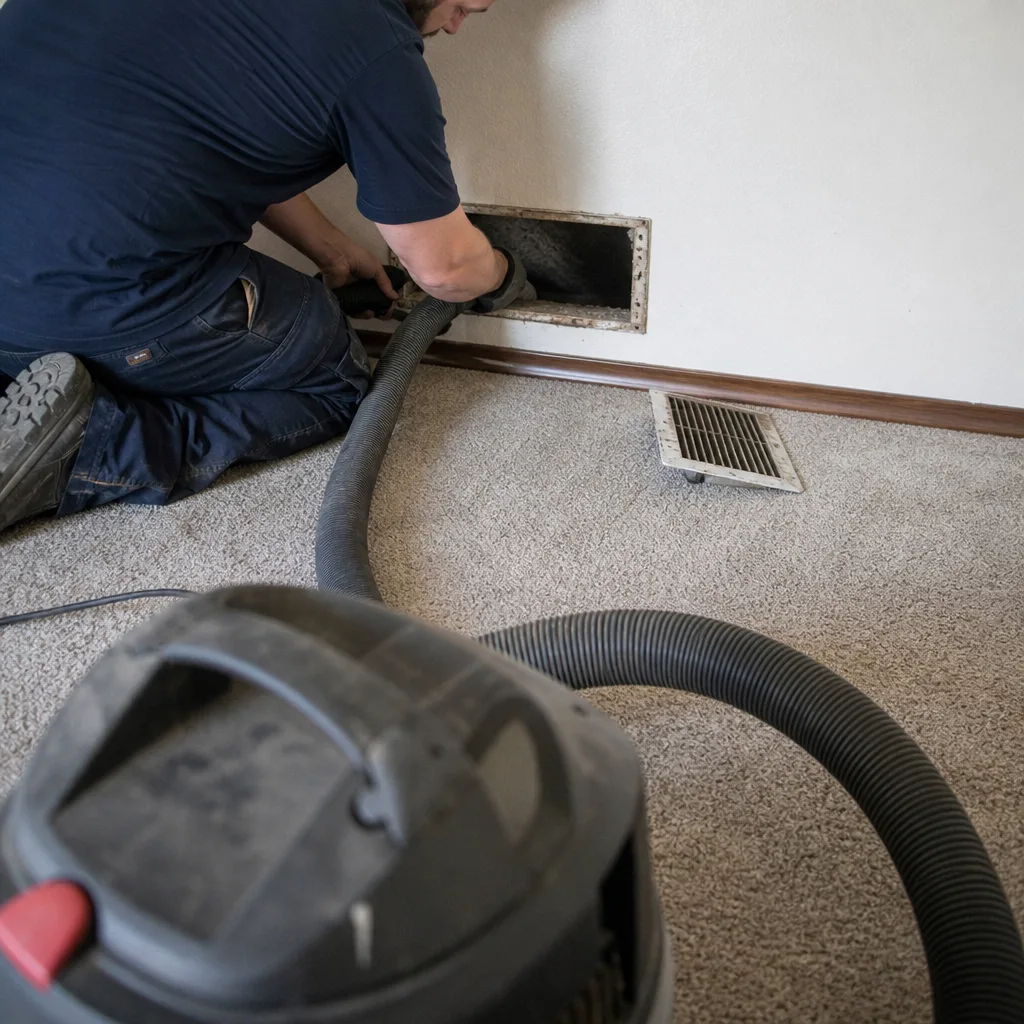 Before
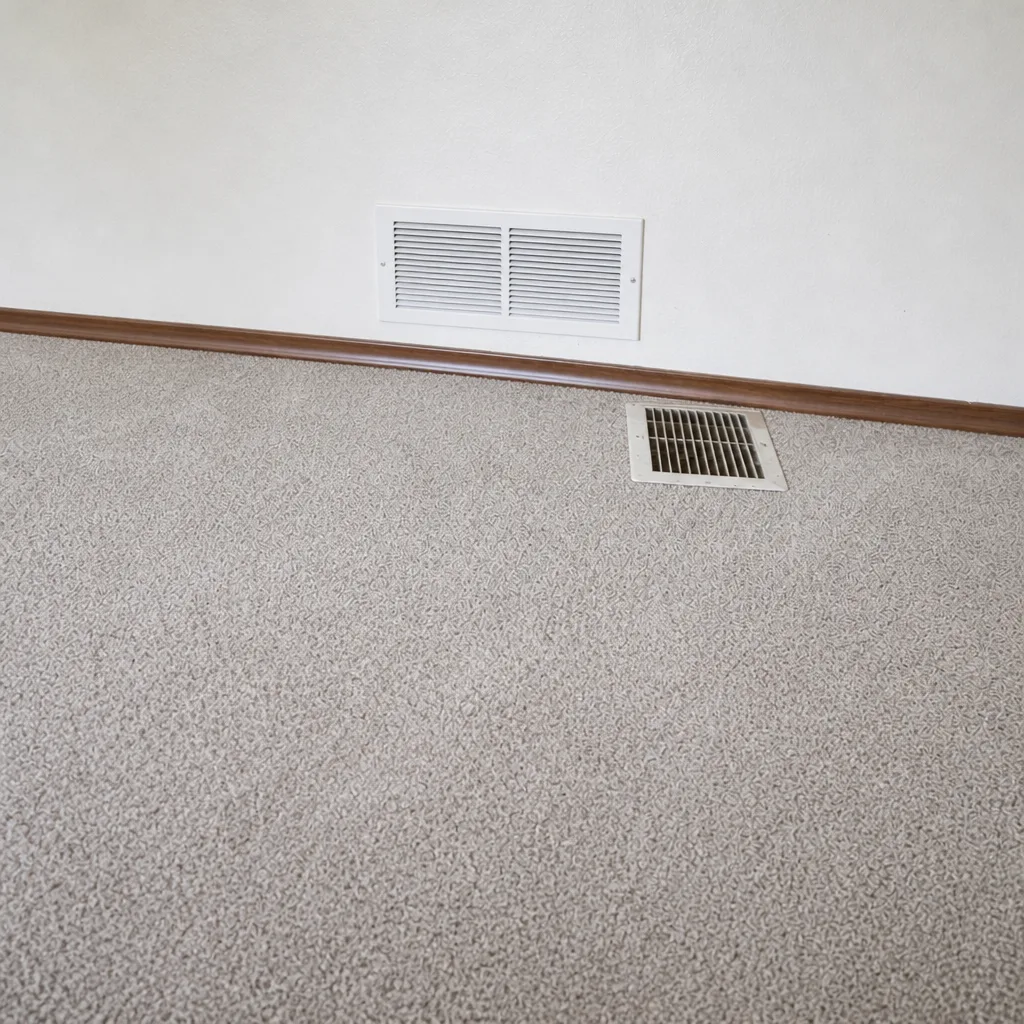 After
When to Call a Professional
Some situations call for a scheduled seasonal visit; others call for a call today. Call us if you see visible dust blowing from registers on startup, notice a musty or smoky smell that doesn’t clear after changing the filter, or you’ve had a wildfire smoke event in the last several days with the HVAC running hard. Call if you’ve just moved into a South Hill home and don’t know the duct history, if you’re seeing allergy symptoms that don’t respond to filtration and medication, or if your dryer takes two or more cycles to dry a load. Any visible damage at duct joints, sagging flexible duct, or condensation on duct surfaces are also worth a call, since those often need repair and sealing rather than a clean. South Hill Air Duct Cleaning Pros offers free estimates in South Hill. Call South Hill Air Duct Cleaning Pros at (833) 772-9858. We answer 24/7. Fast dispatch from 7am to 7pm, Sunday through Friday.
Frequently Asked Questions
Once a year, timed to the fall, covers most South Hill homes. Fall cleaning happens before the heating season closes the house up, which is when accumulated summer particulate actually matters. Homes with allergy sufferers, pets, recent wildfire smoke exposure, or a recent move-in may need a second inspection or targeted action mid-year, but a full second cleaning is usually overkill unless the system is genuinely loaded. Call (833) 772-9858 for an exact recommendation on your system. Estimates are free.
Change the filter immediately, inspect the registers for visible smoke film, and schedule an inspection. If the smoke event was long or your HVAC ran hard during it, a full cleaning is often the right call because the particulate has deposited on the duct walls where a filter can’t reach it. Call (833) 772-9858 after a smoke event and we can tell you whether inspection or cleaning makes more sense for your setup. Estimates are free.
Not wrong, but usually not optimal. Spring cleaning puts the clean state months away from the heating season, so pollen and summer dust re-load the system before winter. If you have a specific spring trigger (recent move-in, allergy symptoms, an older system never cleaned), spring is fine. Otherwise, waiting for fall gives more of the benefit. Call (833) 772-9858 to talk through timing for your home.
Ask for before-and-after photos of your own ducts, taken at multiple points including the trunk lines, not stock images. A provider using professional-grade equipment will also be able to describe what was found and what was removed, in specific terms, at the end of the work. One flat price per system agreed upfront, with photo verification, is the standard. Call (833) 772-9858 for an estimate in South Hill.
Cheap quotes usually reflect a method that can’t remove what’s trapped in the ducts. A single-method or consumer-equipment approach leaves the deepest debris behind, which recirculates within months. The honest comparison isn’t the headline price, it’s what the method actually removes. We quote one flat price per system using Rotobrush and Nikro extraction, so the number reflects the full scope. Call (833) 772-9858 for a quote you can compare fairly. Estimates are free.
Yes, particularly in crawl spaces and attics where ducts aren’t insulated. Cold snaps cause condensation on the duct interior, and over a season that moisture promotes biological growth and degrades the insulation. The early signs are musty smells at registers and higher-than-expected indoor humidity. Winter inspection catches it before it becomes a repair. Call (833) 772-9858 to schedule a crawl space duct check. Estimates are free.
The Bottom Line
Seasonal duct care in South Hill isn’t about following a rigid schedule; it’s about matching what you do to what the year actually throws at your system. Fall is the reset window, timed before heating season. Spring is pollen inspection, not a full clean. Summer is the moment for leaks and sealing work. Winter is moisture awareness and filters. Wildfire smoke is the wildcard that can void the whole timeline and require an inspection on short notice. Get the timing right, ask for the method that actually removes debris, and let the seasonal loads guide the schedule rather than a fixed annual date. If you have an estimate in mind or just want a professional to look at your system before the next seasonal window arrives, we’d like to hear from you.
South Hill Air Duct Cleaning Pros
Phone: (833) 772-9858
We answer 24/7. Fast dispatch from 7am to 7pm, Sunday through Friday.
Written by the team at South Hill Air Duct Cleaning Pros.