
Last updated November 25, 2026
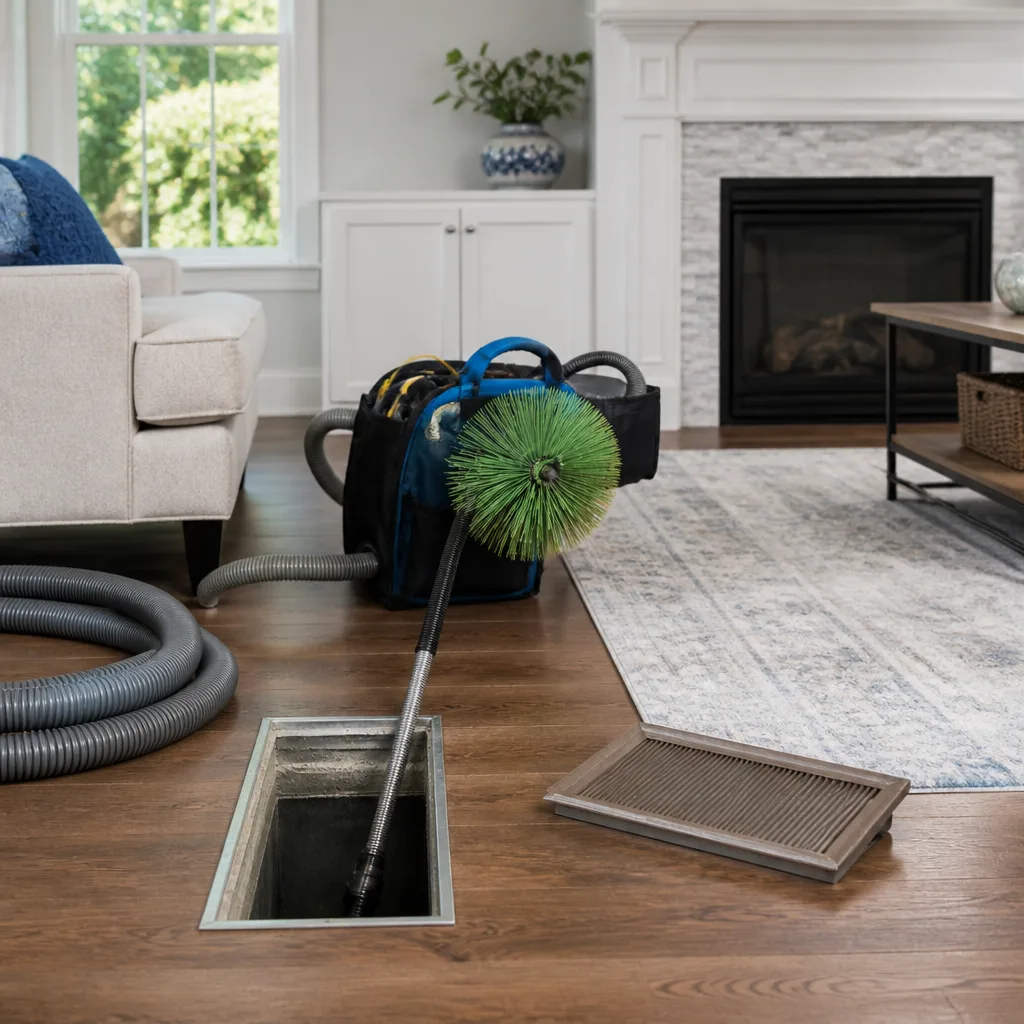 Whole-home duct cleaning
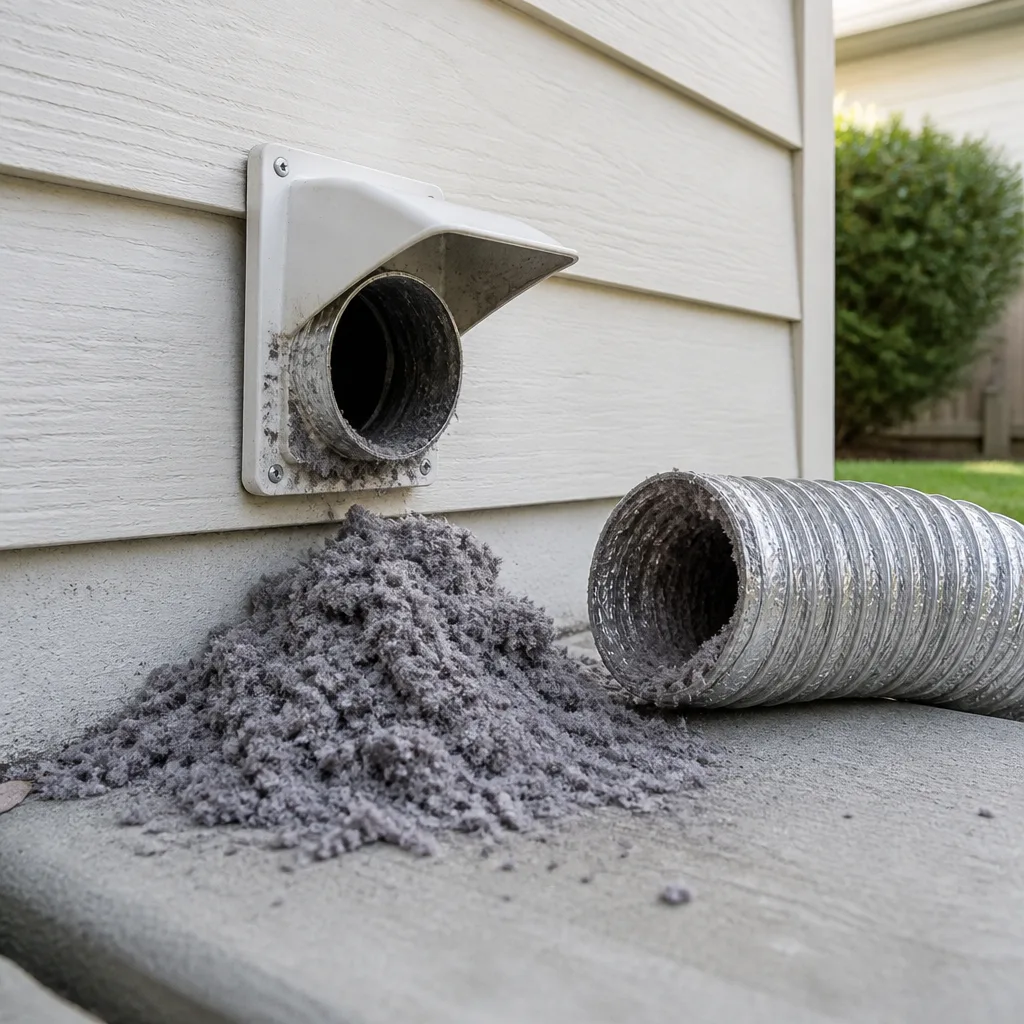 Dryer vent cleaning
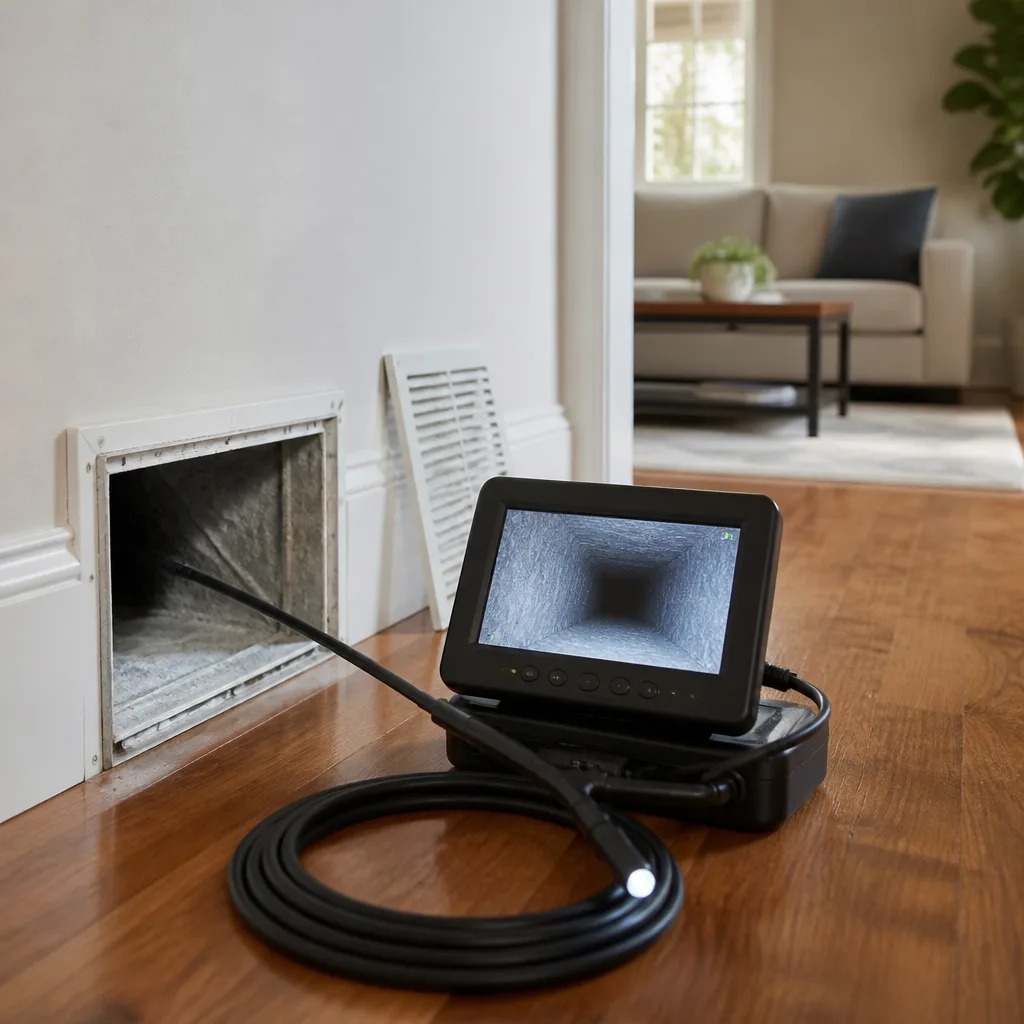 Camera inspection
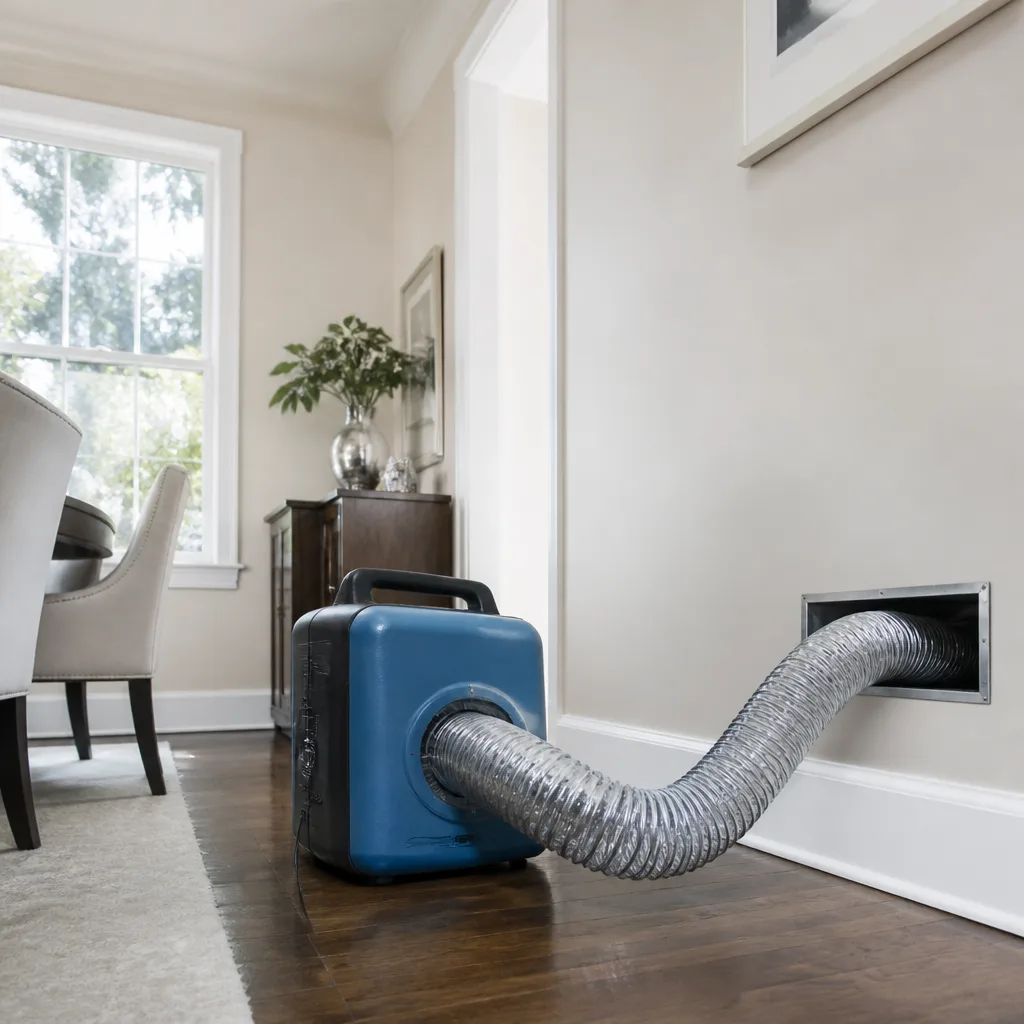 Sanitizing & deodorizing
Whole-system duct and dryer vent check with before-and-after photos - you see exactly what came out of your vents
That "$99 whole-house special" is a bait ad - the real number appears once they are in your hallway, or the "clean" is a shop-vac at the register. We photograph the inside of your ducts before and after instead.
How to Hire an Air Duct Cleaning Contractor in South Hill: A Step-by-Step Guide
Duct cleaning might be the only home service where the work happens entirely out of sight. A technician can spend two hours in your attic and crawlspace, or two hours running a shop vac over a single floor register, and from the kitchen it sounds identical. That invisibility is why the trade has one of the worst consumer-complaint records in home services. The EPA has warned homeowners for years about low-price offers that turn into aggressive on-site upsells, and the pattern still shows up around the Puget Sound market because most homeowners have no reference point for what “done” actually looks like. This guide gives South Hill homeowners a concrete vetting framework: what to ask, what to check, and how to verify the job afterward.
Quick Answer
To hire an air duct cleaning contractor in South Hill, verify three things before you book: the company can name its primary vacuum system and explain its capacity, the quote specifies the number of registers and vents being cleaned, and the contract commits to before-and-after photo or video documentation of every duct run. Ask those questions on the phone and most van-and-vac operators eliminate themselves. The rest comes down to reading the scope line carefully and confirming what happens if the crew finds damaged or leaking ductwork.
Styles & brands we work with
- Whole-home duct cleaning
- Dryer vent cleaning
- Camera inspection
- Sanitizing & deodorizing
Table of Contents
- Why Duct Cleaning Is So Hard to Vet
- Evaluate the Equipment Before You Book
- The Five Questions That Separate Pros From Pretenders
- What NADCA Membership Does and Doesn’t Guarantee
- Reading the Contract: Red Flags and What Belongs In It
- How to Verify the Work Using Only Your Phone
- What Makes Ductwork in South Hill Different
- When Cleaning Reveals Damage: Repair and Sealing
Why Duct Cleaning Is So Hard to Vet
Every other trade leaves evidence. A roofer leaves a visible surface. A plumber leaves a joint you can run your hand over. Duct cleaning happens inside sealed metal channels and flexible runs you’ll never see again once the access panel goes back on. The only proof a homeowner has is documentation, and documentation is exactly what most cheap operators skip.
That gap between what’s promised and what’s provable is what makes the trade so vulnerable to low-price bait. A coupon offer of a very low price gets the phone ringing, then the technician arrives and “discovers” mold, rodent droppings, or a cracked plenum that swells the final bill by a multiple of the original quote. The work is done before you have a chance to compare what was promised against what’s being asked. By then the truck is in the driveway.
In our experience, the contractors worth hiring are the ones who welcome the questions. They have a defined process, they can talk equipment without flinching, and they’ll happily describe what documentation you’ll get at the end. A contractor who dodges a process question on the phone is telling you something important.
Why star ratings don’t solve the problem
Review sites help with some things. They don’t help here, because the homeowner writing “great service, very professional” often can’t tell whether the ducts were cleaned thoroughly or brushed near the registers. A five-star review might reflect a pleasant technician, not a completed job. Use reviews as a filter for basic reliability. Use the vetting steps below to verify the actual work.
Evaluate the Equipment Before You Book
A legitimate commercial duct cleaning contractor will name their primary vacuum system without hesitation. Ask the question directly on the first call: “What equipment will you bring into my home?” A professional will answer in specifics. A van operator will say “professional-grade equipment” and change the subject.
Three equipment systems come up repeatedly in serious duct work:
- Rotobrush. A rotary-brush system with integrated negative-pressure collection. Its strength is agitating and lifting caked-on buildup from the duct walls while capturing dislodged debris. It’s a heavily favored system among residential specialist contractors because it covers the full run from register to plenum rather than just the opening.
- Nikro. A truck-mounted or portable HEPA vacuum system with a reputation for high cubic-feet-per-minute airflow. It pulls a strong negative pressure on the duct system, which is what actually keeps the debris moving toward the collection point instead of drifting into the living space.
- Abatement Technologies. Negative-air filtration equipment originally developed for abatement work. When a crew uses an Abatement unit in a duct cleaning job, the goal is containment – pulling air through HEPA filtration and discharging filtered air so the workspace doesn’t get recirculated contaminants while the cleaning is happening.
A serious contractor often runs two of these systems together. In our own work, we use Rotobrush and Nikro as our primary extraction systems and Abatement Technologies units for on-site air containment. The point isn’t which brand name you hear. The point is that a contractor can name a system and explain its capacity in plain language. If they can’t, ask why not.
What “CFM capacity” actually means on a quote
CFM stands for cubic feet per minute – the volume of air the vacuum moves. Capacity isn’t a spec you need to memorize, but the concept matters. If a vacuum can’t out-pull the amount of air moving through the duct, dust settles back onto the walls as soon as the brush passes. A shop-vac left at the register simply cannot move enough air. When a contractor mentions CFM, they’re signaling that they understand this problem. That’s a positive sign even if they don’t quote a number.
The Five Questions That Separate Pros From Pretenders
These five questions cut through sales language fast. Ask them during the first phone quote. Listen for quality of answers, not just content.
- “What is your primary vacuum system?” Expect a specific brand name: Rotobrush, Nikro, Abatement Technologies, or an equivalent commercial unit. If the answer is “we use professional equipment,” push back. If they can’t or won’t give a brand, move on.
- “How many registers and vents does my quote cover?” A real quote is per-system, not per-vent, but it must specify a count so both sides know what was cleaned. If the phone quote has no register count, the contract won’t either.
- “Will you provide before-and-after photos or video of each duct run?” This is the question that separates operators. A professional will confirm documentation without hesitation. A low-cost operator will say “sure, if you want” – which tells you it isn’t part of their standard process.
- “What happens if you find damage, mold, or leaks during the clean?” A contractor who can answer in specifics – repair, sealing, sanitizing with documented products – is equipped to handle what they find. A contractor who says “we’ll give you a follow-up quote” has just told you they’ll either leave the problem or hand it off.
- “Is the price fixed per system, or does it move once you’re on site?” The right answer is a flat price per system agreed before work starts, with no add-on upsell. If the contractor flinches at this question, you already have your answer.
Ask all five in one phone call. Any contractor worth hiring will sound relaxed going through them. If they sound defensive, thank them and call the next one.
What NADCA Membership Does and Doesn’t Guarantee
NADCA stands for the National Air Duct Cleaners Association. It publishes the ACR standard for how duct cleaning should be performed – the recognized industry reference for scope, process, and source removal – and it offers certifications for technicians and companies. Membership signals that a contractor has made at least a basic commitment to the trade’s standards. That’s worth something.
What membership doesn’t guarantee is that the person showing up at your house will run a thorough job. NADCA certifications require training and testing, but standards rely on the contractor to apply them. Any home service company can pay dues and display the logo. The logo doesn’t clean the ducts – the equipment and process do.
What to actually check
- Certification vs. membership. A certified technician has passed an exam. A member company has joined the association. Both signals are worth seeing, but neither replaces your own questions.
- Source removal, not encapsulation. A serious operation removes contamination from the duct, not seals it in. If a contractor’s answer emphasizes a fogging treatment without describing cleaning first, that’s a red flag.
- Documentation beyond a stamp. A certification logo means less than before-and-after documentation of your actual ducts. Ask for the latter.
For a broader look at what a proper cleaning actually includes, our guide to air duct cleaning walks through the full process. The equipment and standards you hear there are what you should expect from any contractor you hire.
Reading the Contract: Red Flags and What Belongs In It
A contract that reads like a marketing brochure is a warning sign. The contract that’s worth signing is specific. It names what’s covered, names what isn’t, and commits to proof of work. If you see vague phrasing like “cleaning of accessible ductwork” or “full system cleaning,” ask them to get more specific. “Accessible” can mean anything.
What a solid contract contains
- A register count. The line should say something like “20 registers, 4 returns” or “all supply and return runs on the main trunk.” A number or an explicit scope.
- A flat price per system, not per vent. Fixed before work starts. No per-vent pricing that balloons when the crew counts more vents than expected.
- Before-and-after documentation commitment. A line promising photos or video of every cleaned duct run – not just the accessible register openings.
- The equipment named. The contract should reflect what the technician will actually use. If it says “state-of-the-art equipment,” put the brand name into the conversation and ask them to write it in.
- Scope of add-on services. Sanitizing, sealing, and repair should be listed as available with separate pricing, or explicitly excluded. If it isn’t on the page, it doesn’t happen without a separate conversation.
- What happens if damage is discovered. Contractors prepared to repair and seal – rather than hand off to a second contractor – will have a line for it.
Red flags in the contract
- No register count anywhere. The most common sign of a van-and-vac quote.
- Phrases like “up to X vents” or “starting from.” These are bait figures. You won’t know the real price until you’re committed.
- No mention of documentation. If the contract is silent on photos or video, assume you’ll get none.
- “Free inspection!” or “free camera inspection” headlines. The inspection may be free, but it exists to generate a follow-up quote.
- Disclaimers about “existing conditions.” A contractor who reserves the right to charge more for any pre-existing issue has pre-wired an upsell.
How to Verify the Work Using Only Your Phone
You don’t need a borescope to confirm the work was done. You need documentation standards and a phone. Before the crew leaves, run through these verification steps:
- Request the before-and-after footage of each duct run. A serious operator shoots photo or video of what’s inside the duct before cleaning and after. Confirm you’re seeing distinct footage of the trunk lines, the branch runs, and the coil or plenum, not just a single accessible register. If the crew only documents registers, ask why the inaccessible sections weren’t covered.
- Watch the register back-pressure check. A sheet of paper held against a return grille should pull firmly once the system is running post-cleaning. Weak pull suggests a loose connection, a partially detached run, or a duct still clogged somewhere. Ask the crew to show you before they pack up.
- Look at the collection bag or canister. A well-equipped crew captures what they extract. Ask to see what came out. The volume tells you something about what was in the ducts.
- Photograph the access panel seams. Good practice leaves access panels re-sealed, not just screwed back on. Photograph the seams before and after so you have a record if a leak develops.
- Save the documentation as a baseline. Store the before-and-after media somewhere you’ll find it in two years. When the next cleaning comes up, you’ll have a reference point for what “clean” meant last time and what the duct condition was.
If a contractor can’t produce this documentation after the job, ask them to send it. If they say they “don’t normally do that,” you know what you hired. Call a contractor who does.
What Makes Ductwork in South Hill Different
South Hill sits in the Puyallup River valley region, and that geography shapes what accumulates in the ductwork of homes here more than homeowners realize. The valley holds moisture during much of the year, and homes built without strong vapor management collect it in crawlspaces where ductwork runs. When ducts pass through a damp crawlspace with poorly sealed seams, the HVAC system pulls that moisture along with air. Over a winter season, that translates into a duct interior that supports biological growth the homeowner never sees.
Meanwhile, Puget Sound’s pollen load matters for allergy and asthma sufferers. Late spring through summer, tree and grass pollen counts climb sharply and fine particles settle into return-side ductwork. Because household air recycles through the HVAC system several times per hour during hot months, a dirty return trunk keeps redistributing that pollen – even when windows are closed and filtration is on.
South Hill neighborhoods built during the 1990s and 2000s often feature flexible duct runs in the attic and conditioned crawlspaces. Flex duct sags and pinches over time, which reduces airflow and creates pockets where dust collects. When we clean flexible systems, we’re looking not just at what’s inside the duct, but whether the run is still doing its job structurally. A duct that’s clean but pinched isn’t performing. That’s why repair and sealing belong in the same visit as the cleaning – not attached to a later appointment with a different contractor.
If you’ve got a dryer vent that shares a wall cavity with the HVAC chase, this matters too. Dryer vent cleaning is a separate service from HVAC cleaning, but on South Hill homes with cramped utility spaces, both tend to affect each other. Lint in the dryer vent doesn’t drift into HVAC ducts, but the dryer exhaust and an HVAC return on the same wall do share vibration and airflow pressure. A thorough job looks at both.
When Cleaning Reveals Damage: Repair and Sealing
Cleaning is when you find out what condition the ductwork is in. Detached flex runs, torn fiberglass liner, disconnected joints in rigid duct, rodent damage in crawlspace sections, or seams that were never sealed properly in the first place – these show up during a real clean because that’s when the ducts are actually opened and accessed. This is normal. What matters is what happens next.
A contractor who only cleans will tell you about the damage and hand you a card for a duct repair specialist. One contractor becomes two, the timing gets complicated, and the detached run that was found during the cleaning stays detached while you wait. In our own process, we’ve built repair and sealing into the same visit: when the crew finds a loose or damaged section, they can repair and re-seal it before finishing. That’s the point of keeping repair and cleaning together – the cleaning crew has full access to the duct at the moment the problem is found.
What “sealing” means in practice
Most existing ducts leak – joints and seams that were never taped or were taped with material that has dried out and separated. Sealing closes those gaps, which does two things: it keeps contaminated crawlspace or attic air from getting sucked into the duct, and it puts more of the conditioned air into the rooms instead of wasting it in the chase. For some South Hill homes, that airflow improvement matters more than the clean itself.
When sanitizing makes sense
Sanitizing is a follow-on to cleaning, not a substitute. If the clean finds biological growth in the ducts – which damp-crawlspace homes tend to accumulate – that’s the point to consider sanitizing. Our air quality and sanitizing approach uses Honeywell and Aprilaire products because they’re the same lines HVAC contractors rely on for filtration and air handling. For a homeowner trying to move from “one-time clean” to ongoing indoor air quality, those products are the bridge. But they only work after the clean.
For dryer vents, the story is somewhat different. Lint accumulation in a dryer exhaust run restricts airflow, extends dry times, and adds heat-load risk. That’s a separate job, done on its own schedule – see our guide to dryer vent cleaning for how that’s handled and why it belongs on your maintenance list regardless of duct cleaning schedule.
Common Mistakes to Avoid
- Booking on price alone. A low coupon quote is the bait, not the estimate. Ask what’s covered in the coupon price. If the answer is vague, assume the actual scope is narrower than the coupon suggests, and the on-site price will build up from there.
- Accepting “per-vent” pricing. A serious quote is per system, not per vent. Per-vent pricing means you’ll never quite know how many your house actually has, and the total keeps moving. Ask for a flat system price and register count.
- Skipping the documentation conversation. If you don’t confirm before-and-after footage at the booking stage, you’ll likely not get it. Ask before you agree to the appointment, not after the crew is on site.
- Hiring a generalist. A company that also does house cleaning, window washing, and duct work is not the same as a duct specialist. Duct work needs the equipment, the training, and the focused process to be done right. Ask how long the company has been doing duct work as a primary service.
- Not asking about repair and sealing. If a run turns out to be disconnected (common in South Hill’s attic and crawlspace flex duct), a cleaning-only contractor will leave it for someone else. Ask about full scope up front.
- Assuming the “inspection” is included. Some quotes include camera inspection of the duct interior; some don’t. If a camera inspection is offered “free,” ask what the follow-up quote looks like before you say yes.
- Not saving the documentation. The before-and-after photos are only useful if you can find them in two years. Back them up to cloud storage and note the date alongside them.
See the difference
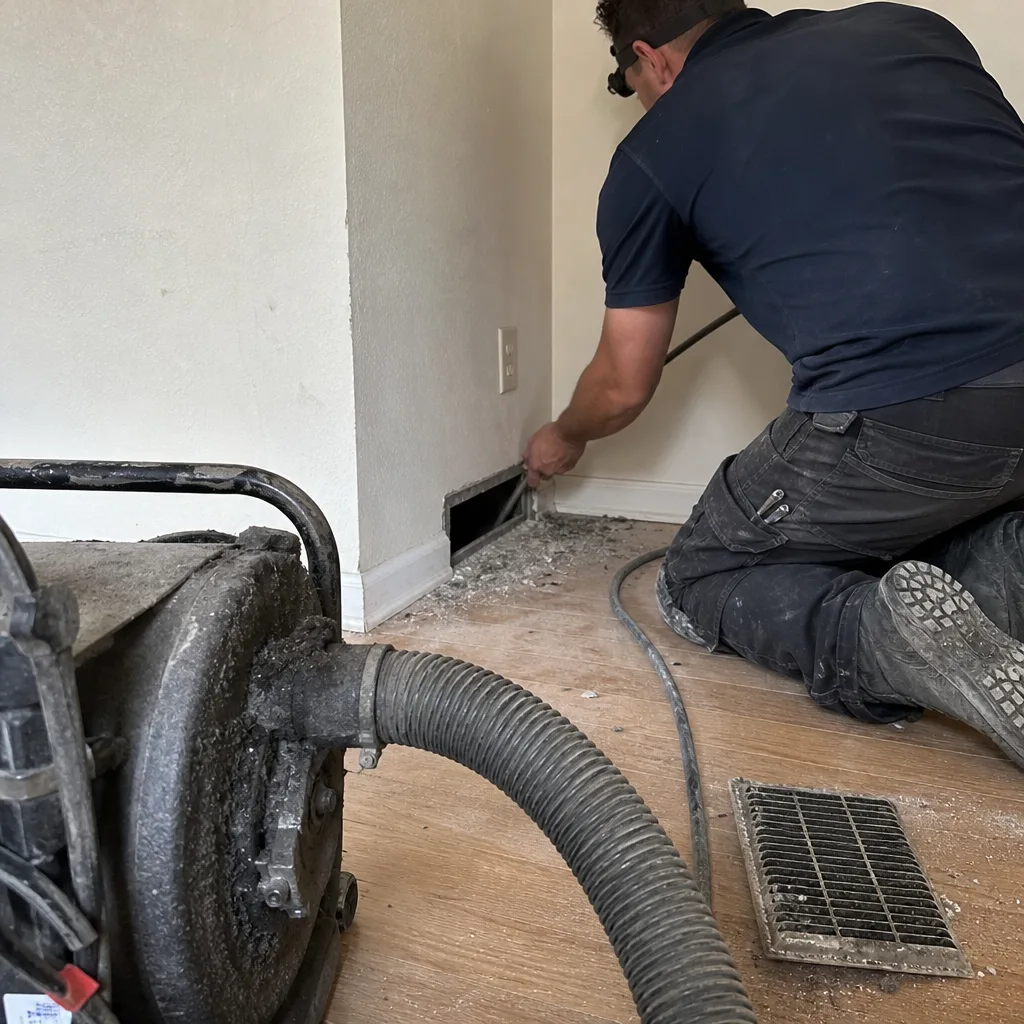 Before
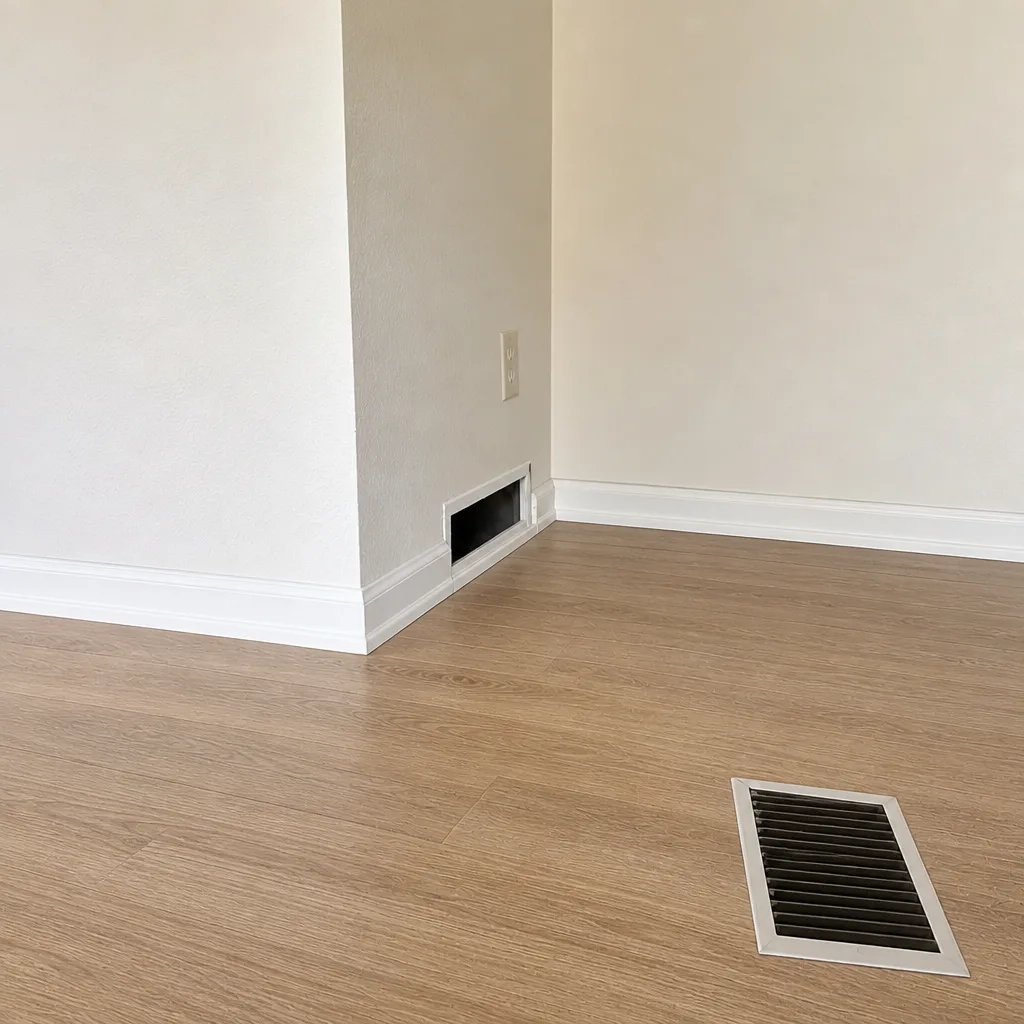 After
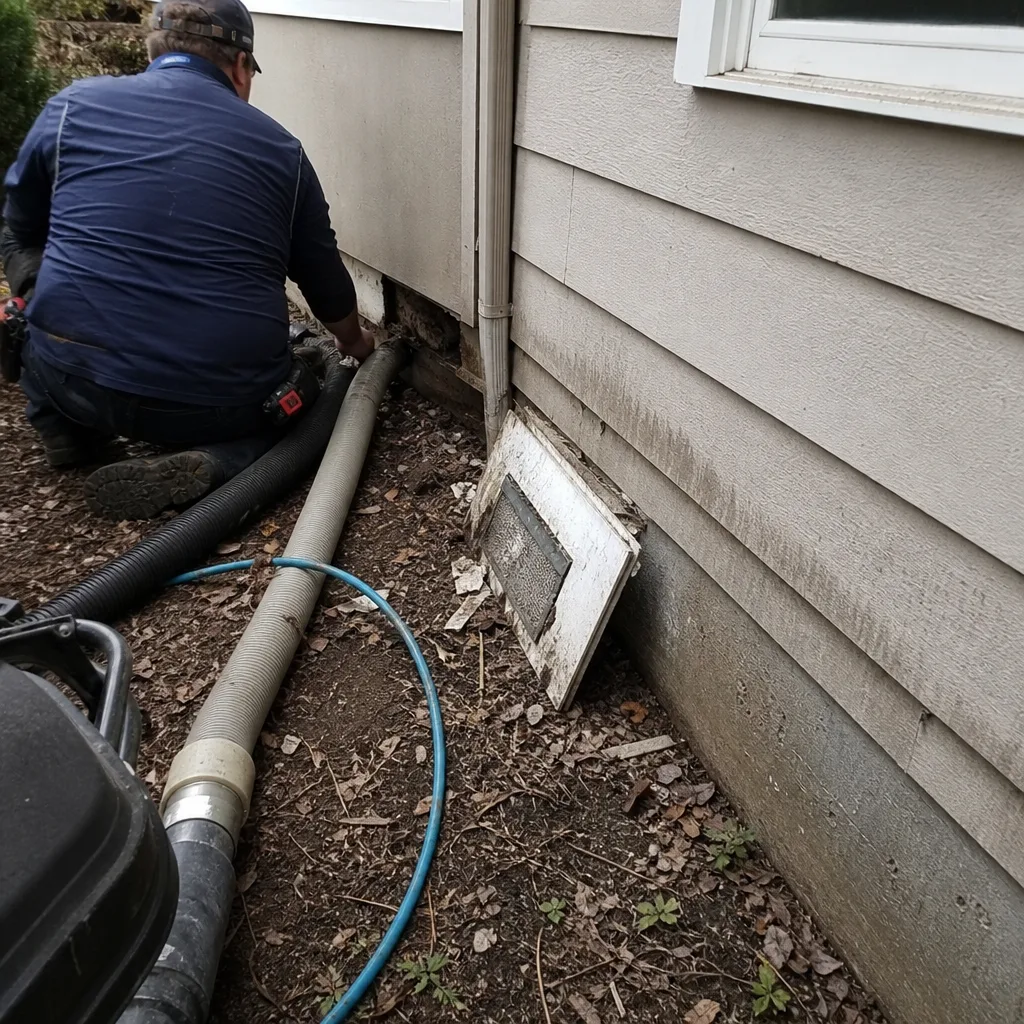 Before
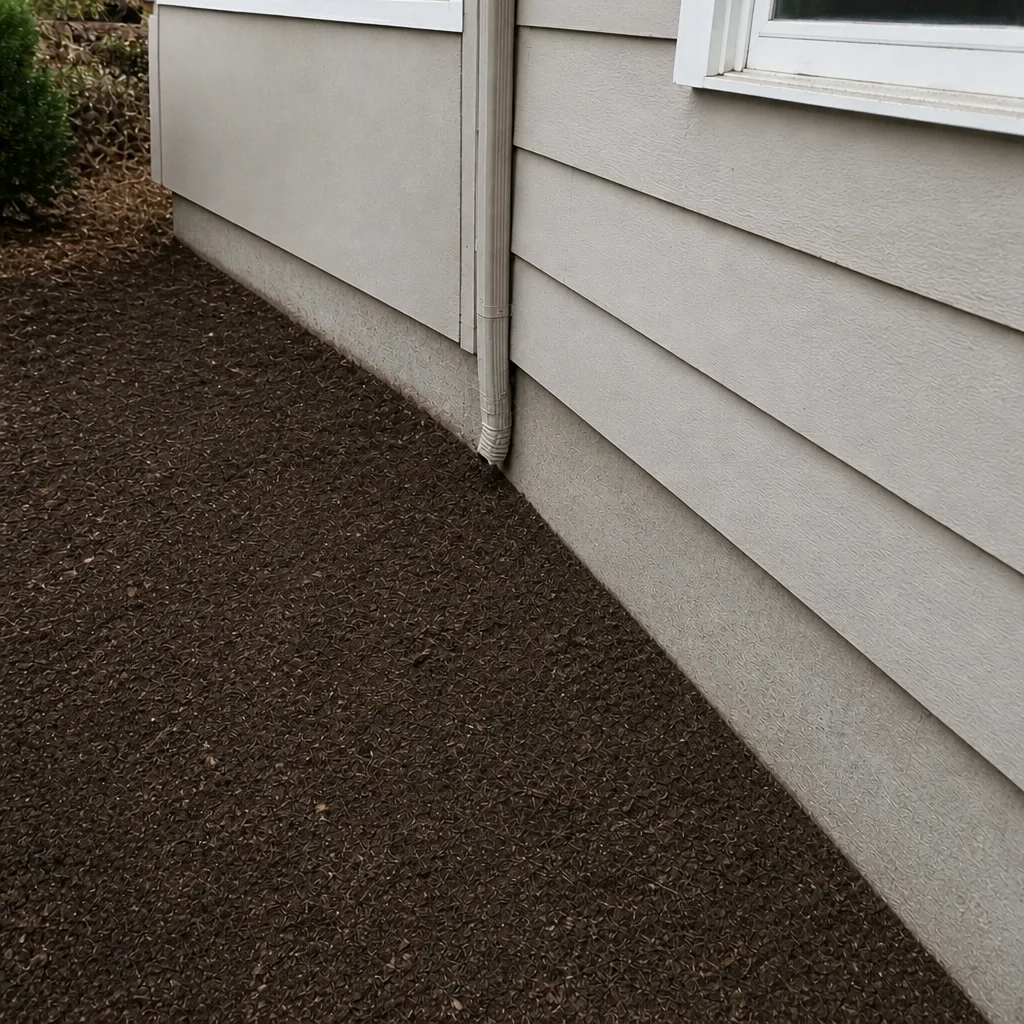 After
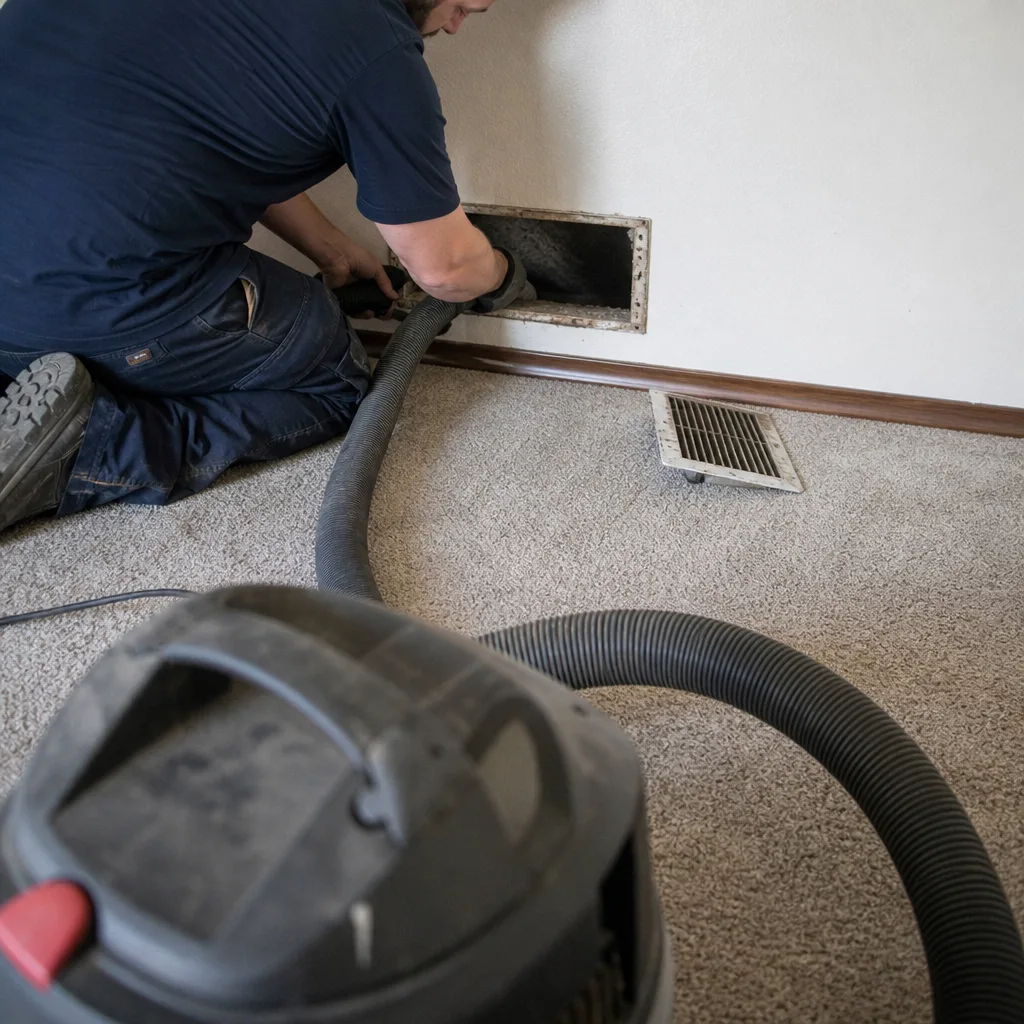 Before
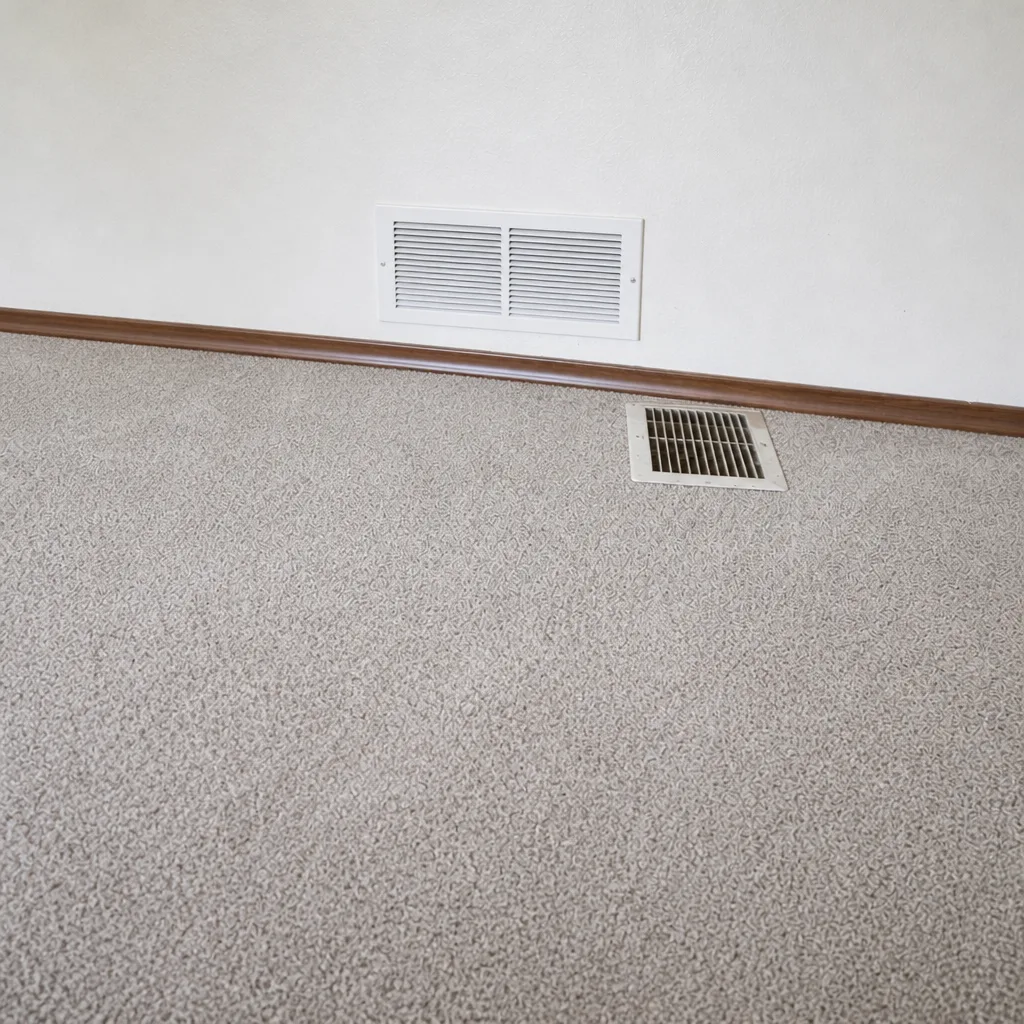 After
When to Call a Professional
Call a professional air duct cleaner if you haven’t had the system cleaned since you moved in, if you notice visible dust plumes from registers when the system comes on, if there’s a musty smell in the house when the HVAC runs, or if someone in the household has developing allergy or asthma symptoms that doctors can’t otherwise explain. Visual signs of mold, rodent droppings near ductwork, or debris on top of registers all warrant a call, and a disconnected or leaking duct found during a home inspection should be repaired before it’s cleaned. Dryer vents should be cleaned on their own schedule, regardless of duct cleaning. South Hill Air Duct Cleaning Pros offers free estimates in South Hill – call (833) 772-9858. We answer 24/7. Fast dispatch from 7am to 7pm, Sunday through Friday.
Frequently Asked Questions
It depends on the number of registers, the number of HVAC systems, and whether any repair or sealing is needed, which is why we give a flat price per system after reviewing the details of your home. The written estimate sets the final price, so you know what you’re paying before any work starts. Call (833) 772-9858 for an exact quote – estimates are free.
Cheap quotes usually cover less than they claim. The low price often reflects cleaning only the accessible registers, not the full run; skipping the documentation; and leaving damaged ductwork for a different contractor. Any add-on costs, including sanitizing or repair, appear once the crew is on site. The flat price per system you agree to up front is the only figure that reflects the whole job.
Ask for before-and-after photos or video of each duct run, not just the register openings. A professional operator documents the trunk lines, branch runs, and plenum. Save the documentation as a baseline for your next cleaning. Call (833) 772-9858 if you’d like to see how our documentation process works – estimates are free.
Most homes do well with cleaning every three to five years, depending on duct construction, moisture, pets, and household allergies. Homes with flexible duct in a damp crawlspace – which includes many South Hill neighborhoods – tend to benefit from a shorter interval because moisture and settling change duct performance faster. If it has been more than a few years, book an estimate to see what the system actually looks like.
We use Rotobrush and Nikro as our primary extraction systems, and Abatement Technologies negative-air equipment to contain dislodged contaminants on site. Rotobrush agitates and lifts buildup from duct walls while Nikro’s high-CFM vacuum pulls dislodged debris toward the collection point. Abatement units run throughout the job to capture and filter air rather than recirculating it into the home. For ongoing air quality, we can add Honeywell and Aprilaire products as a long-term improvement beyond a single cleaning.
Yes. Duct repair and sealing are part of our service scope, so if the clean turns up a detached run, a torn liner, or unsealed joints, we can address it before finishing. That avoids a handoff to a second contractor and keeps the newly cleaned duct in working condition. Call (833) 772-9858 to talk through what your system might need.
The Bottom Line
Hiring a duct cleaner comes down to evaluating process and equipment rather than reviews. Ask for the equipment brand. Ask for a register count. Ask for a flat price per system, not per vent. Ask for before-and-after documentation of every duct run. Ask what happens if the crew finds damage during the clean. Any contractor worth the call can answer all five without flinching. In South Hill, where damp crawlspaces and tight attic duct runs are the norm, the same contractor should be able to handle repair and sealing on the same visit rather than handing off. For a broader view of how HVAC-side cleaning fits alongside duct work, our HVAC cleaning page covers the full-system picture – and if you’re ready to book an estimate now, call (833) 772-9858. We answer 24/7. Fast dispatch from 7am to 7pm, Sunday through Friday. Estimates are free, and the written estimate sets the final price.
Whether you’re vetting your first contractor or ready to book a cleaning for a system that hasn’t been touched in years, the standard is the same: proof of method, proof of scope, proof of work. South Hill Air Duct Cleaning Pros is a duct and HVAC specialist: cleaning, sanitizing, repair, and sealing handled in a single visit, with documentation to show what happened and why. Our technicians have up to 14 years of experience, and the team you reach on the phone is the team that handles the estimate and the work.
Written by the team at South Hill Air Duct Cleaning Pros.